
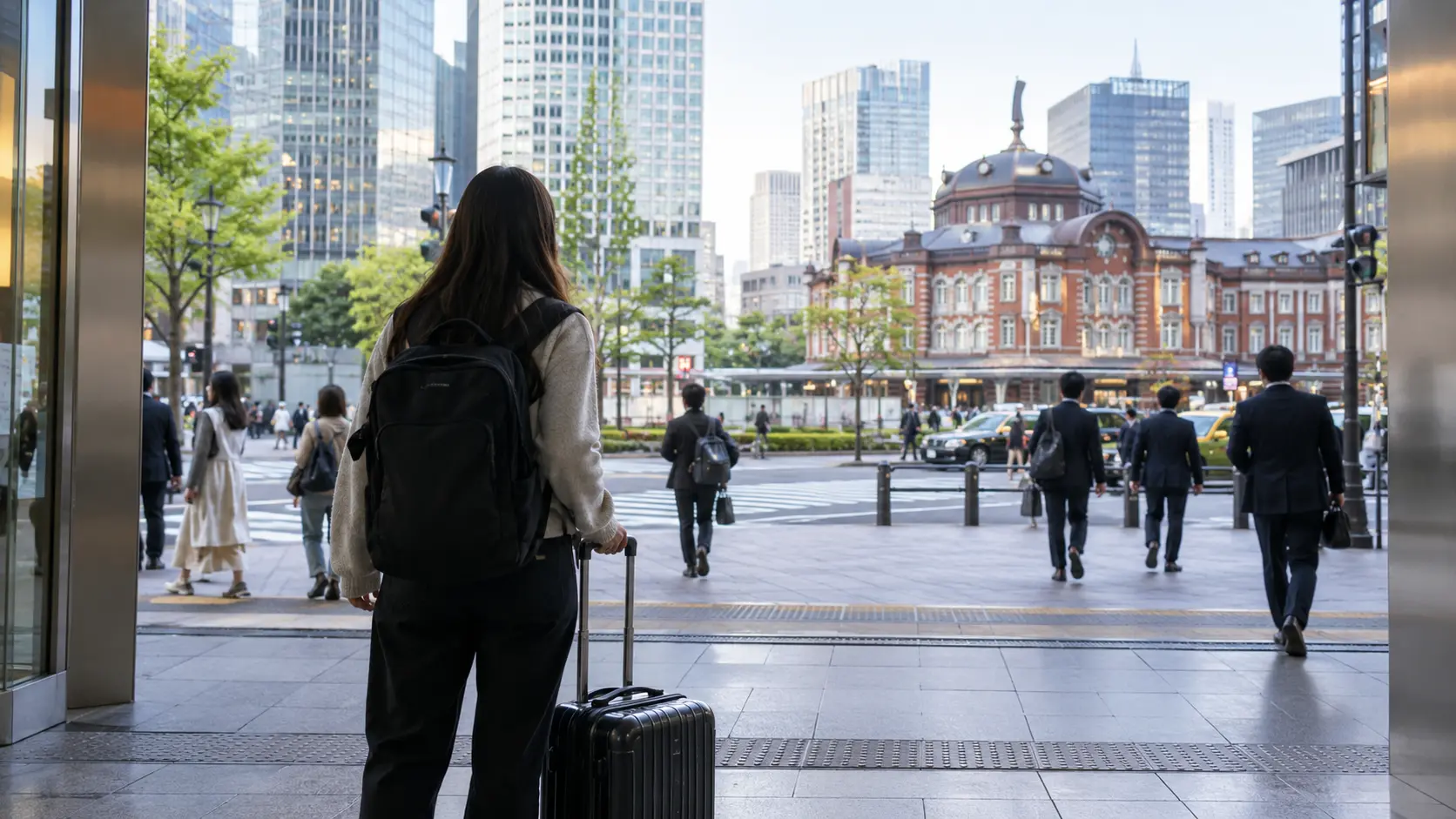

Planning your first trip to Japan can feel confusing. Trains may seem complex. There are different payment methods. Cultural rules may also feel unfamiliar.
However, Japan becomes much easier once you understand the basics.
These Japan travel tips first time visitors need will help you prepare before you leave home. You will learn about entry rules, hotels, trains, IC cards, the JR Pass, cash, food, packing, etiquette, airports, luggage, and useful apps.
You will also learn how to avoid common first-time mistakes.
Whether you plan to visit Tokyo, Kyoto, Osaka, or several cities, good planning can make your first Japan trip much easier.
First Trip to Japan? Keep These Basics in Mind
Your first trip to Japan becomes much easier when you keep the plan simple. Choose two or three main bases, stay close to useful train stations, use an IC card for local transport, carry some Japanese yen, and compare long-distance train costs before buying a JR Pass.
Book limited-entry attractions and important experiences early, but leave enough free time to explore without rushing between cities.
Planning Your First Trip to Japan?
Start with our complete Japan guide for help with when to visit, how long to stay, where to go, transport, accommodation and planning your first route.
Read the Japan Travel GuideWhat Should First-Time Visitors Know About Japan?
If you are visiting Japan for the first time, remember these basic tips:
- Check your passport and entry rules before flying.
- Complete Visit Japan Web before arrival.
- Check whether your prescription medicine is allowed.
- Remember that your arrival date may be one day later.
- Book popular hotels and attractions early.
- Get mobile internet through an eSIM or pocket WiFi.
- Use an IC card for local trains and buses.
- Do not buy a JR Pass without comparing ticket costs.
- Carry some Japanese yen.
- Pack light because you will walk and use trains often.
- Learn basic Japanese manners.
- Avoid planning too many cities.
- Check your airport transport before landing.
- Keep your first day simple.
Good preparation removes much of the stress from a first Japan trip.
Preparation and Planning Your First Trip to Japan
Japan rewards travelers who prepare before they arrive.
You do not need to plan every minute. However, you should understand the main travel systems before your flight.
Visa, Immigration, and Entry Rules
U.S. citizens traveling to Japan for tourism generally do not need a visa for stays of less than 90 days.
Your passport must stay valid for your entire visit. You should also have proof of your return or onward journey. At least one blank passport page is required.
Always check the latest requirements before your departure because entry rules can change.
You should also consider using Visit Japan Web before your flight.
Visit Japan Web is an official Japanese government service. It lets travelers complete information for immigration and customs online before arrival.
Completing it before your trip can make airport procedures easier.
Japan’s International Tourist Tax
Most travelers leaving Japan now pay an International Tourist Tax.
As of July 1, 2026, the standard tax is ¥3,000 per person for each departure from Japan.
Airlines and ship operators usually collect the tax as part of the ticket price. Some eligible transport contracts made before July 1, 2026 may still use the previous ¥1,000 rate.
Therefore, most tourists do not need to make a separate tax payment at the airport.
Know About Local Accommodation Taxes
Some Japanese cities also charge accommodation taxes.
Kyoto changed its accommodation tax on March 1, 2026.
The tax now ranges from ¥200 to ¥10,000 per person per night, depending on the accommodation price.
Check whether local taxes are already included when comparing hotel prices.
Important 2026 Tax-Free Shopping Change
Japan’s tax-free shopping system changes on November 1, 2026.
Until October 31, eligible international visitors can generally buy qualifying products at participating stores without paying Japan’s consumption tax at the time of purchase.
From November 1, 2026, the system changes to a refund method.
Travelers will pay the tax-inclusive price first. Customs must then confirm that eligible goods are leaving Japan before the consumption-tax amount can be refunded. Goods must leave Japan within 90 days of purchase.
If your trip takes place near or after this date, check the current process before shopping.
Make Sure Your Passport Is in Order
Check your passport several weeks before your flight.
For U.S. travelers, it must stay valid during the entire trip.
You should also carry your original passport while traveling in Japan.
Japanese law generally requires foreign visitors to carry their passport or other required official document with them.
Keep a digital or paper copy as a backup. However, a copy does not replace the original passport.
Your passport can also be important when using tourist services such as tax-free shopping.
Check Your Medicine Before Traveling
This is one of the most important Japan travel tips for first-time visitors from the United States.
Do not assume that a medicine is allowed because you have a U.S. prescription.
Japan has strict rules for some prescription and controlled medicines.
Travelers can bring up to a one-month supply of many prescription medicines without applying for an Import Confirmation. However, controlled drugs follow separate rules. Some medicines require advance permission, while others cannot be imported.
For example, the U.S. State Department warns that certain prescription medicines, including Adderall, are illegal in Japan even with a U.S. prescription.
Check your exact medicine before you travel.
Do this several weeks before your departure.
Keep medicines in their original packaging when possible. Also carry any useful prescription or medical documents.
Understand the International Date Line
Travelers coming from the United States should check their arrival date carefully.
Japan is many hours ahead of the U.S.
Therefore, a flight leaving the United States on Monday may arrive in Japan on Tuesday.
Check the local arrival date printed on your flight booking before reserving your first hotel night, airport transfer, restaurant, or attraction.
This simple step can prevent expensive booking mistakes.
Keep Your Japan Itinerary Flexible
One of the biggest first-time Japan mistakes is trying to see everything.
Tokyo alone can fill several days.
Kyoto also has enough temples, neighborhoods, markets, and cultural sites for several days. Osaka adds food, nightlife, shopping, and easy day trips.
Therefore, avoid changing cities every day.
For a first trip, many travelers use a route such as:
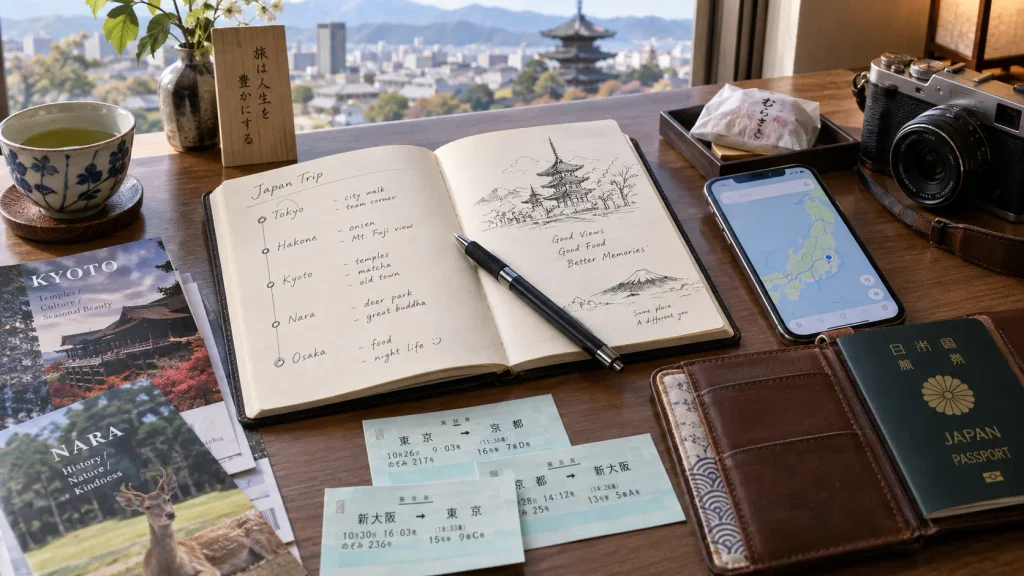
Tokyo → Kyoto → Osaka
You can then add day trips if you have enough time.
A flexible schedule also gives you room for bad weather, tired feet, train changes, or places you discover during your trip.
Japan is not a country you need to rush through.
How Many Days Are Good for a First Japan Trip?
There is no perfect trip length.
However, this simple guide can help:
| Trip Length | Simple First-Trip Plan |
| 5 days | Focus mainly on Tokyo |
| 7 days | Tokyo plus one other base |
| 10 days | Tokyo, Kyoto, and Osaka |
| 14 days | Tokyo, Kyoto, Osaka, plus day trips or another area |
Use this as a starting point, not a strict rule.
Travel slower if you prefer relaxed trips.
Choose Your Japan Itinerary
Once you know how much time you have, use one of our detailed itineraries to build a realistic first trip.
Time Your Visit With the Shoulder Seasons
Japan has four clear seasons.
Each season gives visitors a different experience.
Spring is famous for cherry blossoms. However, this period can also bring larger crowds and higher hotel prices.
Autumn is popular because of cooler weather and colorful leaves.
Summer can be very hot and humid.
Winter can be cold, but some destinations may feel quieter.
If possible, compare different months before choosing your dates.
Also check Japanese public holidays.
Golden Week, New Year, and other major holiday periods can affect hotels, trains, and attractions.
Know When Reservations Are Needed
You do not need to book every restaurant and train months ahead.
However, some experiences can sell out.
Consider booking early if you want:
- Popular theme parks
- Famous observation decks
- Special museums
- Limited-entry attractions
- High-end restaurants
- Popular ryokan
- Small luxury hotels
- Seasonal experiences
Always check the official booking window.
Some attractions only release tickets a few weeks or months before the visit date.
A simple booking calendar can help.
Simple Japan Booking Timeline
Several months before your trip, check flights and hotels, especially during busy seasons.
When attraction booking windows open, reserve limited-entry experiences that are important to you.
A few weeks before your trip, book any priority restaurants that accept advance reservations.
During the final week, check Visit Japan Web, your eSIM, airport route, medicine documents, and major train plans.
Book the Right Hotel for Your Stay
Location matters more than a huge hotel room.
Japanese city hotel rooms can be smaller than many American travelers expect.
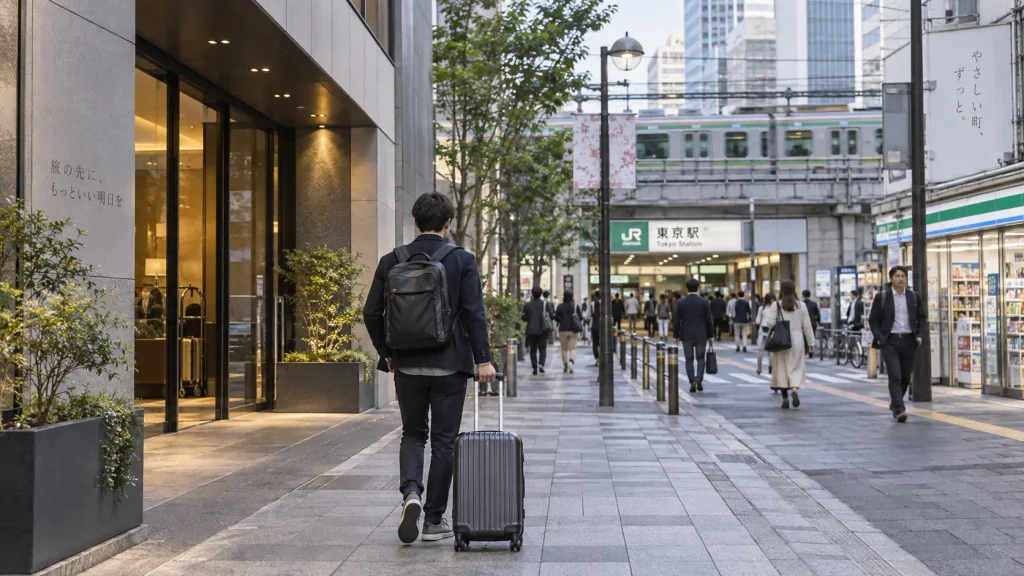
For your first visit, choose a hotel close to a useful train or subway station.
In Tokyo, areas such as Shinjuku, Shibuya, Ginza, Ueno, and Tokyo Station can work well.
However, the best area depends on your itinerary and budget.
In Kyoto, staying near Kyoto Station can make transportation easier.
In Osaka, Namba and Umeda are popular bases.
Before booking, check:
- Distance from the nearest station
- Walking distance with luggage
- Room size
- Check-in time
- Laundry facilities
- Luggage storage
- Breakfast
- Nearby convenience stores
- Nearby train lines
Do not choose a hotel based only on the lowest price.
A cheap room far from your daily attractions may cost you more time every day.
Find the Right Base for Your Japan Trip
Compare the best neighbourhoods and transport-friendly areas in Japan’s three most popular first-time cities.
Compare Shinjuku, Shibuya, Asakusa, Ueno, Ginza and other popular bases.
Explore Tokyo areas →Choose a practical base for temples, sightseeing and transport.
Explore Kyoto areas →Compare convenient areas including Namba, Umeda and more.
Explore Osaka areas →Get Travel Insurance for Japan
Travel insurance can protect you from unexpected costs.
A useful policy may cover:
- Medical emergencies
- Trip cancellation
- Delays
- Lost baggage
- Travel disruption
JNTO recommends travelers have insurance with suitable coverage before visiting Japan.
Read the policy details before buying.
Cheap insurance is not always useful insurance.
Before You Fly to Japan
Use this quick checklist during the final weeks before your first trip to Japan.
Check that your passport is valid for your trip.
Check the latest Japan entry requirements.
Complete Visit Japan Web before arrival.
Check whether your prescription medicines are allowed in Japan.
Arrange suitable travel insurance.
Confirm your first hotel reservation.
Check how you will travel from the airport to your hotel.
Arrange an eSIM or pocket WiFi if needed.
Reserve important limited-entry attractions.
Understand how you will use an IC card for local transport.
Have access to some Japanese yen.
Save your hotel address and important travel details on your phone.
Tech and Apps for Japan
Your phone can become your most useful Japan travel tool.
Set it up before your flight.
Get an eSIM for Internet Access
Mobile internet makes Japan much easier.
You may use it for:
- Google Maps
- Train routes
- Translation
- Hotel directions
- Restaurant searches
- Attraction tickets
- Messaging
- Currency conversion
An eSIM is simple for many travelers.
You can often install it before leaving the United States. Then activate it when you reach Japan.
Pocket WiFi is another option.
It can work well for families or groups that want to connect several devices.
However, you need to charge it and carry it with you.
Choose the option that matches your trip.
Download Navigation Apps
Google Maps is useful in Japan.
It can show:
- Train routes
- Platforms
- Station exits
- Travel times
- Walking directions
- Bus routes
Station exits matter more than many first-time visitors expect.
Large stations can have many exits. Taking the wrong one may add a long walk.
JNTO also lists tools such as Japan Travel by NAVITIME and Japan Transit Planner as useful options for train and bus planning.
Save your hotel location before you arrive.
Use a Translation App
You can travel around major Japanese cities without speaking fluent Japanese.
Still, translation apps can make things easier.
Use them for:
- Menus
- Signs
- Product labels
- Hotel questions
- Medicine information
- Restaurant communication
Camera translation can also help with Japanese text.
Keep your sentences simple when using translation software.
Short sentences are easier to translate correctly.
Learn Key Japanese Phrases
You do not need to speak Japanese to enjoy your trip.
However, learning a few words shows respect.
Useful phrases include:
Konnichiwa
Hello
Arigatou gozaimasu
Thank you
Sumimasen
Excuse me or sorry
Onegaishimasu
Please
Eigo wa hanasemasu ka?
Do you speak English?
Even a simple “sumimasen” can be useful when asking for help.
Arriving in Japan for the First Time
Your airport choice and arrival time can affect your first day.
Plan this part before you fly.
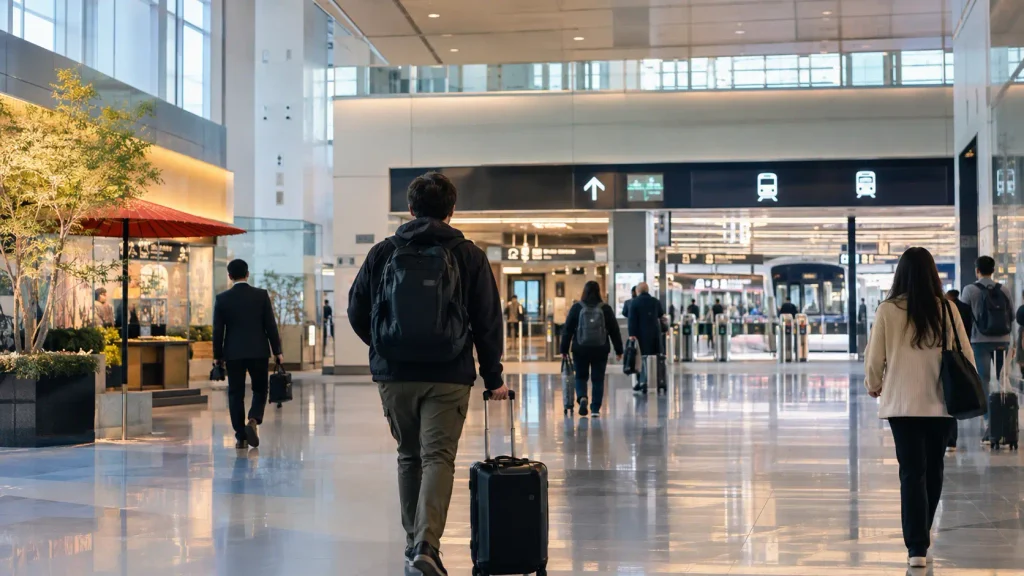
Haneda vs Narita: Which Airport Is Better for First-Time Visitors?
Tokyo has two main international airports: Haneda Airport and Narita Airport.
Haneda is much closer to central Tokyo.
Official JNTO information says the Keikyu Line can reach Shinagawa from Haneda in around 20 minutes. The Tokyo Monorail also reaches Hamamatsucho in around 20 minutes.
Narita Airport is about 60 kilometers east of central Tokyo. It still has good train and bus connections.
| Airport | Haneda | Narita |
| Airport code | HND | NRT |
| Location | Closer to central Tokyo | Farther from central Tokyo |
| Transport | Train, monorail, bus, taxi | Train, bus, taxi |
| First-time convenience | Often easier | Still easy with planning |
Do not choose an airport based only on flight price.
Compare your arrival time, airport transport cost, and hotel location too.
What If Your Flight Arrives Late at Night?
Check your airport transport before booking a late flight.
Tokyo trains do not run all night.
Your final train or bus can depend on the airport, terminal, destination, and day.
Before you fly, check:
- Final train times
- Airport bus times
- Taxi costs
- Airport hotels
- Hotel check-in rules
Do not assume you can always take a train into Tokyo after a late arrival.
Transportation Tips for First-Timers
Japan’s train system looks complex at first.
However, it becomes easier after your first few rides.
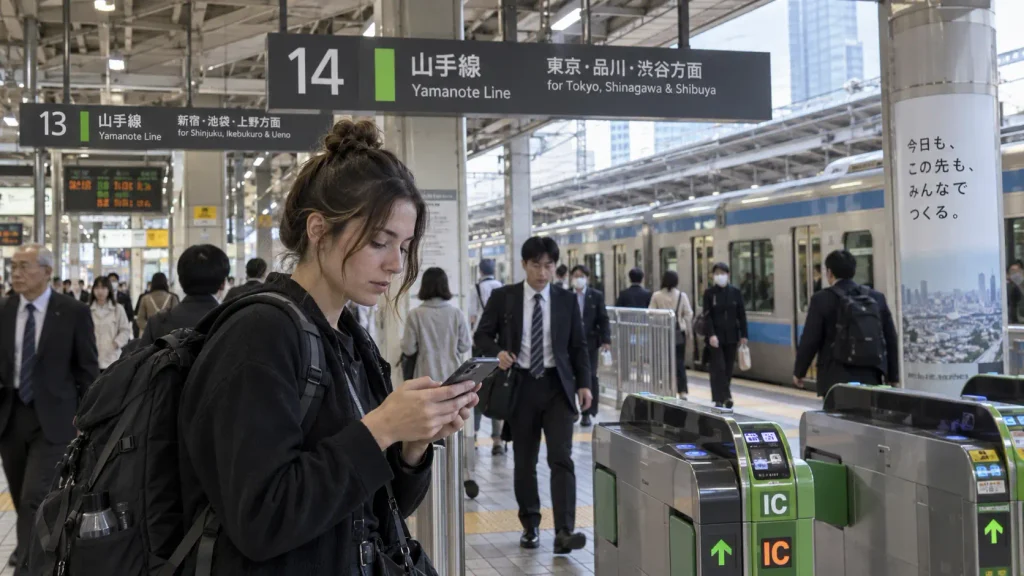
Use Trains and Buses to Get Around
Public transport is usually the easiest way to move around major Japanese cities.
Tokyo has several train and subway companies.
Osaka and Kyoto also use different transport networks.
Do not worry about memorizing every company.
Instead, use a navigation app and follow:
- Train line name
- Train direction
- Platform
- Departure time
- Station name
- Exit number
Arrive at large stations with enough time.
Stations such as Shinjuku can feel like small cities.
Get a Rechargeable IC Card
An IC card is one of the most useful things you can have in Japan.
Popular cards include:
- Suica
- PASMO
- ICOCA
You can tap an IC card when entering and leaving many train stations.
Compatible cards can also work on buses and at convenience stores, vending machines, some taxis, and other businesses.
This means you do not need to buy a paper ticket for every small journey.
Most major IC cards are also widely compatible across Japan, although they are not accepted on every transport service.
2026 Update: TOURIST PASMO
International visitors can now buy TOURIST PASMO at selected locations at Haneda and Narita airports.
It can be used on compatible trains and buses and for payments at participating stores.
TOURIST PASMO is valid for 28 days from the purchase date.
It does not require a deposit.
However, unused stored value is not refundable. Therefore, avoid adding more money than you expect to spend.
IC Card vs JR Pass vs Shinkansen Ticket
First-time visitors often confuse these options.
They do different jobs.
| Option | Best Use |
| IC card | Local trains, subways, buses, and small payments |
| Shinkansen ticket | Individual bullet train journeys between cities |
| JR Pass | Multiple eligible JR journeys during a fixed period |
| Subway or day pass | Frequent local travel on eligible networks |
Which Japan Transport Option Do You Need?
An IC card does not replace every Shinkansen ticket.
A JR Pass is also not automatically the cheapest choice.
Think about your route first. Then choose the option that fits your trip.
Decide Whether You Need the JR Pass
Do not automatically buy a Japan Rail Pass.
Years ago, it was an easy choice for many visitors. Today, you should compare costs first.
The JR Pass provides travel on many JR services for a fixed period.
However, it can cost more than individual tickets if you only take a few long-distance trains.
For example, someone mainly traveling:
Tokyo → Kyoto → Osaka
should compare individual fares with the pass before buying.
Travelers taking many eligible long-distance JR trips may get more value from it.
Also remember that JR Pass holders need an additional special ticket to use NOZOMI and MIZUHO services.
The simple rule is:
Calculate first. Buy second.
Purchase Shinkansen Tickets
The Shinkansen is Japan’s famous bullet train.
It is fast, comfortable, and easy to use once you understand the ticket system.
You can buy tickets at stations and through supported online booking services.
Reserved seats can be useful during busy periods.
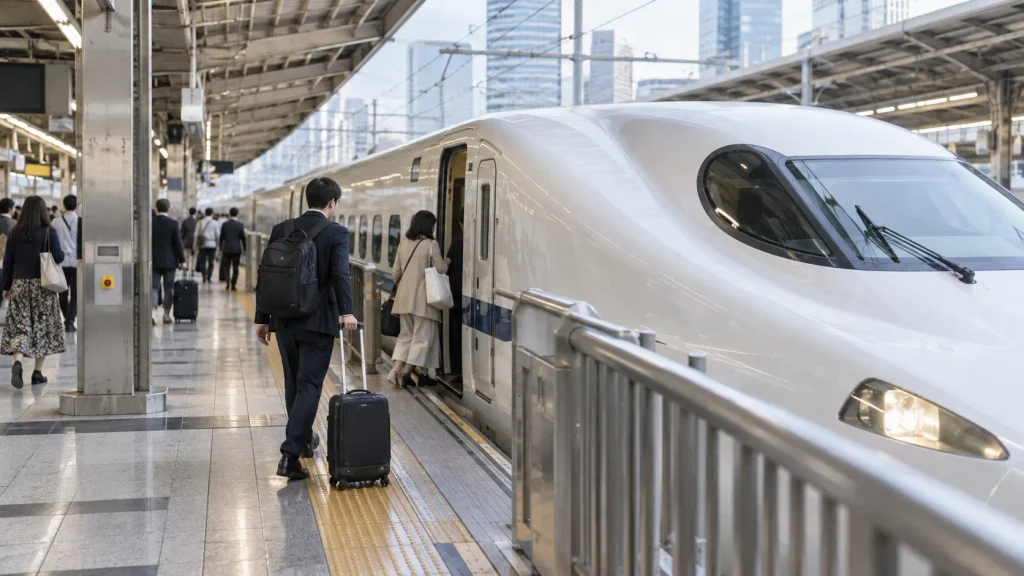
If you travel with a large suitcase, check the baggage rules before boarding.
On relevant Shinkansen services, baggage with combined dimensions of 161 to 250 cm requires a reservation for an oversized baggage space.
Baggage over 250 cm cannot normally be brought onboard under these rules. Traveling with oversized baggage without the required reservation can also lead to a ¥1,000 baggage fee.
If you have large luggage, forwarding it may be easier.
How Luggage Forwarding Works in Japan
Japan’s luggage forwarding services can make a multi-city trip easier.
Instead of taking a large suitcase through busy stations, you can send it to another hotel or airport.
The basic process is simple:
- Ask your hotel whether it offers luggage forwarding.
- Give staff the address of your next hotel.
- Confirm the delivery date.
- Pay the delivery charge.
- Keep important items and a change of clothes with you.
- Confirm that your next hotel accepts forwarded luggage.
Delivery may not happen on the same day.
Keep passports, medicines, chargers, valuables, and anything you need immediately in your carry-on bag.
Understand Connecting and Merging Train Lines
Sometimes a Japanese train continues onto another railway line.
The train may change line names without making every passenger leave.
This can confuse first-time visitors.
Always check your complete route in your navigation app.
Also look at the final destination shown on the train.
If you are unsure, ask station staff.
Showing the station name on your phone is often enough.
Don’t Open Taxi Doors Yourself
Japanese taxis may surprise first-time visitors.
Many taxi doors open and close automatically.
Let the driver control the door.
Do not pull it open unless the driver asks you to.
Also keep your hotel’s Japanese address available.
This can help if the driver does not recognize the English hotel name.
Watch Out for Cyclists
Bicycles are common in Japanese cities.
Some cyclists use shared areas near sidewalks.
Stay aware while walking.
Do not stop suddenly in the middle of busy paths.
Follow local signs and markings when available.
Get an International Driving Permit if Renting a Car
Most first-time visitors do not need a rental car in Tokyo, Kyoto, or Osaka.
Public transport is usually easier.
However, a car can be useful in rural areas.
Short-term U.S. visitors who plan to drive in Japan need the correct International Driving Permit before arriving.
The U.S. State Department states that short-term U.S. visitors should obtain their IDP before entering Japan.
Do not assume your U.S. driver’s license alone is enough.
Japanese Cultural Etiquette
Japanese etiquette may look strict from the outside.
In reality, most basic rules are simple.
Be quiet, be clean, follow signs, and avoid blocking other people.
Avoid Eating While Walking
Eating while walking is less common in Japan than in the United States.
If you buy street food, look for a nearby eating area.
Some food markets have clear spaces for customers.
Follow local signs.
However, eating on long-distance trains such as the Shinkansen is generally common.
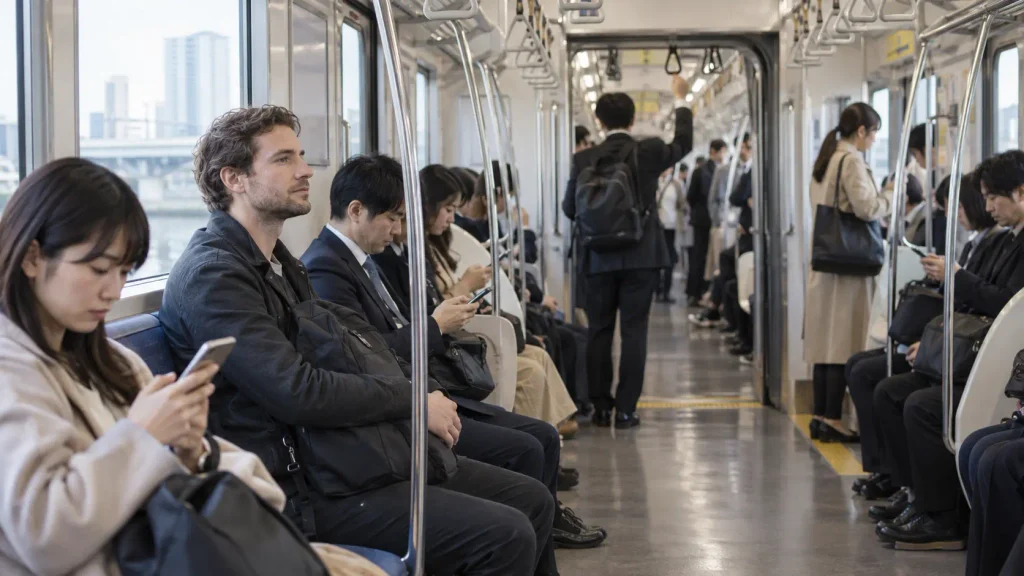
Stay Quiet on Trains
Public trains are usually calm.
Keep your voice low.
Avoid loud phone conversations.
Put your phone on silent when requested.
During busy periods, avoid blocking doors with bags.
Move deeper into the train when possible.
These small actions make travel easier for everyone.
Understand Tipping Culture
You normally do not need to tip in Japan.
This applies to many restaurants, taxis, hotels, and everyday services.
Good service is already part of the experience.
Trying to leave extra cash may sometimes create confusion.
If a business clearly lists a service fee, follow its stated policy.
Practice Politeness
You do not need to know every Japanese custom.
Simple respect goes a long way.
Say thank you.
Wait your turn.
Follow signs.
Do not block doors.
Speak softly in quiet places.
Ask before taking close photos of people.
If you make a mistake, a polite “sumimasen” can help.
Carry Your Rubbish
Japan is known for clean streets.
However, public rubbish bins can sometimes be hard to find.
Carry a small bag for wrappers and other waste.
Dispose of it when you find the correct bin.
Do not leave rubbish beside a full bin.
Tattoos and Onsen Rules
Travelers with tattoos should check an onsen’s rules before visiting.
Tattoo policies are not the same everywhere.
Some hot springs allow tattoos.
Others may ask visitors to cover small tattoos.
Some facilities may not allow tattooed guests inside shared bathing areas.
Check the specific hotel’s, ryokan’s, or onsen’s policy before making a reservation.
Private baths can also be useful for travelers who prefer more privacy.
Japan Etiquette: What to Do and What to Avoid
| Do | Avoid |
|---|---|
| Queue patiently and wait your turn. | Blocking train doors or busy walkways. |
| Keep your voice low on public transport. | Loud phone conversations on trains. |
| Follow local signs and instructions. | Assuming the same rules apply everywhere. |
| Carry rubbish until you find the correct bin. | Leaving rubbish beside a full bin. |
| Ask before taking close photos of people. | Photographing people closely without permission. |
| Check an onsen’s tattoo policy before visiting. | Assuming every hot spring has the same tattoo rules. |
| Use simple polite phrases such as “sumimasen.” | Worrying about knowing every Japanese custom. |
| Follow the business’s stated payment or service policy. | Assuming tipping is expected. |
First-Time Dining in Japan
Food is one of the best reasons to visit Japan.
You do not need to eat at expensive restaurants to eat well.
Small noodle shops, local restaurants, department-store food halls, markets, and convenience stores can all be worth trying.
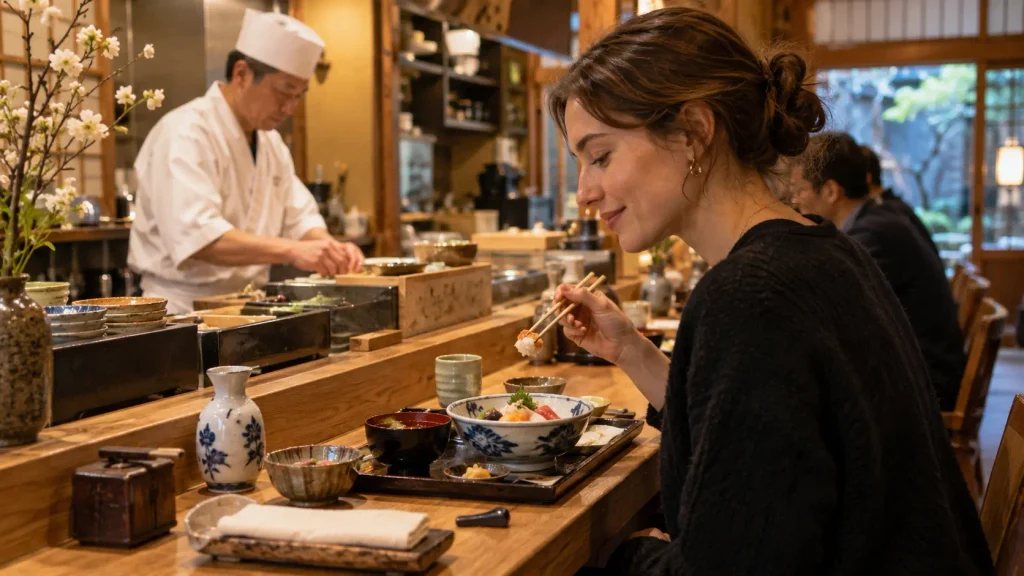
Reserve Restaurants in Advance
Popular restaurants may require reservations.
This is especially true for:
- Fine dining
- Famous sushi restaurants
- Small chef-led restaurants
- Popular seasonal restaurants
Book important meals early.
However, leave some meals open too.
Finding a small local restaurant while exploring can become one of the best parts of your trip.
Understand Restaurant Queues
Popular Japanese restaurants often have lines, especially around lunch and dinner.
However, a long queue does not always mean a restaurant is better than nearby options.
Check the waiting system before joining.
Some restaurants use:
- Physical lines
- Numbered tickets
- Digital waiting lists
- Reservation systems
- Name sheets
Do not assume standing near the entrance automatically puts you in the queue.
Look for signs or ask staff.
Practice Japanese Table Manners
Basic table manners are easy to follow.
Do not stick chopsticks straight into a bowl of rice.
Do not pass food directly from chopsticks to chopsticks.
Use the chopstick rest when one is provided.
At many restaurants, you may receive a wet towel called an oshibori.
Use it to clean your hands.
Watch what local guests are doing if you feel unsure.
Understand Noodle-Slurping Etiquette
Slurping noodles is common in Japan.
You may hear people slurping ramen, soba, or udon.
You do not have to copy them.
However, you do not need to worry if you make some noise while eating noodles.
Eat in a way that feels comfortable and respectful.
What to Do When You Can’t Understand the Menu
Many restaurants in tourist areas have English menus.
Others use photos or food models.
Translation apps also help.
You can photograph a menu and translate the text.
If the restaurant uses a ticket machine, you may need to choose and pay for your meal first. Then give the ticket to the staff.
Keep your order simple if communication is difficult.
Pointing politely can also help.
Traveling With Food Allergies or Dietary Restrictions
Travelers with food allergies should prepare before arriving in Japan.
Do not depend only on menu photos or automatic translation if an allergy could cause a serious reaction.
Translate your allergy information into Japanese before your trip.
A written allergy card can help restaurant staff understand which ingredients you must avoid.
Research suitable restaurants if you follow a:
- Vegetarian diet
- Vegan diet
- Halal diet
- Gluten-free diet
- Other restricted diet
Some Japanese dishes may contain ingredients that are not obvious from the menu.
When you are unsure, ask before ordering.
Visit a Konbini
Japanese convenience stores are called konbini.
Major chains include 7-Eleven, FamilyMart, and Lawson.
They are useful for much more than snacks.
You can find:
- Rice balls
- Sandwiches
- Bento
- Drinks
- Toiletries
- ATMs
- Desserts
- Coffee
- Some over-the-counter items at certain locations
Konbini can be very useful after a late flight or long sightseeing day.
Remember That Some Shops and Restaurants Close Early
Do not assume every Japanese city stays open late.
Some restaurants close earlier than expected.
Others have a break between lunch and dinner.
Smaller towns may become very quiet in the evening.
Check opening hours before traveling across town for one place.
Google listings can also be wrong, so check an official website when possible.
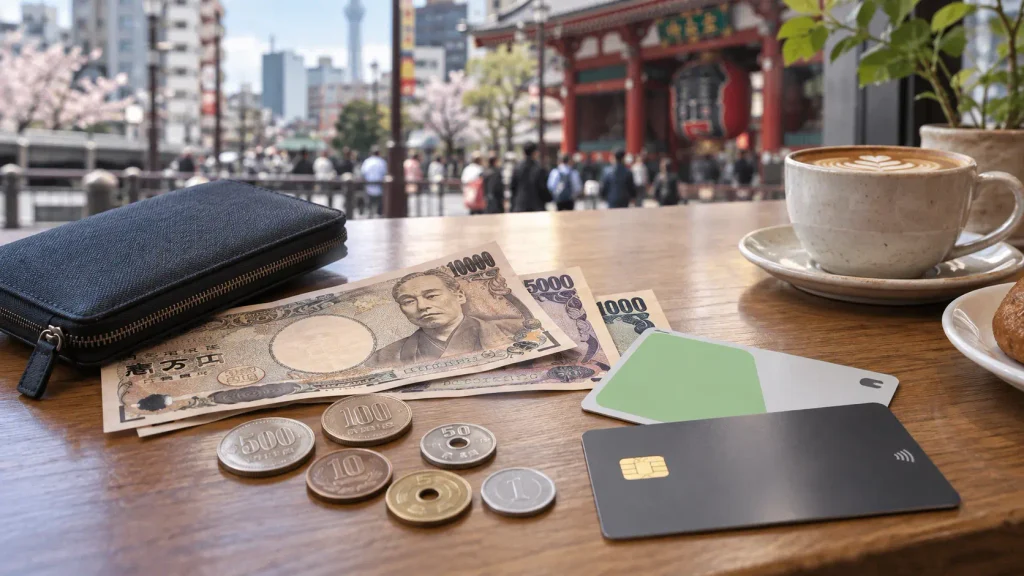
Carry Cash in Japan
Japan uses far more cards and contactless payments than it once did.
Still, cash remains useful.
Some smaller restaurants, temples, local businesses, machines, and rural locations may still require it.
JNTO advises visitors to keep some cash available because some places still do not accept cards.
Do not carry your entire travel budget in cash.
Use a mix of:
- Cash
- Credit card
- Debit card
- IC card
This gives you backup options.
Cash vs Card vs IC Card in Japan
You do not need to rely on only one payment method in Japan. A combination of cash, cards and an IC card gives you more flexibility.
| Payment Method | Useful For |
|---|---|
| Cash | Small restaurants, temples, local businesses, machines and some rural locations. |
| Credit Card | Hotels, larger shops, restaurants and major purchases where cards are accepted. |
| IC Card | Compatible local trains, buses, convenience stores, vending machines and some small purchases. |
| Debit / ATM Card | Withdrawing Japanese yen from compatible ATMs. |
Tip: Keep some yen available even if you plan to use cards for most of your trip.
Use Tourist-Friendly ATMs
Not every ATM works with every foreign bank card.
Seven Bank and Japan Post Bank ATMs are common choices for international visitors.
Check your bank’s foreign transaction and ATM fees before traveling.
When a card machine offers to charge you in dollars or yen, check the exchange rate and fees carefully.
Get a Coin Purse or Wallet With a Coin Pouch
You may collect more coins than expected.
Coins can be useful for:
- Vending machines
- Small purchases
- Lockers
- Cash payments
A wallet with a small coin section can save time.
Use your coins instead of letting them build up for the entire trip.
Packing and Essentials for First-Timers
Japan involves a lot of walking.
You will also use stations, stairs, trains, and smaller hotel rooms.
Pack for movement.
Prioritize Comfortable Walking Shoes
Expect long walking days, especially in major cities such as Tokyo and Kyoto.
Even when you use trains, stations and attractions can involve a lot of walking.
Wear comfortable shoes that you have already tested.
Do not start your trip with brand-new shoes that may cause blisters.
Also remember that some temples, restaurants, ryokan, and homes may ask you to remove your shoes.
Wear clean socks.
Pack Light
Large suitcases become annoying quickly.
They are harder to manage:
- On crowded trains
- Through stations
- On stairs
- Inside small hotel rooms
Pack fewer clothes and use laundry facilities when available.
Japan’s luggage forwarding services can also help on multi-city trips.
Bring Lotion
Japan’s climate may feel different from home.
Winter air can be dry.
Air conditioning can also dry your skin.
A small bottle of lotion can be useful.
However, you can easily buy skincare products in Japan if you run out.
Bring Hand Sanitizer and a Hand Towel
Carry a small hand towel.
Not every public bathroom provides paper towels.
A small towel can also be useful during hot summer weather.
Hand sanitizer is useful during long sightseeing days.
Check Your Power Adapters
Japan mainly uses Type A electrical plugs.
These look similar to two-flat-pin U.S. plugs.
Japan uses 100V electricity.
Many modern phone and laptop chargers accept a wide voltage range.
Check the label on your charger before using it.
Do not assume every U.S. electrical device will work correctly.
Hair tools can be a common problem.
Check their voltage before packing.
Tourist Spots and Avoiding Crowds
Japan is very popular.
Tokyo, Kyoto, Osaka, and famous attractions can become busy.
A little planning can improve your experience.
Visit Popular Places Early
Go early when visiting major attractions.
This can work well for famous temples, shrines, markets, and viewpoints.
Morning visits may mean:
- Smaller crowds
- Better photos
- Cooler weather in summer
- More relaxed sightseeing
Check opening hours first.
Some attractions do not open early.
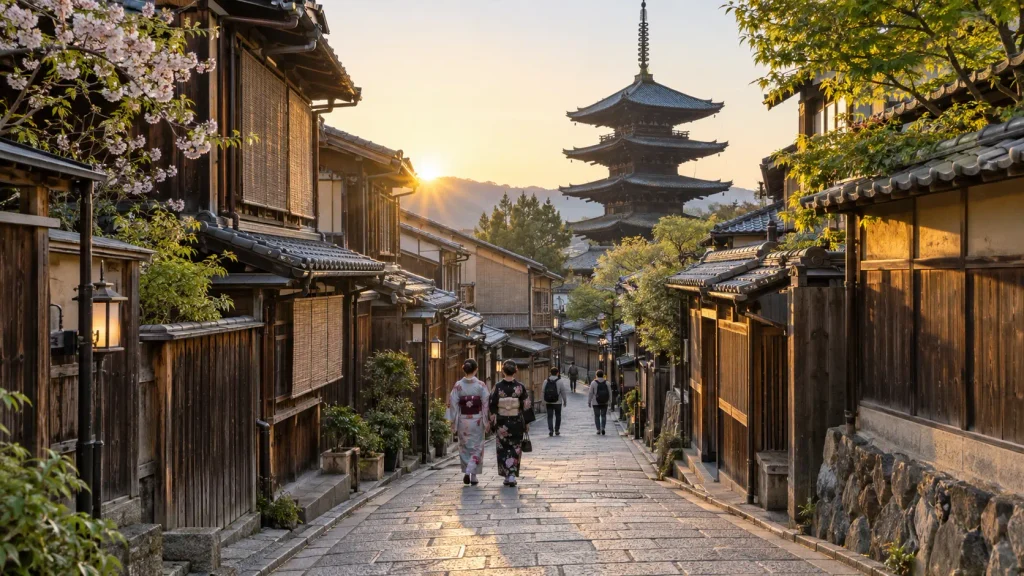
Stay in Less-Touristy Neighborhoods
You do not need to spend every hour around Japan’s most famous landmarks.
Explore local shopping streets and quieter neighborhoods too.
Tokyo has many areas beyond Shibuya and Shinjuku.
Kyoto also has quieter streets away from its most famous temples.
These places can give you a slower view of everyday life.
However, remember that residential neighborhoods are not tourist attractions.
Keep noise low and respect private property.
Plan Tokyo, Kyoto and Osaka
Go deeper with our city guides, sightseeing ideas and easy day trips.
Japan Weather Tips
Weather can change how your trip feels.
Check the season before packing.
Rainy-Day Etiquette
Japan gets plenty of rain.
You can buy affordable umbrellas at convenience stores.
Many businesses provide umbrella stands near entrances.
Some also provide umbrella covers to keep floors dry.
Do not take another person’s umbrella by mistake.
If rain is expected, plan some indoor activities.
Museums, shopping centers, cafés, and covered markets can work well.
Prepare for Summer Heat and Humidity
Japanese summers can feel very hot and humid.
Drink water often.
Take indoor breaks.
Wear light clothing.
Use sunscreen.
Convenience stores and vending machines make it easy to buy cold drinks.
Do not plan every summer day from early morning until late at night.
Heat can make a packed itinerary exhausting.
Your First 24 Hours in Japan
Your first day should be simple.
Jet lag, airport procedures, luggage, and a new transport system can make arrival tiring.
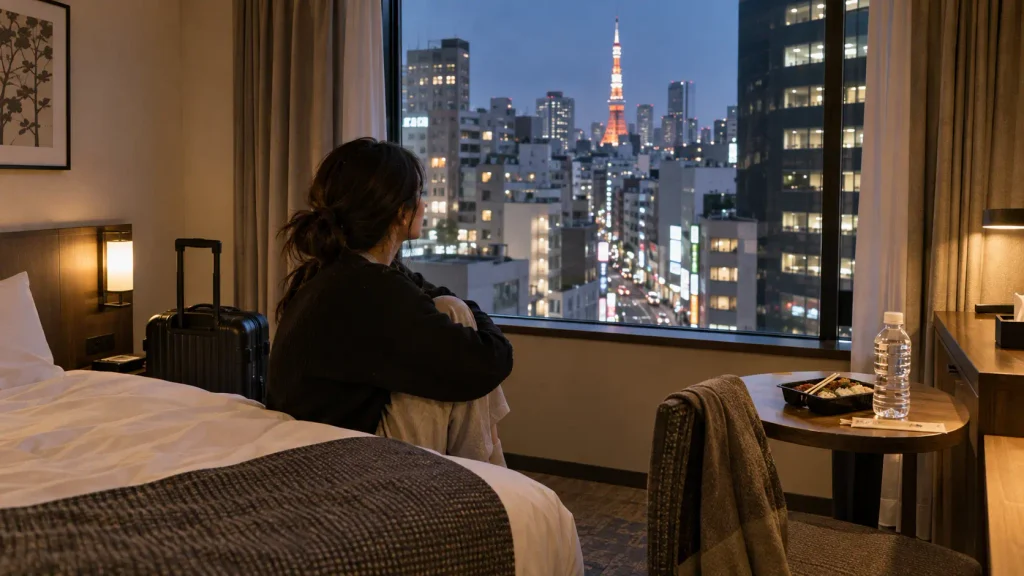
Follow this basic order:
- Complete immigration and customs.
- Connect your phone to your eSIM or WiFi.
- Prepare or buy an IC card.
- Withdraw some yen if needed.
- Confirm your airport-to-hotel route.
- Send large luggage ahead if useful.
- Travel to your hotel.
- Check in or leave your bags.
- Eat somewhere simple nearby.
- Buy water and basic items at a konbini.
- Take a short walk around your hotel area.
- Get enough sleep.
Avoid booking an expensive restaurant or fixed attraction shortly after landing.
Flights can be delayed.
Airport procedures can take time.
Your body may also be tired.
A quiet first evening can make the rest of the trip easier.
Common Mistakes to Avoid on Your First Trip to Japan
Most first-time Japan mistakes are easy to avoid with a little planning. Here are some of the most common ones.
| Common Mistake | Better Approach |
|---|---|
| Trying to visit too many cities. | Use a few main bases and add day trips when they fit your schedule. |
| Automatically buying a JR Pass. | Compare the cost of your planned journeys before buying one. |
| Travelling everywhere with oversized luggage. | Pack lighter or consider luggage forwarding between hotels. |
| Ignoring station exit numbers. | Check the correct exit in your navigation app before leaving the station. |
| Assuming Japan is completely cashless. | Carry some Japanese yen alongside your cards. |
| Planning too much on arrival day. | Keep your first day flexible in case of delays or jet lag. |
| Choosing a hotel only because it is cheaper. | Consider the hotel’s distance from useful train or subway stations. |
| Assuming restaurants and shops stay open late. | Check opening hours before travelling across the city. |
| Wearing brand-new walking shoes. | Bring comfortable shoes you have already tested. |
| Assuming a U.S. prescription is automatically allowed. | Check Japan’s rules for your exact medicine before travelling. |
Other Advice for First-Timers in Japan
A few small details can make a big difference.
Don’t Be Scared of Japanese Toilets
Japanese toilets can look complicated.
Many have buttons for different functions.
Some include:
- Bidet controls
- Heated seats
- Flushing sounds
- Automatic lids
Look for English labels or simple symbols.
The normal flush control may be separate from the electronic buttons.
Make Your Japan Trip Your Own
Do not build your entire trip around social media.
You do not need to visit every viral café, photo spot, or attraction.
Choose places based on your interests.
Love food?
Spend more time at markets and restaurants.
Love anime?
Explore areas linked to anime, games, and pop culture.
Love history?
Give Kyoto and Nara more time.
Love nature?
Add mountains, coastal towns, parks, or rural areas.
Your first Japan trip should feel like your trip.
Common Mistakes First-Time Japan Visitors Should Avoid
Many Japan travel mistakes come from overplanning or making assumptions.
Try to avoid these common problems.
Trying to Visit Too Many Cities
Moving hotels every night wastes time.
Stay longer in fewer places.
Buying the JR Pass Without Checking Prices
A JR Pass does not always save money.
Calculate your route first.
Bringing Huge Luggage Everywhere
Use smaller bags or luggage forwarding.
Large suitcases are difficult in busy stations.
Depending Only on Credit Cards
Cards are widely accepted, but cash still helps.
Keep some yen with you.
Arriving Without Internet
Navigation becomes harder without mobile data.
Set up an eSIM or another connection before or soon after arrival.
Ignoring Medicine Rules
Check your exact prescription before flying.
Japan may regulate it differently from the United States.
Planning Every Minute
Leave room for rest and unexpected discoveries.
You may find places you want to explore longer.
Ignoring the Last Train
Public transport does not run all night.
Check your final train before staying out late.
Choosing a Hotel Only by Price
A cheaper hotel may cost more time and transport money.
Location matters.
Forgetting How Much Walking Japan Requires
Comfortable shoes are important.
Give yourself time to rest.
What to Do in an Emergency in Japan
Save Japan’s main emergency numbers before your trip.
| Situation | Number |
| Police | 110 |
| Fire or ambulance | 119 |
| JNTO Japan Visitor Hotline | 050-3816-2787 |
The Japan Visitor Hotline operates 24 hours a day, 365 days a year.
It offers English, Chinese, and Korean assistance for emergencies, accidents, illness, natural disasters, and general tourism information.
If an earthquake, typhoon, or another natural disaster happens, follow official local instructions.
Keep your phone charged and make sure you can access mobile data.
Frequently Asked Questions About Visiting Japan for the First Time
Is Japan Easy for First-Time Tourists?
Yes. Japan is generally easy to explore once you understand the transport system.
Major stations have English signs, and navigation apps make routes easier.
Good preparation helps even more.
Do Americans Need a Visa to Visit Japan?
U.S. citizens generally do not need a visa for tourist stays of less than 90 days.
You need a passport that is valid for your entire stay and should have proof of onward or return travel.
Should I Get Suica or PASMO?
Either can work well for many tourists in Tokyo.
Both are IC travel cards used for transport and small payments.
Other regions use cards such as ICOCA.
Major compatible IC cards can often be used across different regions, although not on every transport service.
What Is TOURIST PASMO?
TOURIST PASMO is a special IC card for international visitors.
It is sold at selected locations at Haneda and Narita airports.
It is valid for 28 days and has no deposit. However, unused stored value is not refundable.
Is the JR Pass Worth It for a First Japan Trip?
Not always.
It depends on how many eligible long-distance JR journeys you plan to take.
Compare the pass cost with individual train tickets before buying.
Do I Need Cash in Japan?
Yes, carrying some cash is still a good idea.
Credit cards are common, especially in cities, but smaller businesses and some rural locations may still require cash.
Do I Need to Speak Japanese?
No.
You can travel around major tourist areas without speaking Japanese.
However, basic phrases and a translation app can make your trip easier.
How Many Days Are Good for a First Japan Trip?
Around 10 to 14 days works well for many first-time visitors who want to see Tokyo, Kyoto, and Osaka without rushing.
A shorter seven-day trip can also work if you focus on fewer places.
Should I Fly Into Haneda or Narita?
Haneda is usually more convenient for central Tokyo because it is much closer.
Narita is farther away but has strong train and bus links.
Choose based on airfare, arrival time, hotel location, and airport transport.
Should I Use an eSIM or Pocket WiFi?
An eSIM is often easier for one traveler because there is no extra device to carry.
Pocket WiFi can work well for families or groups that need several connected devices.
Can I Bring Prescription Medicine to Japan?
It depends on the medicine and amount.
Many prescription medicines can be brought in limited quantities, but controlled substances may need permission or may be prohibited.
Check Japan’s Ministry of Health rules for your exact medicine before departure.
Can I Bring Adderall to Japan?
U.S. travelers should not assume that an American prescription makes Adderall legal in Japan.
The U.S. State Department specifically warns that Adderall is illegal in Japan even with a U.S. prescription.
Check official medicine rules well before traveling.
Can Tourists With Tattoos Use an Onsen?
It depends on the facility.
Some onsens allow tattoos, some may require small tattoos to be covered, and others may restrict tattooed guests.
Check the specific facility before booking.
How Does Luggage Forwarding Work in Japan?
Many hotels can help send luggage to your next hotel or another destination.
You give them the delivery details, pay the fee, and keep a smaller bag with anything you need before the luggage arrives.
Always confirm that your next hotel accepts forwarded bags.
What Are Japan’s Emergency Numbers?
Call 110 for police.
Call 119 for fire or ambulance.
The JNTO Japan Visitor Hotline is 050-3816-2787 and operates 24 hours a day throughout the year.
Final Thoughts
Japan can look complicated before your first visit.
However, most travelers become much more comfortable after their first day.
The most useful Japan travel tips first time visitors should remember are simple.
Prepare your entry documents.
Check your medicine.
Get reliable internet.
Learn how IC cards work.
Compare train passes before buying.
Carry some cash.
Pack light.
Respect local customs.
Most importantly, do not rush.
You do not need to understand every part of Japan before you arrive.
Learn the basics first. Then give yourself time to enjoy the country.
A well-planned first trip can take you from Tokyo’s busy streets to Kyoto’s temples and Osaka’s food scene without feeling overwhelmed.
Prepare well, stay flexible, and let Japan surprise you.

1 Comment
Pingback: Japan Train Travel Guide How to Travel Japan by Train - myglobejourney.com