
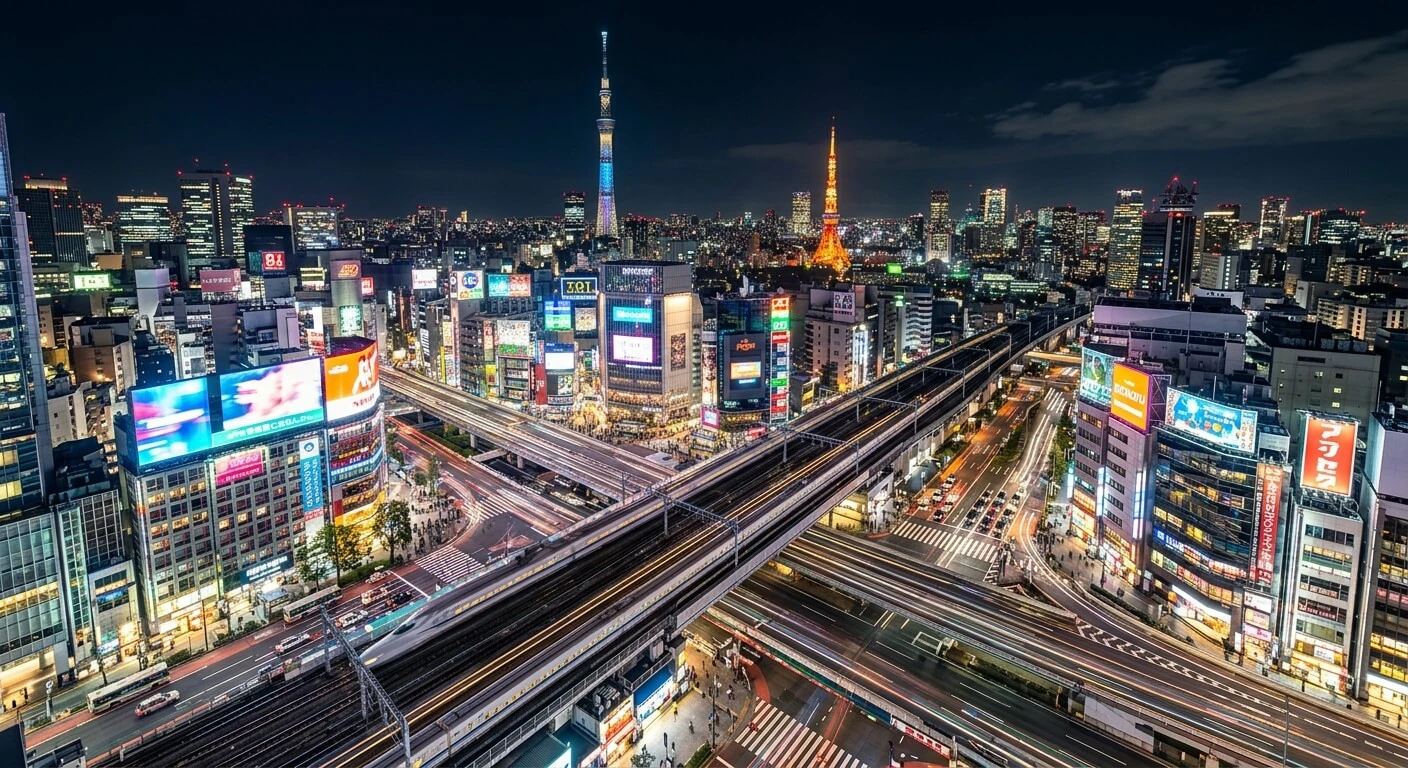

Planning a Japan 2 week itinerary can feel difficult at first. Japan has many cities, temples, food districts, mountain towns, and day trips. Two weeks sounds like a long time. However, it can disappear quickly if your route is not planned well.
For a first trip, you do not need to see everything.
This 14-day Japan itinerary focuses on Tokyo, Mt Fuji, Kyoto, Hiroshima, Osaka, and nearby day trips. It gives you a mix of modern cities, Japanese history, food, temples, nature, and local culture.
The route also limits unnecessary backtracking. You will spend several nights in major cities instead of changing hotels every day.
For most first-time travelers, this gives a much better balance between sightseeing and enjoying the trip.
Quick Tips
A few simple choices can make your two weeks in Japan much easier.
First, do not pack every day with attractions. Japan often involves more walking than expected. Train stations can also be large.
Second, group nearby attractions together. Do not cross Tokyo several times in one day.
Third, leave some free time in your schedule. Weather, jet lag, crowds, and shopping can change your plans.
An IC card is useful for local transportation. Cards such as Suica and PASMO work on many trains, subways, and buses. They can also be used for some small purchases. Special tourist IC cards are available as well.
However, an IC card is not the same as a Japan Rail Pass.
For long-distance Shinkansen trips, compare individual tickets with the JR Pass before buying anything.
As of August 2026, the Ordinary 14-day Japan Rail Pass costs ¥80,000 for an adult. Overseas agency purchases will increase to ¥84,000 from October 1, 2026, while JR has said its online price will remain unchanged for a limited period.
Also, travel with a smaller suitcase when possible.
On the Tokaido, Sanyo, and Kyushu Shinkansen, luggage with combined dimensions of more than 160 cm and up to 250 cm requires a reservation for a seat with an oversized baggage area.
Luggage delivery is another option. Many major hotels can arrange hotel-to-hotel delivery. Airports and some convenience stores also offer luggage services.
Wondering what this itinerary will cost? Our guide on how much two weeks in Japan costs breaks down flights, hotels, food and rail passes.
When to Visit Japan
There is no single perfect month for everyone.
Your best time depends on weather, crowds, prices, and what you want to see.
Spring is one of the most popular seasons. Cherry blossoms attract many visitors. However, bloom dates change each year and by location.
Late April also leads into Golden Week. This is one of Japan’s busiest domestic travel periods. Trains and hotels can become crowded or fully booked.
Summer brings warmer weather and higher humidity to many parts of Japan. It can still be a good season for festivals and mountain trips.
Fall offers cooler weather and autumn colors. It is a popular season for walking, temples, and gardens.
Winter can work well if you enjoy colder weather, hot springs, snow, or smaller crowds in some areas.
For this Japan 2 week itinerary, spring and fall offer an easy balance for many first-time visitors.
However, avoid Golden Week if your dates are flexible.
Which Cities to Visit
For your first two weeks in Japan, focus on a small number of strong bases.
This route uses:
Tokyo for modern Japan, food, shopping, temples, and neighborhoods.
Fujinomiya and the Mt Fuji area for nature and mountain views.
Kyoto for temples, traditional streets, gardens, and Japanese history.
Hiroshima for modern history and access to Miyajima.
Osaka for food, nightlife, shopping, and an easy day trip to Nara.
These destinations create a good first look at Japan.
You also avoid the common mistake of trying to visit ten cities in fourteen days.
Tokyo, Kyoto, and Osaka deserve several days each. Hiroshima and the Fuji area work better as shorter stays.
Nara and Miyajima can be visited as day trips.
This approach also means fewer hotel changes.
How to Get There
Most visitors from the United States arrive by air.
Tokyo has two main airports: Haneda Airport and Narita Airport.
Haneda is closer to central Tokyo. JNTO currently describes it as around 30 minutes from central Tokyo by train.
Narita is farther away. However, trains and buses connect it with major parts of Tokyo.
The Narita Express can reach Tokyo Station in just under an hour.
If airfare is similar, Haneda is usually more convenient for a Tokyo stay.
Another option is an open-jaw flight.
For example:
Fly into Tokyo → travel across Japan → fly home from Osaka.
This can reduce backtracking.
However, airfare can change greatly. Compare both options before booking.
If you return to Tokyo, make sure you leave enough time before your international flight.
Planning This Japan 2 Week Itinerary From the USA
Travelers coming from the United States should plan the trip slightly differently from someone already traveling in Asia.
First, decide whether you want a round-trip flight or an open-jaw flight.
Option 1: Fly Into and Out of Tokyo
Your route becomes:
USA → Tokyo → Japan itinerary → Tokyo → USA
This can make flight shopping simple.
However, you must return to Tokyo at the end of your trip.
That means another long train journey if you finish in Osaka.
Option 2: Fly Into Tokyo and Home From Osaka
Your route becomes:
USA → Tokyo → Mt Fuji → Kyoto → Hiroshima → Osaka → USA
This removes the need to return across Japan only to catch your flight home.
The airfare may be higher or lower depending on your dates.
Compare the airfare difference with the cost and time of returning to Tokyo.
Do US Travelers Need a Visa for Japan?
US passport holders are currently included in Japan’s visa-exemption arrangements for short-term visits.
The standard period granted to US visitors under this arrangement is 90 days.
Entry rules can change.
Always check Japan’s Ministry of Foreign Affairs before departure.
Leave Space for Jet Lag
Do not make your first day one of the busiest days of the trip.
Use it for:
- Hotel check-in
- A short neighborhood walk
- A simple dinner
- An early night
Save your full Tokyo sightseeing days for after you have rested.
This is one reason Day 1 of this itinerary stays light.
How to Get Around
Japan’s railway system makes this itinerary possible without renting a car.
Use local trains and subways inside Tokyo, Kyoto, and Osaka.
Use the Shinkansen for longer journeys between major cities.
An IC card makes local travel simpler.
Suica and PASMO are prepaid stored-value cards. They work on many JR trains, subways, buses, and private railways across Japan.
You do not need to buy a paper ticket for every eligible local train ride if you use an IC card.
However, the JR Pass works differently.
Do not buy a 14-day JR Pass simply because you are staying in Japan for 14 days.
Calculate the long-distance trips first.
JR Pass vs Individual Tickets for This Route
Do not buy a Japan Rail Pass only because your trip lasts two weeks.
First, calculate the journeys you will actually take.
For this itinerary, the main long-distance routes are:
| Journey | What to Check |
| Tokyo → Mt Fuji area | Train or train-and-bus combination |
| Mt Fuji area → Kyoto | Local connection plus Shinkansen |
| Kyoto → Hiroshima | Shinkansen |
| Hiroshima → Shin-Osaka | Shinkansen |
| Shin-Osaka → Tokyo | Shinkansen if returning to Tokyo |
Then compare your total with the price of the Japan Rail Pass.
As of August 2026, the Ordinary 14-day adult Japan Rail Pass costs ¥80,000.
For overseas agency purchases made on or after October 1, 2026, the price will rise to ¥84,000. JR’s online purchasing service remains at ¥80,000 for a limited period.
There is another important detail.
The standard Japan Rail Pass covers Hikari and Kodama services on the Tokaido Shinkansen.
It does not cover a normal Nozomi journey by itself.
Pass holders can use Nozomi by buying an extra Nozomi/Mizuho ticket before boarding.
The current extra charge for Tokyo or Shinagawa to Kyoto is ¥4,960 per adult.
A Simple JR Pass Test
Use this method:
Step 1: Add the cost of your major JR journeys.
Step 2: Add any local or private railway travel that the pass will not cover.
Step 3: Compare that total with the JR Pass price.
Step 4: Consider convenience as well as savings.
If individual tickets cost much less, skip the national pass.
If the totals are close and you plan several extra JR journeys, the pass may offer more value.
Suica vs JR Pass vs Shinkansen Tickets
First-time visitors often confuse these options.
They do different jobs.
| Option | What It Does | Best Use |
| Suica, PASMO, or another IC card | Stores money for tap-and-go payments | Local trains, subway, buses, and small purchases |
| Shinkansen ticket | Pays for a bullet train journey | Travel between major cities |
| Japan Rail Pass | Covers eligible JR services during a fixed period | Travelers making enough covered JR journeys |
| Regional rail pass | Covers selected transport in one area | Travelers exploring one region heavily |
An IC card is not an unlimited travel pass.
Think of it as a rechargeable travel wallet.
JNTO says IC cards can be used across many transportation networks and for some small purchases.
For this itinerary, many travelers may find it easier to use an IC card locally and buy separate Shinkansen tickets.
Is This 14 Days in Japan or 14 Days Including Flights?
There is an important difference between 14 days in Japan and a 14-day vacation from the USA.
This main itinerary assumes you have about 14 usable days in Japan.
If your entire vacation lasts only 14 calendar days, including international flights, you will have less sightseeing time.
In that case, remove one or two stops instead of rushing through the same route.
A shorter version could skip Hiroshima or the overnight Fuji stop.
Another option is to finish in Osaka and fly home from the Kansai region instead of returning to Tokyo.
For most first-time visitors, fewer stops create a better trip.
You spend less time checking out of hotels, moving luggage, and traveling between stations.
Our 2-Week Japan Itinerary At A Glance: Why This Route Wins
This Japan 2 week itinerary gives the largest amount of time to Tokyo and Kyoto.
It then adds Mt Fuji, Hiroshima, Osaka, Miyajima, and Nara without creating too many hotel changes.
| Day | Destination | Main Focus |
| Day 1 | Tokyo | Arrival and easy sightseeing |
| Day 2 | Tokyo | Shibuya, Harajuku, Shinjuku |
| Day 3 | Tokyo | Asakusa, Ueno, Akihabara |
| Day 4 | Tokyo | Flexible Tokyo day |
| Day 5 | Tokyo day trip | Kamakura or another day trip |
| Day 6 | Mt Fuji area | Fujinomiya and Mt Fuji |
| Day 7 | Kyoto | Travel and Gion |
| Day 8 | Kyoto | Higashiyama and temples |
| Day 9 | Kyoto | Arashiyama and west Kyoto |
| Day 10 | Kyoto → Hiroshima | Final Kyoto sights and travel |
| Day 11 | Hiroshima | Hiroshima |
| Day 12 | Miyajima → Osaka | Miyajima and travel |
| Day 13 | Osaka | Osaka or Nara |
| Day 14 | Osaka → Tokyo | Final sightseeing and return |
You can also fly home from Osaka after Day 14.
If you do that, there is no need to return to Tokyo.
Daily Pace and Planning Guide
Two itineraries can include the same places but feel very different.
This table shows how demanding each day may feel.
| Day | Plan | Walking | Travel | Hotel Change | Planning Level |
| 1 | Arrive in Tokyo | Light | High | Yes | Easy |
| 2 | Western Tokyo | High | Low | No | Easy |
| 3 | Eastern Tokyo | High | Low | No | Easy |
| 4 | Flexible Tokyo day | Moderate | Low | No | Flexible |
| 5 | Tokyo day trip | Moderate | Moderate | No | Moderate |
| 6 | Mt Fuji area | Moderate | Moderate | Yes | Weather dependent |
| 7 | Travel to Kyoto | Moderate | High | Yes | Moderate |
| 8 | Eastern Kyoto | High | Low | No | Early start |
| 9 | Arashiyama | High | Moderate | No | Early start |
| 10 | Kyoto to Hiroshima | Moderate | High | Yes | Moderate |
| 11 | Hiroshima | Moderate | Low | No | Easy |
| 12 | Miyajima and Osaka | High | High | Yes | Busy |
| 13 | Osaka or Nara | Moderate to High | Low to Moderate | No | Flexible |
| 14 | Tokyo or departure | Light | High | Possible | Flexible |
Days 8, 9, and 12 are likely to feel the busiest.
Do not worry if you skip an attraction on these days.
The goal is not to complete a checklist.
Use Days 4 and 13 as flexible days if weather, tiredness, or delays change your plans.
2-Week Japan Itinerary
DAYS 1 – 4: TOKYO
Tokyo deserves several days on a first trip.
The city is huge, but you do not need to race across it.
Instead, divide your sightseeing by area.
Day 1 should stay easy.
International travel can leave you tired.
Check into your hotel and explore your local area.
If you stay in Shinjuku, spend your evening walking around the neighborhood.
Have ramen, sushi, or another simple meal.
Then get an early night.
On Day 2, explore western Tokyo.
Start around Meiji Shrine.
Then walk toward Harajuku and Omotesando.
Continue toward Shibuya later in the day.
See Shibuya Crossing.
Explore the nearby streets.
If you want a city view, add an observation deck before dinner.
End your evening in Shibuya or Shinjuku.
On Day 3, explore eastern Tokyo.
Visit Asakusa and Senso-ji first.
After that, continue toward Ueno.
If you enjoy museums, spend more time around Ueno Park.
Later, visit Akihabara for electronics, gaming, anime, and bright city streets.
On Day 4, keep your schedule flexible.
You could explore Ginza, Tsukiji, Odaiba, Tokyo Station, or another neighborhood that matches your interests.
You could also use this day for an attraction that requires advance tickets.
This extra time makes the itinerary easier to adjust.
Ideas for things to do in Tokyo
Tokyo offers very different experiences within the same city.
Popular first-time choices include:
- Meiji Shrine
- Harajuku
- Shibuya Crossing
- Shinjuku
- Senso-ji
- Asakusa
- Ueno
- Akihabara
- Tsukiji Outer Market
- Ginza
- Tokyo Station area
Do not try to visit all of these in one day.
Instead, group nearby places together.
This reduces train time.
It also gives you more time to walk and explore.
Where you stay also matters.
Shinjuku works well for nightlife and train connections.
Shibuya suits travelers who want shopping and busy city energy.
Asakusa offers a quieter, more traditional feel.
Tokyo Station can be useful if you want easy access to long-distance trains.
Where to eat in Tokyo
Tokyo is one of the best parts of this trip for food.
You do not need expensive restaurants every night.
Try ramen, sushi, yakitori, tonkatsu, udon, soba, curry, and tempura.
Department store food halls are also useful.
Convenience stores can work for a quick breakfast or snack.
However, leave room for at least one special meal.
Instead of building your schedule around famous restaurants, choose a neighborhood first.
Then find a good place nearby.
This stops you from wasting an hour crossing Tokyo just for lunch.
DAYS 5 – 6: Day trips from Tokyo (including Mt Fuji)
After four days in Tokyo, use the next two days to see a different side of Japan.
You have several options.
Kamakura is a good choice for temples and a coastal atmosphere.
Nikko offers shrines, forests, and mountain scenery.
Yokohama works well if you want another major city.
Mt Fuji should get its own day if seeing the mountain is a priority.
Weather can affect visibility.
Therefore, keep your Fuji plans flexible where possible.
Select two separate day trips
For most first-time travelers, this route uses:
Day 5: Kamakura
Day 6: Mt Fuji area
Kamakura gives you a slower day after Tokyo.
You can explore temples, shrines, traditional streets, and the coast.
Then return to Tokyo for your final night in the city.
On Day 6, leave Tokyo and head toward the Fuji area.
If the weather is poor, consider changing your plans.
There is little value in forcing a mountain-view trip on a day with very poor visibility.
Overnight in Fujinomiya
Fujinomiya can work well if you want to see Mt Fuji from a different base.
Spend your afternoon exploring the area.
Then stay overnight before continuing toward Kyoto.
An overnight stay also gives you another chance for Fuji views the next morning.
Keep this night simple.
You are changing regions the following day, so do not plan a late evening.
DAYS 7 – 10: KYOTO
Kyoto is one of the most important stops on this Japan 2 week itinerary.
Give it at least three full sightseeing days where possible.
The city has many famous temples and shrines.
However, they are spread across different areas.
Good planning matters.
Use Day 7 as your arrival and orientation day.
Check into your hotel.
Then walk around Gion and nearby traditional streets.
Keep your evening relaxed.
On Day 8, focus on eastern Kyoto.
Start early around Kiyomizu-dera.
Then explore the preserved streets of Higashiyama.
Continue toward Gion later in the day.
On Day 9, explore Arashiyama and western Kyoto.
Start early if the bamboo grove matters to you.
Then spend time at temples and gardens nearby.
On Day 10, use the morning for any Kyoto sights you missed.
Then travel to Hiroshima.
Getting from Tokyo to Kyoto
The Shinkansen is the easiest way to travel between Tokyo and Kyoto.
JR Central currently lists the Tokyo to Kyoto Shinkansen trip at about 130 minutes.
Book ahead when you travel during busy dates.
Also check your suitcase size before boarding.
Oversized bags may require a special seat reservation.
If you do not want to carry large bags between hotels, luggage forwarding can help.
Many major hotels can arrange delivery to your next hotel.
Where to eat in Kyoto
Kyoto has everything from simple noodle shops to formal dining.
Try local dishes, tofu cuisine, soba, udon, tempura, sushi, and matcha desserts.
Nishiki Market is also popular for food and snacks.
However, avoid making every meal a major event.
Temple days can involve a lot of walking.
A quick lunch can sometimes help you keep a better pace.
Save your longer meal for the evening.
Gion and downtown Kyoto offer many choices.
Ideas for things to do in Kyoto
Good first-time Kyoto choices include:
- Kiyomizu-dera
- Gion
- Fushimi Inari Taisha
- Arashiyama
- Kinkaku-ji
- Nishiki Market
- Nijo Castle
- Philosopher’s Path
- Kyoto Imperial Palace area
Do not put Fushimi Inari, Arashiyama, and eastern Kyoto into the same rushed morning.
Instead, divide the city by area.
Start early at your most popular attraction.
Then move through nearby sights.
Kyoto becomes much more enjoyable when you stop racing between temples.
Advance tickets for activities in Kyoto
Some Kyoto experiences should be planned before arrival.
Special cultural experiences, popular restaurants, and limited-entry attractions can fill up.
Your exact booking window depends on the activity.
Make a list of your must-do experiences before you fly.
Book anything that would seriously disappoint you if it sold out.
Leave normal temples, walks, and markets more flexible.
DAYS 10 – 12: HIROSHIMA
Day 10 becomes your transition from Kyoto to Hiroshima.
Do not fill the morning with too many Kyoto attractions.
Enjoy one or two final places.
Then travel west.
After arriving in Hiroshima, check into your hotel.
Use the evening for a quiet walk and dinner.
On Day 11, focus on Hiroshima.
If Hiroshima’s history matters most to you, start around the Peace Memorial area.
Give yourself enough time.
Do not treat it like a quick photo stop.
On Day 12, visit Miyajima in the morning.
Then travel to Osaka later in the day.
This creates a more realistic pace than trying to fit Hiroshima and Miyajima into one rushed day.
Getting from Kyoto to Hiroshima
The Shinkansen makes the Kyoto to Hiroshima route straightforward.
Still, this is a travel day.
Do not judge the journey only by train time.
You must also check out, reach the station, find your platform, arrive, and reach your next hotel.
That is why Day 10 works better as a half sightseeing day.
Reserve your seat if you travel during a busy period.
If you have large luggage, check the baggage rules before boarding.
Where to stay in Hiroshima
Stay close to public transportation or the central sightseeing area.
A central hotel reduces wasted travel time.
It also makes your evening easier after arriving from Kyoto.
For a short stay, convenience matters more than choosing the most stylish neighborhood.
Where to eat in Hiroshima
Try Hiroshima-style okonomiyaki while you are in the city.
You will find many casual restaurants serving it.
Seafood is another good choice.
Keep your first dinner flexible.
Train delays or a slower Kyoto morning can change your arrival time.
Your second day is better for a planned restaurant.
Ideas for things to do in Hiroshima
The most common first-time stops include Hiroshima Peace Memorial Park and nearby historic sites.
You can also explore Hiroshima Castle and local shopping areas.
However, the key reason many first-time travelers add Hiroshima is its history.
Give that part of the trip enough time and respect.
Do not schedule five major attractions around it.
A slower pace works better here.
OPTIONAL: Day trip from Hiroshima to Miyajima (Itsukushima Shrine)
Miyajima is one of the easiest ways to add nature, temples, and coastal scenery to this route.
You can visit it from Hiroshima.
Itsukushima Shrine is the island’s best-known sight.
You can also walk through the town, see temples, enjoy local food, and spend more time around the mountain area.
For this route, the morning of Day 12 works well.
Visit Miyajima first.
Then continue to Osaka in the afternoon or evening.
DAYS 12 – 14: OSAKA
Osaka feels very different from Kyoto.
That contrast is part of the reason it belongs on a first Japan trip.
Kyoto offers temples and traditional streets.
Osaka brings street food, shopping, nightlife, and a more casual city atmosphere.
Arrive on Day 12.
Check into your hotel.
Then spend your evening around Dotonbori and Namba.
On Day 13, explore Osaka properly.
You can choose Nara instead if temples, history, and Nara Park interest you more than Osaka.
However, if this is your first visit to Osaka, spending Day 13 in Osaka gives you a more balanced itinerary.
On Day 14, enjoy your final morning.
Then either return to Tokyo or travel to your departure airport.
If you are flying home from Osaka, there is no reason to return to Tokyo.
Getting from Hiroshima to Osaka
Travel from Hiroshima toward Shin-Osaka by Shinkansen.
Then use local transportation to reach your hotel area.
Namba is a strong base if food and nightlife are priorities.
Umeda can be more useful for railway connections.
Try to arrive before evening.
That gives you time to check in and enjoy Osaka without rushing.
Where to stay in Osaka
Namba works very well for a first visit.
Dotonbori, restaurants, shopping, and nightlife are close.
Umeda is another strong option.
It offers large shopping centers and good transportation links.
If you only have two nights, choose convenience over saving a small amount on a hotel far outside the center.
A central location can save valuable time.
Where to eat in Osaka
Food should be a major part of your Osaka visit.
Try takoyaki and okonomiyaki.
You can also find sushi, ramen, yakiniku, kushikatsu, and many casual local dishes.
Dotonbori is famous and busy.
You do not need to eat at the most photographed restaurant.
Walk a few streets away from the busiest signs.
You may find a calmer meal.
Ideas for things to do in Osaka
Popular first-time options include:
- Dotonbori
- Namba
- Kuromon Market
- Shinsekai
- Osaka Castle area
- Umeda
- Shinsaibashi
Choose the places that match your interests.
If nightlife matters, save energy for the evening.
If history matters more, spend extra time around Osaka Castle.
If food is your priority, keep your schedule loose.
That gives you time to stop when something looks good.
OPTIONAL: Day trip from Osaka or Kyoto to Nara
Nara is one of the easiest day trips on this route.
You can visit from Kyoto or Osaka.
For this schedule, Day 13 is the easiest option.
However, there is an important trade-off.
If you visit Nara on Day 13, you will have much less time to explore Osaka.
Choose Nara if temples, historic sites, and Nara Park are a bigger priority.
Choose Osaka if food, nightlife, shopping, and city neighborhoods matter more.
You do not need to stay overnight in Nara on a first trip.
Ideas for things to do in Nara
Keep your first Nara visit focused.
Walk through Nara Park.
Visit Todai-ji.
Explore nearby temple and shrine areas.
Take your time.
Nara works best as a walking day.
Wear comfortable shoes.
If you are tired after almost two weeks of travel, skip Nara.
A free day in Osaka is a perfectly good alternative.
DAY 14: TRANSIT TO TOKYO
If your return flight leaves from Tokyo, Day 14 becomes another travel day.
Do not put an important paid attraction in Osaka that morning.
Have breakfast.
Take a final walk.
Then begin your journey toward Tokyo.
If your international flight leaves the following day, spend your final evening near Tokyo Station, Shinagawa, or another area with an easy airport connection.
This reduces stress.
If you only have 14 calendar days including your flight home, shorten the route.
Do not force the full itinerary into less time.
Getting back to Tokyo from Kyoto or Osaka
The Shinkansen is the normal choice for this route.
Book ahead if you travel during a holiday or another busy period.
The 14-day JR Pass does not automatically save money simply because your trip lasts two weeks.
Compare your own ticket total first.
TRANSIT: Tokyo from/to Haneda or Narita Airports
Both airports work for this itinerary.
However, they are not equally close to central Tokyo.
Haneda is generally easier for travelers staying in Tokyo.
Narita is farther away but has strong rail and bus connections.
Always check which airport appears on your ticket.
HND means Haneda.
NRT means Narita.
Confusing the two can create a major problem on departure day.
How to get to/from Tokyo via Haneda Airport
Haneda is around 30 minutes from central Tokyo by train.
The Keikyu Line connects the airport with Shinagawa.
The Tokyo Monorail connects it with Hamamatsucho.
Choose your route based on your hotel.
Do not automatically travel through Tokyo Station if another connection is easier.
How to get to/from Tokyo via Narita Airport
Narita sits outside central Tokyo.
The Narita Express connects the airport with major stations.
JNTO says the Narita Express reaches Tokyo Station in just under an hour.
The Keisei Skyliner is another useful option for travelers staying near Ueno or Nippori.
Choose the train that best matches your hotel location.
Money saving tips for Tokyo transport
Use an IC card for normal local transportation.
It saves you from buying a paper ticket for every eligible journey.
However, do not confuse convenience with unlimited travel.
The card uses stored value.
Also, avoid unnecessary train journeys.
Good neighborhood planning can save both time and money.
For example, combine Harajuku, Shibuya, and Shinjuku.
Then place Asakusa, Ueno, and Akihabara on another day.
Two weeks in Japan budget: How much does it cost?
The cost of two weeks in Japan can vary greatly.
Flights, hotel dates, room type, food, attractions, transportation, and shopping all change the final amount.
There is no single correct two-week Japan budget.
Use a range instead of one fixed number.
A simple planning budget could look like this:
| Travel Style | 14-Day Land Budget Per Person | Flights |
| Budget | About $1,400–$2,000 | Extra |
| Mid-range | About $2,100–$3,100 | Extra |
| Comfortable | $3,500+ | Extra |
These are broad planning ranges, not live quotes.
Hotel prices can change greatly by city, season, and booking date.
Cherry blossom season, Golden Week, premium hotels, fine dining, theme parks, and last-minute reservations can push costs much higher.
A better way to build your budget is to price these categories separately:
- International flights
- Hotels
- Shinkansen tickets
- Local transport
- Food
- Attractions
- Internet access
- Travel insurance
- Shopping
- Emergency buffer
2 weeks in Japan cost for two adults
For two adults, build your budget from real hotel and train prices for your travel dates.
Start with accommodation.
Then calculate the major Shinkansen journeys.
Add a daily food and local transport allowance.
Finally, add attractions, shopping, and an emergency buffer.
This gives you a much more useful number than copying another traveler’s total.
Hiroshima vs Hakone vs Japanese Alps: Which Should You Choose?
Two weeks is not enough to see every famous part of Japan.
At some point, you need to choose.
Hiroshima, Hakone, Fujinomiya, and the Japanese Alps offer very different experiences.
| Destination | Best For | Main Advantage | Main Trade-Off |
| Hiroshima | History and culture | Peace Memorial sites and Miyajima | Adds another long-distance stop |
| Hakone | Onsen and relaxation | Ryokan experience and Fuji-area scenery | Fuji views depend on weather |
| Japanese Alps | Mountains and traditional towns | Smaller cities and mountain scenery | More transport planning |
| Fujinomiya | Mt Fuji focus | A quieter Fuji-area stop | Fewer major attractions |
Choose Hiroshima if…
Japanese history is an important part of your trip.
It also makes sense if Miyajima is high on your list.
Choose Hakone if…
You want an onsen or traditional ryokan experience.
It can also provide a slower break between large cities.
Choose the Japanese Alps if…
You want mountains, traditional towns, and a route that feels different from the standard Tokyo-Kyoto-Osaka trip.
Takayama and nearby mountain areas work well for travelers who prefer smaller destinations.
Choose Fujinomiya if…
Seeing Mt Fuji is one of your main priorities.
It suits travelers who want a Fuji-focused stop without adding a longer mountain route.
There is no single correct choice.
Choose the place that adds something your other destinations do not already provide.
Want a Slower Two-Week Japan Itinerary?
The main itinerary includes several cities.
That works well for active travelers.
However, not everyone enjoys changing hotels every few days.
A slower route can be just as rewarding.
Try this instead:
| Days | Base |
| Days 1–5 | Tokyo |
| Days 6–10 | Kyoto |
| Days 11–13 | Osaka |
| Day 14 | Departure or Tokyo |
Then use day trips to add variety.
From Tokyo, consider Mt Fuji or Kamakura.
From Kyoto, visit Nara.
From Osaka, spend more time exploring the city.
This slower route removes Hiroshima and the overnight Fuji stop.
You see fewer regions, but you gain more free time.
It is a better choice if you:
- Dislike packing often
- Travel with children
- Prefer slower mornings
- Want more food and shopping time
- Plan several special activities
- Want more room for bad weather
Seeing fewer places does not mean having a worse trip.
For many first-time visitors, it creates a better one.
Things to keep in mind for your Japan two week itinerary
A good itinerary is not only about choosing attractions.
Timing matters just as much.
Book the parts of the trip that have limited supply.
Keep the rest flexible.
Also, remember that 14 days in Japan is different from a 14-day vacation from the United States.
International flights and the date change can reduce your usable sightseeing time.
If you have exactly two weeks away from home, remove one or two itinerary days.
Do not try to squeeze the same route into less time.
Busy Periods and Public Holidays in Japan
Japan has several periods when domestic travel becomes much busier.
Golden Week runs around late April and early May.
Obon falls around mid-August.
New Year is another major domestic travel period.
JNTO warns that transportation and accommodation can become crowded during these periods.
If you travel during a busy season, book hotels sooner.
Book important long-distance trains early as well.
Most importantly, do not build a schedule that depends on everything running exactly as planned.
Leave some breathing room.
Tickets for popular attractions
Book any attraction that is essential to your trip.
Do this before filling the rest of your daily schedule.
Popular observation decks, museums, theme parks, special experiences, and limited-entry attractions may use timed tickets.
Your booking window will vary.
Check the official website for each attraction.
Once your flights and hotels are booked, make a simple reservation list.
Label each item:
Must book
Can book later
No booking needed
This can prevent disappointment later.
Useful resources for 2 weeks in Japan
Before departure, keep a few important resources ready.
Save your hotel addresses.
Save your flight details.
Download your airline app.
Keep copies of your passport and insurance information.
Have mobile internet available.
Keep your itinerary accessible offline.
You do not need a complicated spreadsheet.
A simple daily list works well.
What to Book Before Your Japan Trip
Not everything needs to be reserved months ahead.
However, leaving every booking until you arrive can also cause problems.
Use a simple timeline.
3 to 6 Months Before
Book your international flights once you are comfortable with the price.
Reserve hotels in Tokyo, Kyoto, Hiroshima, Osaka, and the Fuji area.
Book earlier if you are traveling during a major holiday or popular season.
If a ryokan stay is important to you, treat it as a priority.
1 to 2 Months Before
Check reservations for must-see attractions.
Book popular restaurants if a specific meal is important to your trip.
Check transport for routes with limited seating.
If you have a large suitcase, plan your Shinkansen baggage arrangements.
Passengers with baggage over 160 cm and up to 250 cm in combined dimensions must reserve an appropriate oversized baggage seat on affected Shinkansen routes. A ¥1,000 fee can apply if oversized baggage is brought aboard without the required reservation.
A Few Weeks Before
Compare your JR Pass and individual-ticket costs.
Arrange your eSIM, SIM, or other internet option.
Save your hotel addresses.
Check airport transportation.
Make a list of attractions that need timed entry.
A Few Days Before
Check the weather.
Pay special attention to the Mt Fuji part of your trip.
Do not lock yourself into a poor-weather mountain day if your plans can be moved.
Confirm important train and attraction reservations.
Then stop planning every minute.
Leave room for the trip to happen naturally.
How to Adjust This Itinerary by Season
The same 14-day route can work at different times of year.
Your daily schedule should change with the season.
Spring
Start popular outdoor attractions early.
Tokyo and Kyoto can become very busy during cherry blossom periods.
Keep some flexibility because bloom timing changes each year.
Summer
Move long outdoor walks to the morning where possible.
Use the hotter part of the day for lunch, shopping, museums, or indoor attractions.
Carry water.
Avoid making every day a heavy walking day.
Fall
Expect popular foliage areas in Kyoto to attract more visitors.
Start temple and garden days early.
Leave extra travel time around famous seasonal locations.
Winter
Build more indoor stops into your schedule.
Cold weather can make long outdoor days more tiring.
A slower evening also gives you more time for hot food, baths, and indoor activities.
You do not need a completely different Japan itinerary for every season.
Adjust the pace rather than rebuilding the entire trip.
Making It Happen: Our Planning Checklist
Use this checklist before starting your Japan 2 week itinerary:
- Confirm your passport
- Check current Japan entry requirements
- Book international flights
- Compare Haneda and Narita
- Compare round-trip and open-jaw flights
- Book Tokyo accommodation
- Book Fuji-area accommodation
- Book Kyoto accommodation
- Book Hiroshima accommodation
- Book Osaka accommodation
- List important attractions
- Reserve limited-entry attractions
- Price individual Shinkansen tickets
- Compare the total with the JR Pass
- Check suitcase dimensions
- Decide whether you need luggage forwarding
- Arrange an IC card
- Arrange an eSIM, SIM, or other internet access
- Save hotel addresses offline
- Save train information
- Check the weather before Mt Fuji
- Bring comfortable walking shoes
- Keep at least one flexible half-day
- Leave room in your luggage for purchases
The biggest mistake is trying to plan every hour.
Use reservations as fixed points.
Build the rest of your day around them.
That gives you structure without losing freedom.
Japan 2 Week Itinerary FAQs
Is two weeks enough for Japan?
Yes. Two weeks is enough for a strong first trip if you focus on a few regions.
Tokyo, Kyoto, Osaka, Mt Fuji, and one or two extra stops can fit well.
Trying to cover the entire country will make the trip rushed.
How many cities should I visit in two weeks in Japan?
Around three to five main bases is comfortable for many travelers.
Day trips let you see more places without changing hotels every night.
Is the JR Pass worth it for two weeks in Japan?
Not automatically.
As of August 2026, the Ordinary 14-day Japan Rail Pass costs ¥80,000 per adult.
Compare this with the cost of the individual JR journeys in your exact itinerary before buying.
How many days should I spend in Tokyo?
Three to five days works well for a first trip.
Tokyo is large, so four days gives you time to explore several neighborhoods without rushing.
How many days should I spend in Kyoto?
Three full sightseeing days is a good starting point.
Add another day if temples, traditional neighborhoods, gardens, and Japanese history are major interests.
Can I visit Tokyo, Kyoto and Osaka in two weeks?
Yes.
These three cities fit easily into a two-week Japan trip.
You can also add Mt Fuji, Nara, Hiroshima, Miyajima, or another short stop.
Should I visit Nara or spend another day in Osaka?
Choose Nara if temples, historic sites, and Nara Park interest you most.
Choose Osaka if food, nightlife, shopping, and city neighborhoods are bigger priorities.
If you only have one full Osaka day, staying in Osaka often creates a more balanced itinerary.
Should I visit Hiroshima or Hakone?
Choose Hiroshima for history and Miyajima.
Choose Hakone for an onsen, ryokan stay, and a slower mountain experience.
Neither destination is required for a first trip.
Should I stay near Mt Fuji overnight?
An overnight stay can give you more time in the area and another chance to see Mt Fuji if visibility is poor earlier in the day.
A day trip is better if you want fewer hotel changes.
Should I fly into Tokyo and out of Osaka?
It can be a smart option.
Flying into Tokyo and home from Osaka can remove the need to travel back to Tokyo at the end of your trip.
Compare the airfare difference with the cost and time of returning to Tokyo.
Do I need to forward my luggage in Japan?
No.
Luggage forwarding is useful when you want to travel with a smaller overnight bag or avoid carrying large suitcases through stations.
For simple city-to-city trips, carrying a small suitcase yourself may be easier.
Many major hotels can arrange luggage forwarding if you decide to use it.
Quick Reference of our Trip
Here is the full route again.
Days 1 to 4: Tokyo
Explore Shibuya, Harajuku, Shinjuku, Asakusa, Ueno, Akihabara, and other areas that interest you.
Day 5: Day trip from Tokyo
Kamakura is an easy first choice.
Day 6: Mt Fuji area
Travel to Fujinomiya and stay overnight.
Days 7 to 10: Kyoto
Focus on Gion, Higashiyama, Fushimi Inari, Arashiyama, temples, gardens, and traditional streets.
Days 10 to 12: Hiroshima
Use Day 10 as the Kyoto-to-Hiroshima transition.
Spend Day 11 in Hiroshima.
Visit Miyajima on the morning of Day 12.
Days 12 to 14: Osaka
Use Day 12 as the Hiroshima-to-Osaka transition.
Explore Namba, Dotonbori, Shinsekai, shopping areas, and local food.
Use Day 13 for Osaka or Nara.
Day 14: Tokyo or departure
Return to Tokyo if your international flight leaves there.
Otherwise, finish the trip in Osaka.
The main route is:
Tokyo → Mt Fuji → Kyoto → Hiroshima → Osaka → Tokyo
Optional stops are:
Kamakura → Miyajima → Nara
This route gives first-time visitors a good mix of large cities, culture, history, nature, and food.
Concluding my two weeks in Japan itinerary
A good Japan 2 week itinerary should help you see more without making every day exhausting.
Tokyo and Kyoto need the most time.
Mt Fuji adds nature.
Hiroshima adds important historical context.
Osaka gives you food, nightlife, and a different city atmosphere.
Miyajima and Nara add useful side-trip options.
Most importantly, do not measure a successful Japan trip by the number of attractions you visit.
Leave time to walk.
Stop for food.
Explore side streets.
Rest when you need to.
Two weeks is enough for an excellent first trip when your route has a clear order.
Plan the important parts before you leave.
Keep some days flexible.
Then enjoy Japan instead of racing through it.