
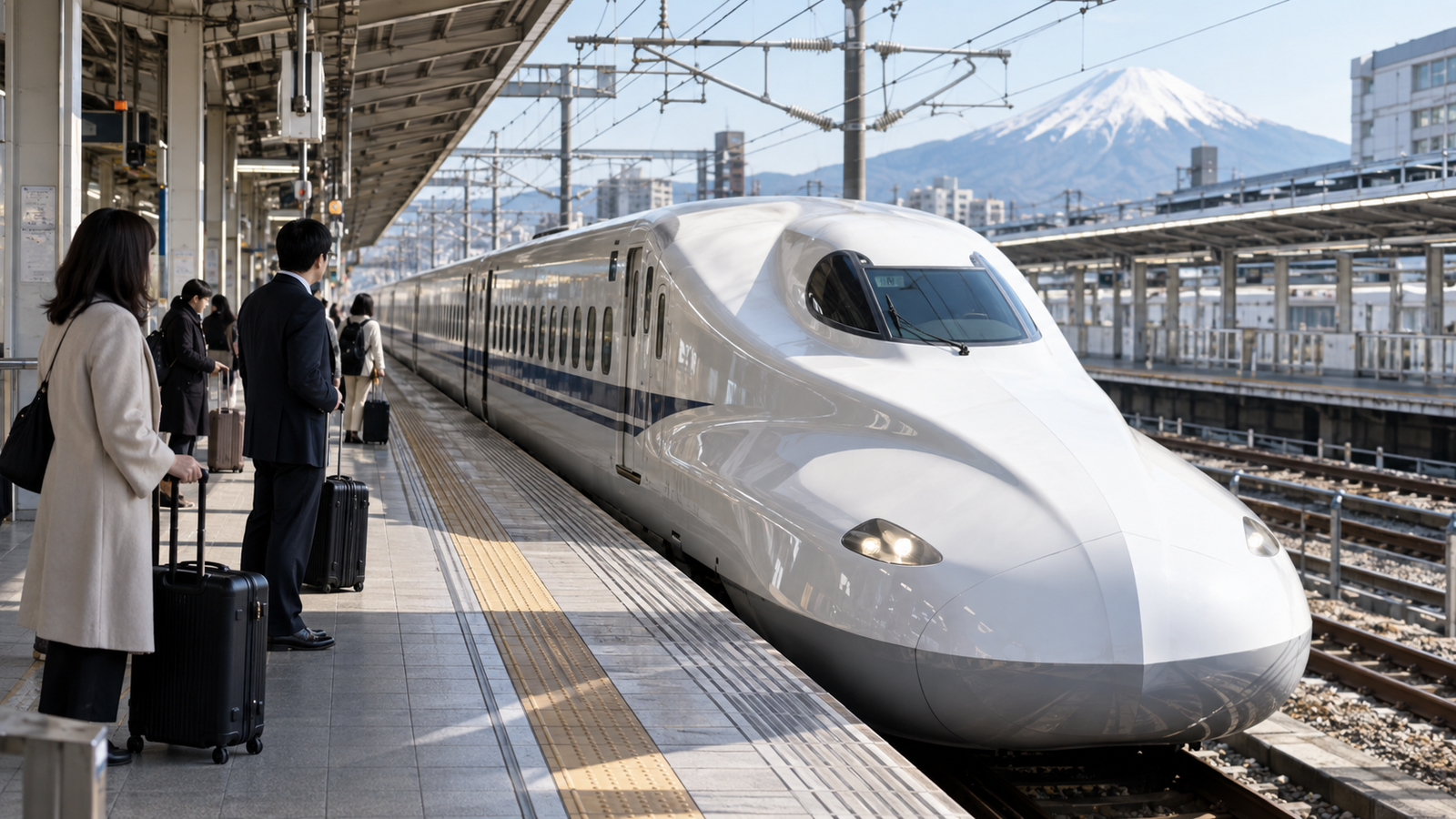

Japan has one of the world’s most extensive and efficient train systems. Trains connect large cities, small towns, airports, and popular tourist areas.
However, Japan’s railway network can look confusing on your first trip. You may see JR trains, private railways, subways, Shinkansen services, and several types of tickets.
This Japan Train Travel Guide explains the system in simple terms. You will learn about train types, tickets, IC cards, rail passes, seat reservations, stations, luggage, apps, and basic train etiquette.
For most visitors, the basic rule is simple. Use an IC card for many local journeys. Buy the correct ticket or reservation for long-distance and special trains.
Japan Train Travel: Quick Takeaways
Use an IC card for many local trains, subways, and buses.
Buy the correct Shinkansen or special train ticket for longer journeys.
Do not automatically buy a nationwide Japan Rail Pass. Compare the cost with your planned journeys first.
Always check the line, direction, platform, train type, and destination before boarding.
Reserve important long-distance journeys early when travelling during busy Japanese holiday periods.
Check the baggage rules if you are travelling with a large or oversized suitcase.
Why Travel Japan by Train?
Train travel is one of the easiest ways to explore Japan.
The railway network connects major destinations such as Tokyo, Kyoto, Osaka, Hiroshima, Fukuoka, and Nagoya. It also reaches many smaller towns and tourist areas.
Japan’s famous Shinkansen, or bullet train, makes long-distance travel fast and simple. Local and rapid trains are useful for shorter trips.
Another benefit is convenience. You do not need to rent a car for most classic Japan itineraries. Trains often take you directly from one city centre to another.
Train travel also gives you flexibility. You can use local trains for short trips, reserve seats for longer journeys, and choose rail passes when they offer good value.
However, do not assume that every visitor needs the Japan Rail Pass. Always compare the pass price with the cost of your planned journeys.
The Japanese Train System
Japan does not have one single railway company.
Several companies operate different parts of the network.
The Japan Railways Group, usually called the JR Group, operates many major railway routes. Different JR companies serve different regions of Japan.
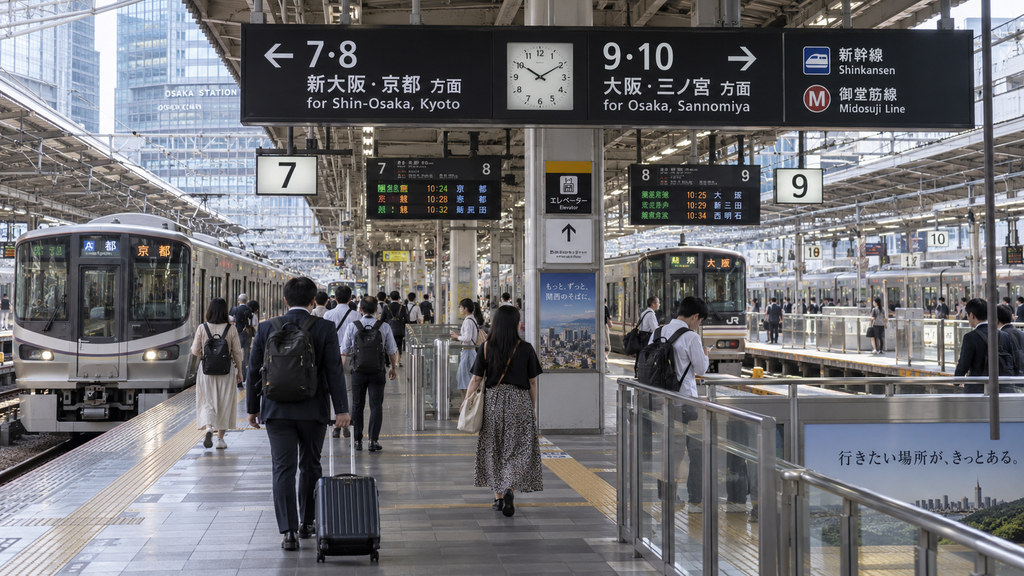
You will also find subway systems and private railway companies in large cities.
For example, a visitor in Tokyo may use JR trains, Tokyo Metro, Toei Subway, and private railway lines during the same trip.
Fortunately, you do not need to memorise every company.
Navigation apps usually show:
- Train company
- Railway line
- Departure time
- Platform
- Transfers
- Journey time
- Estimated fare
Focus on the line name, direction, train type, and platform number.
New to Japanese transport? Our guide on how to get around Japan covers IC cards, buses, taxis, flights and more.
Privately Owned Rail Companies
Private railway companies are common in Japan.
They often connect major cities with suburbs and nearby tourist destinations.
Some private railways are also the easiest way to reach places that are not best served by JR trains.
This is why a JR Pass does not cover every train in Japan.
Always check which company operates your route before using a rail pass.
Japan’s Railway Companies
The JR Group includes:
- JR East
- JR Central
- JR West
- JR Hokkaido
- JR Shikoku
- JR Kyushu
However, JR is only one part of Japan’s railway system.
Large cities also have subway operators and private railway companies.
This becomes important when you buy a rail pass.
A nationwide JR Pass mainly covers eligible JR services. It does not give unlimited travel on every subway and private railway.
Therefore, always check pass coverage before buying.
Types of Trains in Japan
Japanese trains are often grouped by how many stations they stop at.
Understanding these train types can help you avoid boarding a train that skips your destination.
Japan Train Types at a Glance
Use this quick comparison before looking at each train type in more detail.
| Train Type | Stops | Typical Use | Extra Ticket? | Reservation? |
|---|---|---|---|---|
| Local | Every station | Short local journeys | Usually no | Usually no |
| Rapid | Skips some stations | Faster local and regional travel | Usually no | Usually no |
| Express | Fewer stops | Regional journeys | Depends on operator | Depends on service |
| Limited Express | Major stations | Longer regional journeys | Often yes | Available or required on some services |
| Shinkansen | Major cities | Fast long-distance travel | Yes | Available and often useful |
| Sightseeing / Special | Varies | Scenic or themed journeys | Often | Frequently required |
Shinkansen
The Shinkansen is Japan’s high-speed railway network.
It connects many major cities and is often the fastest choice for long-distance travel.
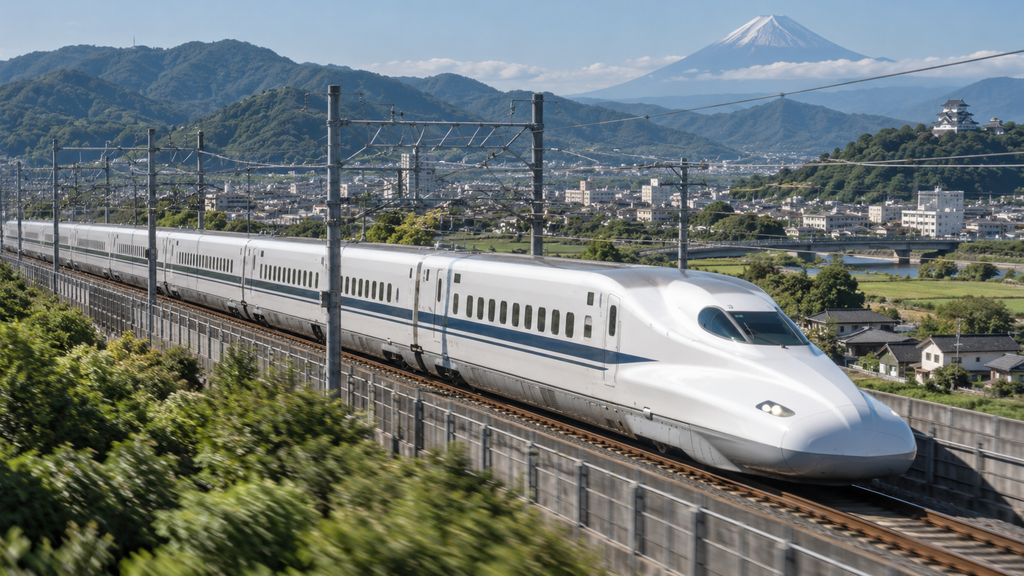
Popular Shinkansen journeys include:
- Tokyo to Kyoto
- Tokyo to Osaka
- Kyoto to Hiroshima
- Osaka to Hiroshima
- Tokyo to Nagoya
- Hiroshima to Fukuoka
Shinkansen tickets cost more than normal local train tickets.
Depending on the service, you may also choose between reserved and non-reserved seating.
Limited Express Trains
Limited Express trains stop at fewer stations than regular trains.
They are useful for longer regional journeys and trips to some airports and tourist destinations.
In many cases, you need an extra Limited Express ticket in addition to the normal base fare.
Therefore, tapping an IC card may not cover the whole journey.
Express Trains
Express trains skip some smaller stations.
As a result, they are faster than local trains.
Fare rules depend on the railway company. Some Express services use the normal fare, while others may need an extra ticket.
Check your route before boarding.
Rapid Trains
Rapid trains also skip some stations.
They are common on busy urban and regional routes.
In many cases, you can use them with a normal ticket or IC card.
However, make sure your destination is one of the train’s stops.
Local Trains
Local trains stop at every station on their route.
They are usually the easiest choice for short journeys.
They may take longer, but they are useful when travelling to smaller stations.
Special Trains
Japan also has scenic, themed, luxury, and sightseeing trains.
Some offer special interiors, meals, local food, or beautiful views.
Popular sightseeing trains may require advance reservations.
If a special train is an important part of your trip, check its booking rules early.
Train Tickets in Japan
There are several ways to pay for train travel in Japan.
The best option depends on your route and how often you plan to travel.
| Option | Best For |
| IC card | Local trains, subways, and buses |
| Standard ticket | Individual journeys |
| Shinkansen ticket | High-speed long-distance travel |
| Japan Rail Pass | Some high-cost multi-city trips |
| Regional rail pass | Travel within one region |
| City pass | Selected local transport |
The Japan Rail Pass
The Japan Rail Pass gives eligible international visitors access to many JR services for a fixed period.
Passes are available for:
- 7 days
- 14 days
- 21 days
As of September 2026, the official online Ordinary Class prices are:
| Pass Length | Adult Price |
| 7 days | ¥50,000 |
| 14 days | ¥80,000 |
| 21 days | ¥100,000 |
Because of these prices, the JR Pass is no longer an automatic choice for every tourist.
Someone staying only in Tokyo does not need a nationwide JR Pass.
A traveller following a simple Tokyo, Kyoto, and Osaka route should also compare individual ticket prices before buying the pass.
The JR Pass becomes more useful when your itinerary includes several expensive long-distance JR journeys.
JR Pass holders should also check the rules for Nozomi and Mizuho Shinkansen trains. These services need an additional special ticket when used with the nationwide JR Pass.
Important Japan Rail Pass Update for 2026
There is an important price change coming for some JR Pass buyers.
From October 1, 2026, prices for passes purchased through designated overseas travel agencies will increase.
| Pass Length | Current Price | Agency Price From Oct. 1, 2026 |
| 7 days | ¥50,000 | ¥53,000 |
| 14 days | ¥80,000 | ¥84,000 |
| 21 days | ¥100,000 | ¥105,000 |
Official online pricing may follow different rules.
Because JR Pass prices and sales conditions can change, always check the official Japan Rail Pass website before buying.
Standard Train Tickets
You can buy standard tickets for individual journeys.
This works well when you do not want to use an IC card or rail pass.
For a simple local trip, select your fare or destination from a ticket machine.
Insert the ticket into the gate when entering the station.
Keep the ticket during your journey. You may need it again when leaving the destination station.
IC Cards
IC cards are one of the easiest ways to use public transport in Japan.
Popular cards include:
- Suica
- PASMO
- ICOCA
You add money to the card and tap it at the ticket gate.
The correct local fare is then deducted automatically.
IC cards can be used across many major train and bus networks. They can also be used at many shops, convenience stores, vending machines, and station lockers.
JR East also offers Welcome Suica for international visitors.
A physical Welcome Suica is designed for shorter visits. Mobile options are also available on supported devices.
However, an IC card does not mean every Japanese train is automatically covered.
City Passes
Some Japanese cities offer one-day or multi-day transport passes.
These may be useful if you plan to take many trains, subways, or buses in a short period.
However, do not buy a city pass only because it sounds convenient.
Compare the pass cost with your planned journeys first.
Regional Rail Passes
The nationwide Japan Rail Pass is not your only rail pass option.
Japan also has regional rail passes.
These passes cover travel in a smaller area and can sometimes offer better value than the nationwide pass.
Examples include passes offered by:
- JR East
- JR West
- JR Hokkaido
- JR Kyushu
There are also passes focused on areas such as Kansai.
A regional pass may be a better choice if most of your trip stays within one part of Japan.
For example, someone spending most of the trip around Osaka, Kyoto, Nara, and nearby cities may not need a nationwide JR Pass.
Always compare pass coverage with your actual itinerary.
JR Pass vs Individual Tickets: Which Should You Choose?
The nationwide JR Pass is not always the cheapest option.
Your best choice depends on where you plan to travel.
Which Japan Train Ticket Should You Use?
Start with your actual journey rather than choosing a rail pass first.
Usually the simplest choice for local trains, subways, and buses.
Choose based on how many local journeys you plan to make.
Compare individual fares before considering a nationwide JR Pass.
Regional passes can sometimes provide better value than the nationwide pass.
Add up your planned long-distance journeys before buying.
A base fare alone may not cover the complete journey.
For example, a traveller visiting Tokyo, Kyoto, and Osaka should not automatically buy a nationwide JR Pass.
Calculate the cost of your major long-distance journeys first.
If individual tickets cost less, buy separate tickets.
If you plan several costly JR journeys within a short period, the pass may offer better value.
How to Ride the Train in Japan
Using Japanese trains becomes easier when you follow the same process each time.
First, search for your destination in a route-planning app.
Check:
- Departure station
- Railway line
- Train direction
- Train type
- Platform
- Transfer stations
- Final destination
At the station, follow the signs for your railway line.
Use your IC card or ticket at the gate.
Next, find the correct platform.
Check the electronic board before boarding. Make sure the train type and destination match your route.
Finally, get off at your station and follow the signs for the correct exit.
Large stations may have many exits. Checking the exit number before arrival can save time.
How to Buy Individual Train Tickets
Ticket machines are available at most Japanese railway stations.
Many machines in major tourist areas offer English menus.
Choose English first. Then select your destination or fare.
Pay using an accepted payment method and collect your ticket.
If you are unsure, use a staffed ticket counter.
Showing the destination name on your phone can also make communication easier.
How to Use Ticket Vending Machines
The exact process depends on the railway company.
However, the basic steps are usually:
- Change the language to English.
- Choose the ticket type.
- Select your destination or fare.
- Choose the number of passengers.
- Pay.
- Collect your ticket and change.
For complex long-distance journeys, use a reserved-seat ticket machine, official booking service, or ticket office.
Why Did I Receive More Than One Train Ticket?
Do not worry if a machine or ticket office gives you more than one ticket.
Some train journeys have separate fare parts.
For example, you may receive:
Base fare ticket + Limited Express ticket
or:
Base fare ticket + Shinkansen ticket
The base fare covers the normal railway journey.
The second ticket covers the faster or special train service.
If you are unsure which ticket to use at the gate, ask station staff.
Why You May Receive Two Train Tickets
Covers the basic railway journey between your departure point and destination.
Covers the additional fare for using the faster or special train service.
If you are unsure which ticket to insert or use at a gate, ask station staff.
How to Reserve Train Seats on Japanese Trains
You do not normally reserve seats on everyday local trains.
However, reservations are available or required on many Shinkansen and Limited Express services.
For the Tokaido, Sanyo, and Kyushu Shinkansen, international visitors can use SmartEX.
Reservations are especially useful when:
- Travelling during busy holiday periods
- Travelling with family
- Wanting seats together
- Travelling with oversized luggage
- Travelling at a fixed time
Can I Make Reservations?
Yes.
Seat reservations are available for many long-distance trains.
You can reserve seats through official online booking systems, selected ticket machines, or ticket offices.
Booking systems differ between railway companies.
Therefore, check the official operator for your route.
Reserved vs Non-Reserved Seats
Some Shinkansen and Limited Express trains offer both reserved and non-reserved seating.
Non-Reserved Seats
A non-reserved ticket does not give you a specific seat.
You enter a non-reserved car and take any available seat.
However, you may need to stand if the train is full.
Reserved Seats
A reserved ticket gives you a specific:
- Train
- Car number
- Seat number
Reserved seats are helpful when travelling with family or friends.
They are also useful during busy periods.
Green Car
Green Car is the premium seating class on many JR trains.
Seats are generally wider and offer more space.
Green Car costs more than Ordinary Class but can provide extra comfort on longer journeys.
Important Nozomi Reservation Rules During Busy Periods
The Nozomi is one of the fastest services on the Tokaido and Sanyo Shinkansen.
During selected busy periods, all Nozomi seats become reserved seats.
These periods can include:
- Golden Week
- Obon
- New Year
During these dates, normal non-reserved Nozomi seating is not available.
If you plan to travel during a major Japanese holiday, check the current reservation rules before your trip.
Book important journeys early when possible.
Getting Around Japanese Train Stations
Japanese railway stations can be large.
Tokyo, Shinjuku, Shibuya, Kyoto, and Osaka stations may feel overwhelming during your first visit.
However, major stations usually have English signs.
Look for five key pieces of information:
Check all five before boarding, especially when using rapid, express, or long-distance services.
Station numbers can also help.
Some metro systems use letters and numbers next to station names.
Do not rush through a large station.
Give yourself extra time, especially when making your first transfer.
Also check your exit before leaving the station. Large stations may have many exits that lead to different streets.
How Do I Get Around Within Cities?
IC cards are usually the simplest option for local city travel.
Tap your card when entering the station.
Tap it again when leaving.
In major cities, you may switch between JR, subway, and private railway services.
Changing railway companies can sometimes mean passing through another ticket gate.
Follow the route shown in your navigation app.
When an IC Card Is Not Enough
Suica, PASMO, and ICOCA make local transport simple.
However, they cannot be used for every journey.
Can I Use an IC Card for This Journey?
| Journey Type | Is an IC Card Usually Enough? |
|---|---|
| Local JR train | Usually yes |
| Metro or subway | Usually yes |
| Local private railway | Usually yes |
| City bus | Often yes |
| Shinkansen | Not by simply tapping like a local train |
| Limited Express | Additional ticket may be required |
| Reserved-seat train | Reservation or extra ticket may be required |
| Journey across separate IC service areas | Check before travelling |
Important: An IC card is a payment method, not an unlimited rail pass. Always check the ticket rules for longer or unusual journeys.
You may need another ticket when:
- Riding certain Shinkansen trains
- Using Limited Express services
- Using a railway that does not accept the card
- Travelling across some separate IC card service areas
- Taking a train that requires a reservation
One common mistake is thinking an IC card works like an unlimited rail pass.
It does not.
Always check ticket rules for longer or unusual journeys.
How Can I Check Train Timetables and Fares?
Navigation apps make Japan train travel much easier.
Google Maps works well for many travellers.
It can show:
- Departure time
- Railway line
- Platforms
- Transfers
- Journey time
- Estimated fare
Japan-specific tools can provide more detail.
Best Apps for Train Travel in Japan
| App | Best For |
| Google Maps | Everyday routes and transfers |
| Japan Travel by NAVITIME | Detailed Japan transport planning |
| Japan Transit Planner by Jorudan | Routes, fares, and train times |
| SmartEX | Selected Shinkansen bookings |
Google Maps is enough for many simple journeys.
However, Japan-specific apps can be useful when you need detailed fares or railway information.
For important long-distance journeys, also check the official railway operator.
This becomes especially important during bad weather or service disruptions.
Which Railway Lines Are Convenient for Visiting Tourist Attractions?
The best railway depends on your destination.
Tokyo has JR lines, subway networks, and many private railways.
Kyoto uses trains, subway lines, and buses.
Osaka also has several railway operators.
Popular day trips may use different companies.
Therefore, avoid planning your whole trip around JR alone.
Search each journey separately.
A pass that works well for long-distance travel may not cover the local railway needed for a particular attraction.
Popular Japan Train Routes for First-Time Visitors
Many first-time visitors follow similar routes through Japan.
Popular Japan Train Routes at a Glance
| Route | Typical Train Choice | What to Know |
|---|---|---|
| Tokyo → Kyoto | Shinkansen | Reserve during busy travel periods. |
| Kyoto → Osaka | JR or private local/rapid train | The Shinkansen is usually unnecessary for this short journey. |
| Kyoto → Nara | JR or private railway | Check which arrival station is closest to your sightseeing plans. |
| Osaka → Hiroshima | Shinkansen | Reservations can be useful during busy periods. |
| Tokyo → Hakone | Multiple operators possible | JR-only passes may not cover the full journey. |
| Tokyo → Kawaguchiko | JR and non-JR services may be involved | Check ticket and pass coverage before travelling. |
Tokyo to Kyoto
The Shinkansen is usually the fastest and easiest choice.
The journey uses the Tokaido Shinkansen.
Reservations are useful during busy periods.
Kyoto to Osaka
Kyoto and Osaka are close together.
Several JR and private railway services connect the two cities.
You usually do not need the Shinkansen for this short trip.
Kyoto to Nara
Nara is a popular day trip from Kyoto.
Both JR and private railway options are available.
Check which station is closest to the places you want to visit.
Osaka to Hiroshima
The Shinkansen is the main fast option.
Reservations can be useful during busy travel periods.
Tokyo to Hakone
Hakone can involve several railway companies and local transport services.
Check your complete route before buying a JR-only pass.
Tokyo to Kawaguchiko
Travel to the Mount Fuji area can involve both JR and non-JR services.
Check ticket and pass coverage carefully.
Plan Your Next Train Journey
Japan’s rail network becomes much easier once you plan each journey separately. Continue with these guides for common first-time routes and trip planning.
Are There Sightseeing or Themed Trains That Are Fun to Ride Just for the Journey?
Yes.
Japan has many scenic and themed railway experiences.
Some trains focus on landscapes.
Others offer special interiors, local food, or unique themes.
Popular sightseeing trains can have limited seats.
Therefore, reserve early if a particular train is an important part of your itinerary.
Where to Store Your Luggage
Small bags and suitcases can usually be placed on overhead racks or in other available luggage spaces.
However, special rules apply to oversized baggage on some Shinkansen routes.
Shinkansen Oversized Baggage: Quick Guide
Normal luggage can generally be carried without an oversized baggage reservation.
On applicable Shinkansen routes, reserve the appropriate seat with oversized baggage space or area.
Baggage above this total size cannot be taken aboard under the oversized baggage rules.
Measure your suitcase before travelling and check the latest rules for your specific Shinkansen route.
On the Tokaido, Sanyo, Kyushu, and Nishi-Kyushu Shinkansen, special rules apply to large luggage.
If the total is between 161 and 250 cm, you need the correct oversized baggage reservation.
Baggage with total dimensions over 250 cm cannot be taken aboard under these oversized baggage rules.
Another option is luggage forwarding.
Japan has delivery services that can send suitcases between hotels and other locations.
This can make multi-city train travel much easier.
Train Etiquette
Japanese trains are shared public spaces.
Good manners matter.
Keep your voice low.
Avoid loud phone calls.
Let passengers leave before boarding.
Follow platform queues.
Keep bags away from busy walkways.
Use priority seats respectfully.
During rush hour, avoid blocking doors with large suitcases.
Do not place bags on empty seats when the train is busy.
These simple habits make travel easier for everyone.
Can I Eat on Trains?
It depends on the train.
Eating is usually avoided on short commuter trains and subways.
However, eating is common on long-distance trains such as the Shinkansen.
Many travellers buy an ekiben, or railway lunch box, before boarding.
Avoid messy or strongly scented food when possible.
Are Trains and Train Stations Accessible to Those With Mobility Issues?
Many large Japanese railway stations have:
- Lifts
- Escalators
- Accessible toilets
- Staff assistance
However, accessibility can vary between stations.
Smaller and older stations may have fewer facilities.
If you use a wheelchair or have limited mobility, check the station and railway company before travelling.
You can also ask station staff for help.
Allow extra transfer time because an accessible route through a large station may be longer.
Example 10-Day Japan Train Plan
Here is a simple example of how different transport options can work during one Japan trip.
10-Day Japan Transport Plan at a Glance
| Day | Location / Journey | Transport to Check First |
|---|---|---|
| Days 1–3 | Tokyo | IC card for local transport |
| Day 4 | Tokyo → Kyoto | Shinkansen ticket |
| Days 5–6 | Kyoto | IC card, individual tickets, or suitable local pass |
| Day 7 | Kyoto → Osaka | Local or rapid train |
| Day 8 | Nara Day Trip | JR or private railway |
| Day 9 | Osaka | IC card for local transport |
| Day 10 | Airport | Airport railway that suits your airport and hotel |
For an itinerary like this, an IC card plus individual long-distance tickets may be more practical than automatically buying a nationwide Japan Rail Pass. Always calculate your own journey costs first.
Days 1 to 3: Tokyo
Use an IC card for local trains, subways, and buses.
You normally do not need a nationwide JR Pass just for Tokyo.
Day 4: Tokyo to Kyoto
Buy a Shinkansen ticket.
Reserve a seat if you want a fixed departure time or are travelling during a busy period.
Days 5 and 6: Kyoto
Use an IC card, individual tickets, or a suitable local transport pass.
Day 7: Kyoto to Osaka
Use a suitable local or rapid train.
A Shinkansen is usually not needed for this short journey.
Day 8: Nara Day Trip
Use a suitable JR or private railway service.
Check which station works best for your sightseeing plans.
Day 9: Osaka
Use an IC card for most local journeys.
Day 10: Airport
Choose the airport railway that best matches your airport and hotel location.
For this type of itinerary, individual tickets plus an IC card may be more practical than automatically buying a nationwide JR Pass.
Always calculate your own journey costs before deciding.
Japan Train Travel Decision Guide
Not sure which option you need?
Use this quick guide.
Travelling inside one city?
Use an IC card in most cases.
Travelling between Tokyo and Kyoto or Osaka?
Check Shinkansen tickets.
Making many expensive JR journeys?
Compare the nationwide JR Pass.
Staying mostly within one region?
Check regional rail passes.
Taking a Limited Express train?
Check whether an additional ticket is required.
Travelling with an oversized suitcase?
Check baggage reservation rules.
Travelling during Golden Week, Obon, or New Year?
Reserve important long-distance trains early.
Other Japan Train Travel Tips
A few simple habits can make train travel in Japan easier.
Check the train type before boarding. A rapid or express train may skip your station.
Do not panic if you take the wrong train. Get off at the next suitable station and search for a new route.
Ask staff if your IC card will not let you exit. Do not force your way through the gate.
Give yourself extra time at large stations. Finding the right platform can take longer than expected.
Check the last train time at night. Most Japanese railway systems do not operate all night.
Reserve important long-distance journeys early during busy periods.
Check service information during bad weather. Heavy rain, typhoons, earthquakes, and other events can affect railway services.
Most importantly, do not try to understand the entire Japanese railway system before your trip.
You only need to understand the journey in front of you.
Check the operator, line, train type, platform, and destination.
After your first few train rides, travelling around Japan usually becomes much easier.
Plan More of Your Tokyo Trip
Japan Train Travel FAQs
Is Train Travel Easy in Japan?
Yes. Japan’s railway system may look confusing at first, but English signs, station numbers, navigation apps, and clear platform information make it easier. Most visitors understand the basic system after completing a few journeys.
How Do Tourists Pay for Trains in Japan?
Tourists can use IC cards, individual tickets, Shinkansen tickets, regional passes, city passes, or the nationwide Japan Rail Pass. The best payment method depends on the route and how often you plan to travel.
Do I Need a Suica Card in Japan?
No. A Suica card is not required. However, Suica or another compatible IC card can make local travel much easier because you can tap through many ticket gates without buying a paper ticket every time.
Is the Japan Rail Pass Worth It?
It depends on your itinerary. The nationwide JR Pass may offer good value if you make several expensive long-distance JR journeys within a short period. For simpler trips, individual tickets may cost less.
Do I Need to Reserve Shinkansen Tickets?
Not always. Some Shinkansen services offer non-reserved seating. However, reservations are useful during busy periods, when travelling in a group, or when you want a specific seat.
Can I Bring Luggage on the Shinkansen?
Yes. Normal luggage can usually be carried on board. However, oversized baggage rules apply on some Shinkansen routes. Measure large suitcases and check the latest rules before travelling.
Can I Use Google Maps for Trains in Japan?
Yes. Google Maps is useful for checking train lines, departure times, transfers, platforms, and estimated fares. Japan-specific transport apps can provide extra detail for more complex journeys.
What Happens if I Take the Wrong Train in Japan?
Do not panic. Get off at the next suitable station and check your route again. If you are unsure what to do, show your destination to station staff and ask for help.
Planning Your First Trip to Japan?
Keep planning with our practical Japan guides covering itineraries, transport, costs, accommodation, and first-time travel tips.
Plan the essentials for your first trip to Japan.
Read the guide → ITINERARY Japan 10 Day ItineraryBuild a realistic Tokyo, Kyoto and Osaka route.
See the itinerary → BUDGET How Much Does a Japan Trip Cost?Understand the main costs before you book.
Plan your budget → FIRST TRIP Japan Travel Tips for First-Time VisitorsKnow what to expect before arriving in Japan.
Read the tips →Final Thoughts
Japan’s train network looks complex when you first see the map. In practice, you only need to understand a few basic rules.
Use an IC card for many local journeys. Buy separate tickets for Shinkansen and other special trains when needed. Compare rail passes with individual ticket prices before spending money.
Most importantly, check the line, platform, train type, and destination before boarding.
With a navigation app and a basic understanding of the ticket system, even a first-time visitor can travel around Japan by train with confidence.