

Business class vs first class: what is the real difference, and is the extra cost worth it? Both cabins sit at the front of the plane. Both give you more space, better food and faster boarding. But on long international flights, the gap between them can be huge, and so can the price.
This guide explains the key differences in simple terms. You will learn what each cabin includes, what you really pay, which airlines still offer first class and how to choose the right seat for your trip.
Business Class vs First Class: Key Takeaways
- Long-haul business class usually means a lie-flat seat with aisle access, lounge access and multi-course meals.
- First class adds private suites, dine-on-demand service and far more crew per guest.
- First class often costs two to five times more than business class on the same route.
- U.S. domestic first class is usually a wide recliner, not a flat bed.
- American Airlines will stop selling international Flagship First for travel from November 19, 2026.
- For most travelers, business class offers the best value.
Example Price Gap: Business vs First Class
Example summer fares from Los Angeles to Paris on Air France, as reported by point.me. Prices vary by date and route.
Business Class vs First Class: Quick Comparison
| Feature | Business class (long-haul) | First class (long-haul) |
|---|---|---|
| Seat | Lie-flat seat, often with aisle access | Large private suite, often with a door |
| Privacy | Good; some cabins have doors | Very high; few seats in the cabin |
| Food and drink | Multi-course meals at set times | Dine on demand, premium wine and champagne |
| Service | Attentive | Highly personal, more crew per guest |
| Lounge | Business lounge | First class lounge, sometimes private check-in |
| Typical cash price | About $3,000–$8,000 round trip | Often $10,000–$15,000 or more |
| Availability | Offered by most long-haul airlines | Offered by fewer airlines each year |
Prices change a lot by route, season and airline. Treat these numbers as a rough guide.
What Is Business Class?
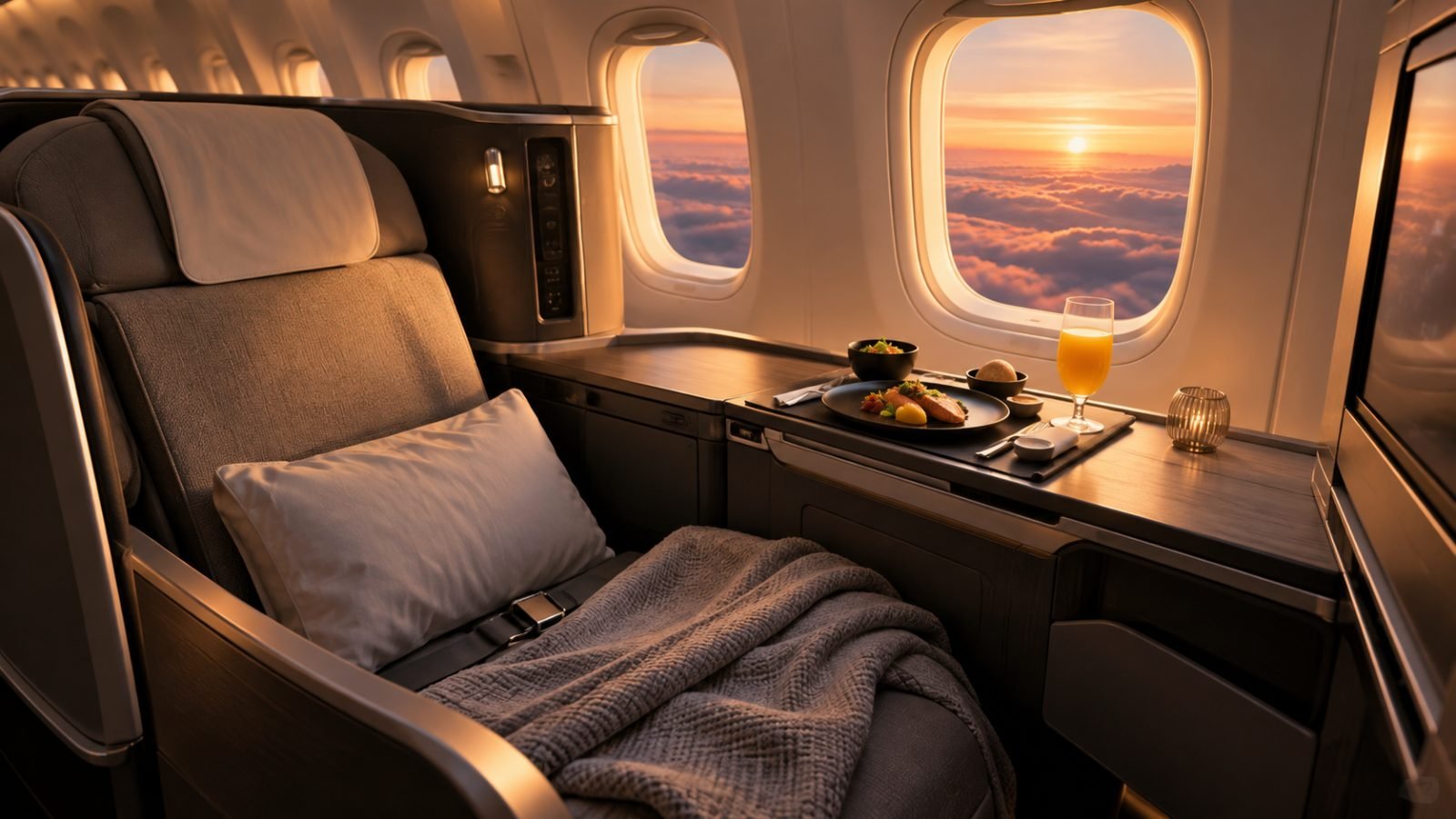
Business class is the premium cabin between economy and first class. On many airlines, it is now the best cabin on the plane. On long international flights, business class usually means a seat that turns into a flat bed. Most modern cabins also give every seat direct access to the aisle, so you never climb over a neighbor.
Some newer business seats are suites with sliding doors. Examples include Qatar Airways Qsuite and Delta One Suites. These feel close to first class at a lower price.
What Is First Class?
First class is the most exclusive cabin an airline sells. On long-haul flights, it often has only four to eight seats. Each seat is usually a large, private suite with a full bed, a big screen and lots of storage.
A few airlines go even further. Emirates offers onboard showers for first class guests on its A380. Singapore Airlines sells suites with a separate bed and seat. Air France La Première is famous for its private airport service and fine French food.
Key Differences Between Business Class and First Class
1. Price
Price is the biggest difference in the business class vs first class debate. A long-haul business class ticket often costs about $3,000 to $8,000 round trip. Long-haul first class can cost $15,000 or more. For example, a summer Air France business ticket from Los Angeles to Paris has cost about $5,500, while La Première on the same route has cost about $26,000.
2. Seats and Space
Business class gives you a lie-flat seat that is fine for sleep on most long flights. First class gives you a wider, enclosed suite. You get more room to move, more storage and often a separate seat and bed.
3. Privacy
Privacy is another big gap in business class vs first class. Business cabins often have 30 to 70 seats. First class cabins usually have only a handful. Many first class suites have doors that close fully, so the cabin feels quiet and calm.
4. Food and Drink
In business class, meals are served in several courses, usually at set times. In first class, you can often order what you want, when you want it. Menus may include caviar, premium champagne and dishes designed by famous chefs.
5. Service
First class has far more crew per passenger. As a result, flight attendants can learn your name, your drink order and when you like to sleep. Business class service is still excellent, but it is less personal.
6. Airport Experience and Lounges
Both cabins include priority check-in, faster security at many airports and early boarding. Business class passengers on international flights usually get lounge access. First class passengers often get a better lounge with sit-down dining. Some airlines also offer private check-in rooms, chauffeur cars or escort to the plane.
7. Amenities and Bedding
Business class usually includes a pillow, blanket, noise-canceling headphones and an amenity kit. First class adds thicker mattresses, better sheets, pajamas and luxury skincare brands.
Domestic First Class vs International Business Class
This is where many travelers get confused about business class vs first class. On most flights within the United States, “first class” is not the same as international first class. It is usually a wider recliner seat with more legroom, free drinks, extra bags and priority boarding.
Domestic first class seats usually do not lie flat. Many domestic first class tickets also do not include lounge access. However, some coast-to-coast routes, such as New York to Los Angeles, use planes with lie-flat seats. Always check the aircraft before you book.
In fact, international business class is usually a much bigger upgrade than U.S. domestic first class.
Which Airlines Still Offer First Class?
Fewer airlines sell international first class every year. Many have replaced it with better business class suites. Delta and United no longer have first class cabins on long-haul flights. Their top long-haul seats are Delta One and United Polaris, which are business class products.
American Airlines is following the same path. It has announced it will stop selling international Flagship First for travel from November 19, 2026, and its 777-300ER planes will get more Flagship Suite business class seats instead. After that change, no major U.S. airline will sell a separate international first class cabin.
Airlines still known for first class include Emirates, Singapore Airlines, Air France, Lufthansa, Japan Airlines, Etihad and Cathay Pacific. Even on these airlines, first class is often only on certain planes and routes.
Is First Class Worth It Over Business Class?
For most travelers, business class gives you most of the comfort of first class for a fraction of the price. A lie-flat seat, good food and lounge access already make long flights much easier.
When Business Class Is the Better Choice
- Your flight is under 10 to 12 hours.
- You mainly want to sleep and arrive rested.
- You are paying cash and want the best value.
- The airline’s business class already has doors or suites.
When First Class May Be Worth It
- You are on an ultra-long flight of 12 hours or more.
- You can book with points or miles at a good rate.
- It is a once-in-a-lifetime trip, such as a honeymoon.
- You value privacy, top service and fine dining.
How to Fly Business or First Class for Less
- Use points and miles. Award seats can save thousands of dollars. Business class awards are usually easier to find than first class.
- Watch for fare sales. Airlines often discount premium cabins on some routes and seasons.
- Be flexible. Changing your dates or departure airport can lower the price a lot.
- Bid for upgrades. Some airlines let you bid or pay a fixed fee to upgrade after booking.
- Consider premium economy. On shorter overnight flights, it can be a smart middle option.
For more ideas, read our guides to traveling luxury for less and affordable luxury travel tips.
Business Class vs First Class vs Premium Economy
If business class vs first class is out of your budget, look at premium economy. It sits between economy and business. You get a wider seat, more recline and better meals, but not a flat bed. It costs much less than business class. It is a good choice for daytime flights or trips of about six to eight hours. For long overnight flights, business class is usually worth the jump if your budget allows.
Frequently Asked Questions About Business Class vs First Class
Is first class better than business class?
Yes, on the same airline, first class is the higher cabin. It has more space, privacy and personal service. However, a top business class suite on one airline can be better than first class on another.
Is business class the same as first class on domestic flights?
On most U.S. domestic flights, the front cabin is called first class, and there is no business class. On international flights, business class is usually much better than domestic first class.
How much more expensive is first class than business class?
On long-haul flights, first class often costs two to five times more than business class. The gap depends on the airline, the route and the season.
Do business class tickets include lounge access?
On international flights, business class tickets usually include lounge access. On U.S. domestic flights, first class tickets often do not, except on some premium coast-to-coast routes.
Can you sleep in business class?
Yes. On most long-haul flights, business class seats turn into flat beds, so you can sleep well.
Travel Better for Less
More Luxury for Less Guides
Find more ways to upgrade your trip without overspending.
Final Thoughts
When you compare business class vs first class, the right choice depends on your budget, your flight length and how much you value privacy. For most trips, business class gives you a flat bed and great service at a much lower price. Save first class for very long flights, special trips or great points deals.
Want more ways to travel in comfort without overspending? Explore our Luxury for Less guides and our guide to luxury travel on a budget.