
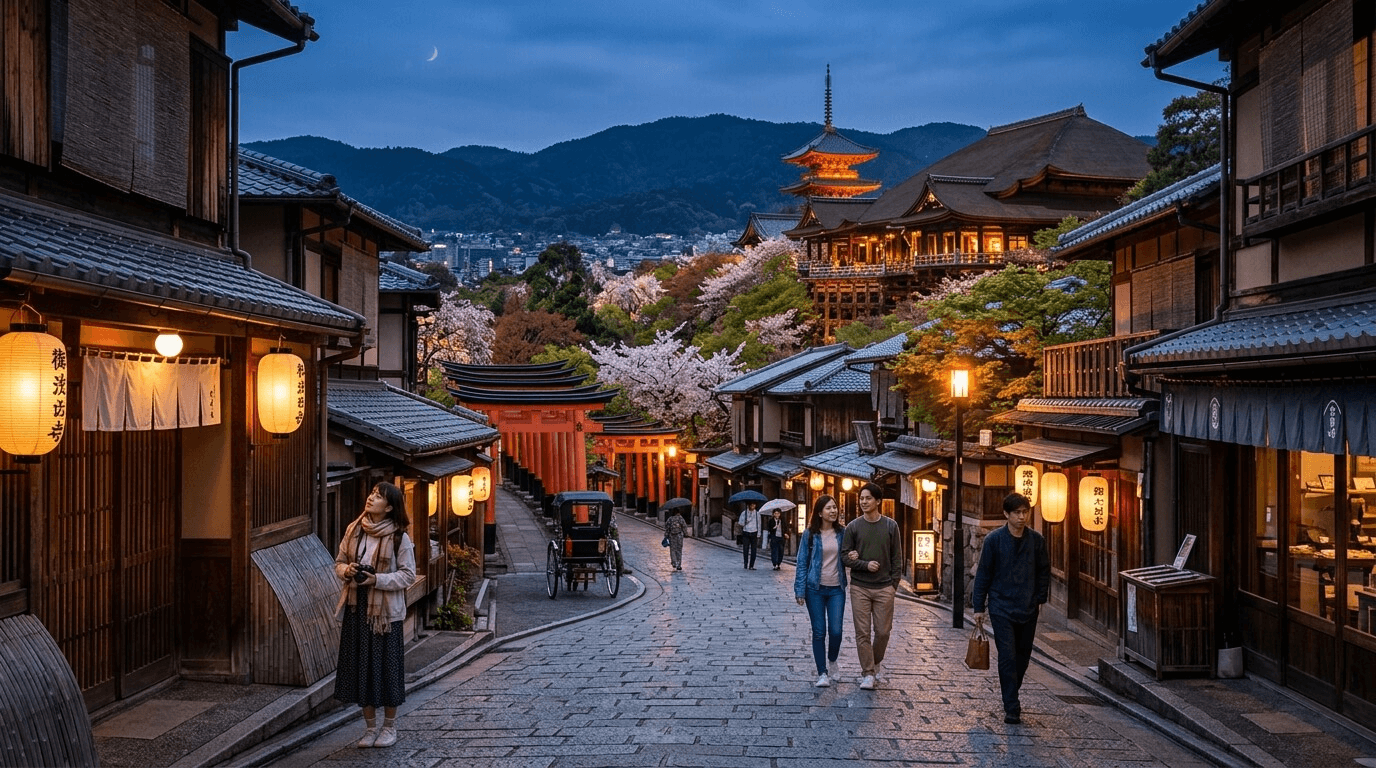

The best things to do in Kyoto include visiting Fushimi Inari Taisha, Kiyomizu-dera, Gion, Kinkaku-ji, Arashiyama, and Nishiki Market. However, Kyoto offers much more than famous temples.
You can join a tea ceremony, try local food, walk through historic neighborhoods, cycle beside the Kamo River, or explore traditional Japanese culture.
Before deciding what to see, it helps to understand the complete Japan travel planning process, including transportation, budgeting, and itinerary creation.
This guide covers the best places to visit in Kyoto and the experiences worth adding to your trip. It also explains how long to spend at major attractions, which areas to combine, and what you can skip when time is limited.
Kyoto Attractions at a Glance
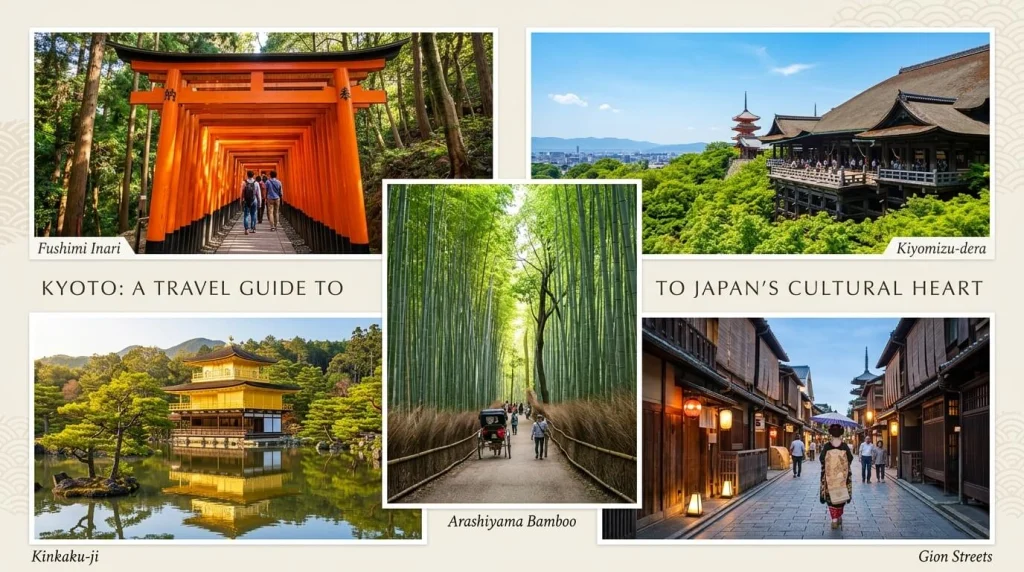
Use this quick guide to decide which Kyoto attractions fit your schedule.
Kyoto Trip Quick Answers
Planning your first Kyoto visit? Start with these quick recommendations.
| Question | Answer |
|---|---|
| Best number of days | 3 days for a comfortable first visit |
| Must-see places | Fushimi Inari, Kiyomizu-dera, Arashiyama |
| Best traditional area | Gion and Higashiyama |
| Best food areas | Nishiki Market and Pontocho |
| Best day trip | Nara |
| Best seasons | Spring and Autumn |
| Attraction | Area | Time Needed | Cost Type | Booking |
| Fushimi Inari Taisha | Southern Kyoto | 1–3 hours | Free | Usually not needed |
| Kiyomizu-dera | Eastern Kyoto | 1–2 hours | Paid admission | Usually not needed |
| Gion | Eastern Kyoto | 1–2 hours | Free to explore | Not needed |
| Arashiyama Bamboo Grove | Western Kyoto | 30–60 minutes | Free | Not needed |
| Kinkaku-ji | Northern Kyoto | 45–60 minutes | Paid admission | Usually not needed |
| Philosopher’s Path | Northern Higashiyama | 1–2 hours | Free | Not needed |
| Nijo Castle | Central Kyoto | 1–2 hours | Paid admission | Check current ticket options |
| Nishiki Market | Central Kyoto | 1–2 hours | Free to enter | Not needed |
| Tenryu-ji | Western Kyoto | 1–2 hours | Paid admission | Usually not needed |
| Ryoan-ji | Northern Kyoto | About 1 hour | Paid admission | Usually not needed |
Opening hours, admission fees, and booking rules can change. Check the official attraction website before visiting.
Best Things to Do in Kyoto
Kyoto has hundreds of temples, shrines, gardens, and historic sites. You do not need to visit all of them.
Instead, choose a mix of famous Kyoto attractions and local experiences.
Key Takeaways
- Best first-time sights: Fushimi Inari Taisha, Kiyomizu-dera, Gion, Kinkaku-ji, and Arashiyama.
- Ideal trip length: Three days works well for most first-time visitors.
- Best planning strategy: Group attractions by area instead of crossing Kyoto several times a day.
- Best for food: Nishiki Market and Pontocho.
- Best cultural experience: A tea ceremony or kimono experience.
- Best advice for avoiding crowds: Visit major outdoor attractions early in the morning.
- Short on time? Focus on Higashiyama, Fushimi Inari, and one other major area.
1. Visit Kiyomizu-dera Temple
Kiyomizu-dera is one of the most famous temples in Kyoto. It sits on a hillside in the Higashiyama area.
The temple is known for its large wooden stage. From here, you can enjoy wide views across Kyoto.
Below the main hall, you can also visit Otowa Waterfall. Its streams have long been associated with different blessings.
The streets around the temple are also part of the experience. Walk through Sannenzaka and Ninenzaka before or after your visit. These historic streets have traditional buildings, shops, cafés, and places selling Japanese sweets.
Kiyomizu-dera can become crowded during the day. Therefore, an early visit is a good choice if you prefer quieter surroundings.
2. Walk Through Fushimi Inari Taisha’s Torii Gates
Walking through the red torii gates of Fushimi Inari Taisha is one of the top things to do in Kyoto.
Thousands of bright gates form paths that lead up Mount Inari. The lower part of the shrine is usually the busiest.
However, the crowds often become smaller as you walk higher.
You do not have to complete the entire mountain route. A shorter walk through the torii gates can still be a memorable experience.
Arrive early if possible. You will have more space to walk and take photos.
3. Wander Through Gion
Gion is Kyoto’s best-known geisha district. It is also one of the best areas to experience the city’s traditional atmosphere.
Walk along its narrow streets and look for wooden machiya buildings. You will also find tea houses, restaurants, temples, and small shops.
Hanamikoji Street is one of the area’s best-known streets.
Gion is also a residential neighborhood. Do not follow, touch, stop, or photograph geiko or maiko without permission. Stay off private property and avoid blocking narrow streets.
Gion is especially attractive in the late afternoon and evening.
4. Explore Arashiyama Bamboo Grove
Arashiyama Bamboo Grove is one of Kyoto’s most photographed places.
Tall bamboo grows on both sides of the walking path. When the area is quiet, the setting can feel peaceful and very different from central Kyoto.
However, Arashiyama is extremely popular. The bamboo path can become packed with visitors later in the day.
Try to arrive early in the morning.
Stay on the paths and never carve or mark the bamboo.
You can also combine the bamboo grove with nearby temples and other attractions. This makes the journey to western Kyoto more worthwhile.
5. See the Golden Pavilion at Kinkaku-ji
Kinkaku-ji is one of Kyoto’s most recognizable landmarks.
The upper floors of the pavilion are covered in gold leaf. The building stands beside Kyokochi, also known as Mirror Pond. Its reflection creates one of Kyoto’s classic views.
Visitors follow a set route through the temple grounds. Therefore, Kinkaku-ji is easy to visit even if your schedule is busy.
The Golden Pavilion is located in northern Kyoto. Pair it with Ryoan-ji to make better use of your travel time.
For first-time visitors, Kinkaku-ji remains one of the must-see places in Kyoto.
6. Walk the Philosopher’s Path
The Philosopher’s Path is a peaceful walking route in northern Higashiyama.
The path follows a canal between the areas around Nanzen-ji and Ginkaku-ji. Small temples, cafés, shops, and residential streets sit nearby.
It is particularly popular during cherry blossom season. However, the walk is pleasant at other times of the year as well.
Instead of rushing through the area, allow time to explore smaller streets and temples along the route.
7. Explore Nanzen-ji Temple
Nanzen-ji is an important Zen Buddhist temple near the southern end of the Philosopher’s Path.
The large temple grounds offer a different experience from some of Kyoto’s busier attractions. You can explore gates, gardens, smaller temples, and historic structures.
One unusual feature is the brick aqueduct that passes through the grounds.
Nanzen-ji works well with the Philosopher’s Path and Ginkaku-ji. Visiting them together can reduce unnecessary travel across Kyoto.
8. Visit Ginkaku-ji Temple
Ginkaku-ji is often called the Silver Pavilion.
Unlike Kinkaku-ji, the building is not covered in silver. Instead, the attraction is known for its gardens and peaceful setting.
The grounds include carefully designed sand areas, moss gardens, ponds, and walking paths.
Ginkaku-ji is located near the northern end of the Philosopher’s Path. As a result, it is easy to combine both attractions.
9. Visit Heian Shrine
Heian Shrine stands out because of its large torii gate and spacious grounds.
Its bright buildings create a strong contrast with the green surroundings. Visitors can also explore the shrine gardens.
Heian Shrine works well as part of an eastern Kyoto sightseeing route. You can combine it with nearby temples and cultural attractions.
10. Experience Ryoan-ji Rock Garden
Ryoan-ji is famous for its Zen rock garden.
The garden uses rocks, gravel, and open space to create a simple design. Visitors can sit along the edge and observe it quietly.
This experience is very different from walking through a large shrine or busy market.
Ryoan-ji is also relatively close to Kinkaku-ji. Therefore, visiting both while exploring northern Kyoto makes sense.
11. Visit Eikando Temple
Eikando is another important temple in eastern Kyoto.
The temple complex includes halls, gardens, ponds, and walking paths. It is especially popular during autumn when the leaves change color.
Its location near Nanzen-ji makes it easy to include in the same part of your Kyoto itinerary.
If you enjoy gardens and seasonal scenery, Eikando can be a worthwhile stop.
12. Explore Nijo Castle
Nijo Castle gives visitors a look at Japan’s feudal history.
The castle was connected to the Tokugawa shogunate. Today, visitors can explore historic buildings, palace rooms, gardens, and defensive structures.
One of its famous features is the so-called nightingale flooring. These wooden floors squeak when people walk across them.
Nijo Castle offers a useful change if your Kyoto itinerary already includes several temples and shrines.
13. Visit Kyoto Imperial Palace
Kyoto Imperial Palace was once home to Japan’s imperial family.
It stands inside the large Kyoto Gyoen National Garden in central Kyoto.
The palace area has historic buildings, gates, gardens, and wide open spaces. The surrounding park also provides room to walk and relax.
This is a good attraction for travelers interested in Japanese history and Kyoto’s role as the former imperial capital.
14. Visit Tenryu-ji Temple
Tenryu-ji is one of the major temples in Arashiyama.
Its traditional garden uses the surrounding mountains as part of the landscape. This makes the scenery feel larger than the garden itself.
Tenryu-ji is also close to Arashiyama Bamboo Grove.
For that reason, visiting both on the same morning makes sense. You can experience a temple, garden, and bamboo forest without traveling across the city.
15. Explore Yasaka Shrine
Yasaka Shrine sits between Gion and Maruyama Park.
Its location makes it easy to include while walking through eastern Kyoto.
The shrine has a long connection with Gion Matsuri, one of Kyoto’s most famous festivals.
You can visit during the day or evening. Afterward, continue walking through Gion or the surrounding Higashiyama streets.
16. See Hokanji Pagoda
Hokanji Pagoda, also known as Yasaka Pagoda, is one of the most recognizable sights in Higashiyama.
The tall pagoda rises above traditional streets and wooden buildings.
You can see it while walking between Kiyomizu-dera and the Gion area.
The surrounding streets are also popular for photography. Early morning is a good time to explore if you want fewer people around.
17. Explore Kyoto Station and Kyoto Tower
Kyoto Station is more than a transport hub.
The huge modern building has shops, restaurants, viewing areas, and unusual architecture. It creates an interesting contrast with Kyoto’s historic temples.
Nearby, Kyoto Tower provides views across the city.
This area is easy to explore when arriving in Kyoto or before leaving. It can also be useful during bad weather because many activities are indoors.
Food and Cultural Experiences in Kyoto
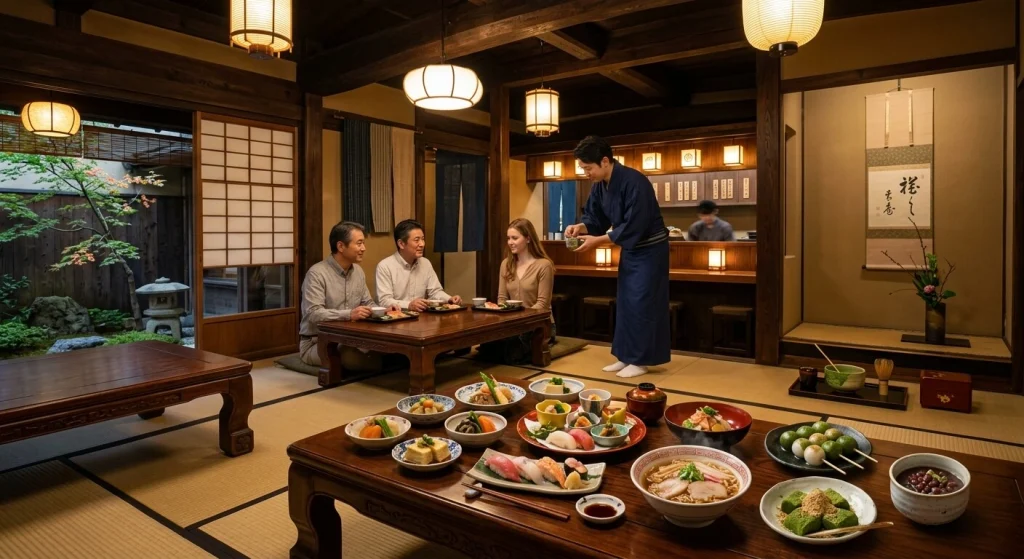
Kyoto is not only about sightseeing. Food, crafts, and traditional activities are an important part of the city.
Try to include at least one cultural experience in your trip.
18. Eat Your Way Through Nishiki Market
Nishiki Market is one of the best places to explore Kyoto’s food culture.
The narrow shopping street contains stores and stalls selling seafood, sweets, pickles, tea, spices, yuba, and other local products.
Try small portions rather than buying a full meal immediately. This gives you a chance to taste several foods.
The market can become busy around lunchtime. Visit earlier if you prefer a calmer experience.
Avoid eating while walking through the market. Eat at the shop where you purchased the food when allowed, or take it away.
19. Enjoy Kyoto’s Local Cuisine
Trying local food is one of the best things to do in Kyoto.
Kyoto has a long culinary history. Traditional dishes often focus on seasonal ingredients and careful presentation.
Look for foods such as yudofu, yuba, Kyoto vegetables, soba, tofu dishes, and matcha sweets.
Travelers who want a special experience can also try kaiseki. This multi-course dining style focuses on seasonal flavors and presentation.
20. Eat Dinner Along Pontocho
Pontocho is a narrow alley close to the Kamo River.
It is lined with restaurants serving different types of Japanese food. Some establishments have views toward the river.
The area becomes especially atmospheric after dark.
Because Pontocho is close to Gion, you can combine both areas during an evening walk. After dinner, you can also walk beside the Kamo River.
21. Take Part in a Traditional Tea Ceremony
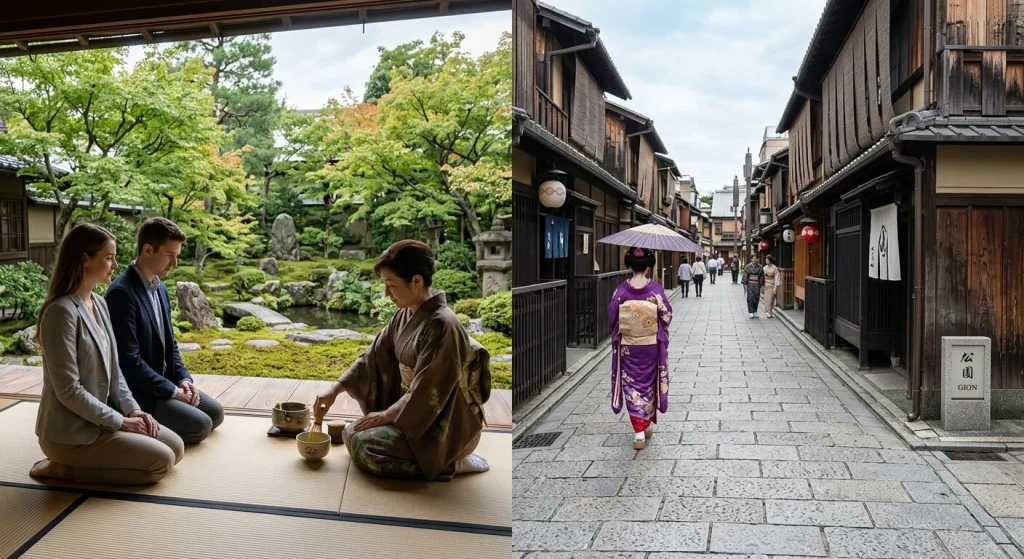
A tea ceremony gives you a closer look at an important part of Japanese culture.
During the experience, you can learn how matcha is prepared and served. You may also learn about traditional manners, utensils, and the meaning behind different steps.
Tea ceremonies are available in several parts of Kyoto.
Some experiences are designed for international visitors and provide explanations in English.
Booking ahead is a good idea for popular sessions.
22. Rent a Kimono in Gion
Renting a kimono is a popular cultural experience in Kyoto.
Gion and Higashiyama are good areas for this because they have traditional streets, temples, and historic buildings. Many rental shops offer different kimono styles and dressing services.
Some packages also include hair styling and accessories.
Book ahead during busy seasons, especially in spring and autumn. Also, wear comfortable footwear because you may spend several hours walking.
23. Join a Miniature Clay Workshop
A craft workshop offers a hands-on break from sightseeing.
A miniature clay workshop allows you to create something while learning a new skill.
It can also be a useful indoor activity during hot, cold, or rainy weather.
Kyoto has a strong craft tradition, so workshops can add another side of local culture to your trip.
24. Experience an Onsen
After several days of walking, an onsen can provide time to slow down.
Japanese hot springs have their own customs and rules. Learn basic onsen etiquette before entering.
Some facilities may have restrictions related to tattoos. Check the rules before your visit.
An onsen experience can be especially enjoyable during the colder months.
25. Explore Kyoto by Bike Along the Kamo River
The Kamo River runs through central Kyoto.
Its riverside paths are popular with walkers, runners, cyclists, and local residents. Cycling here offers a more relaxed way to experience the city.
A bicycle can also help you move between some attractions without relying on buses for every journey.
However, follow local cycling and parking rules. Use designated bicycle parking areas rather than leaving your bike on the street.
In the evening, the river is also a pleasant place to slow down after sightseeing.
Other Experiences in Kyoto
If you have more time, Kyoto has several other experiences worth considering.
Hike to Kurama
Kurama offers a mountain experience north of central Kyoto.
The area is known for forest paths, religious sites, and natural scenery. It provides a different atmosphere from Kyoto’s busy sightseeing districts.
Allow enough time for transportation and walking.
This activity is best for travelers who want to add nature and hiking to their Kyoto trip.
Visit teamLab Biovortex Kyoto
teamLab Biovortex Kyoto is a permanent digital art museum near Kyoto Station.
Its large-scale installations combine light, sound, movement, and interactive art. It offers a modern contrast to Kyoto’s historic attractions.
Tickets use timed entry and may sell out. Therefore, booking ahead is sensible.
Admission prices can change depending on the date and time. Check the official website before visiting.
Join a Walking Tour
A walking tour can help you understand Kyoto beyond what you see from the street.
Guides may explain local history, architecture, customs, food, and neighborhood stories.
Walking tours are particularly useful near the beginning of a trip. They can help you understand the city before exploring alone.
Check the tour format and booking terms before joining.
Experience Gion Matsuri
Gion Matsuri is one of Japan’s best-known festivals.
The festival takes place throughout July. Its best-known events include the Yamahoko float processions on July 17 and July 24.
If your Kyoto trip falls during the festival, check the official schedule before making plans.
Expect large crowds, road closures, and changes to normal transport routes around major events.
Day Trips From Kyoto
Kyoto has enough attractions for several days. However, it is also a useful base for exploring nearby destinations.
Take a Day Trip to Nara
Nara is often included in longer Japan routes because it is easy to visit from Kyoto. If you are building a shorter trip, our Japan 7 day itinerary can help organize your route.
Nara is one of the most popular day trips from Kyoto.
The city is known for historic temples, shrines, parks, and its famous deer.
A day trip gives you enough time to see several major attractions before returning to Kyoto.
However, if you only have one or two days in Kyoto, consider staying in the city instead.
Take a Day Trip to Uji for a Matcha Workshop
Uji is strongly connected with Japanese green tea and matcha.
It is a good choice for travelers interested in tea culture.
You can explore the town, try matcha products, and join a tea or matcha-related activity.
Uji is close enough to Kyoto to work as a shorter day trip.
Visit Lake Biwa
Lake Biwa is Japan’s largest freshwater lake and lies close to Kyoto.
The lake offers a change from Kyoto’s temples and busy streets.
Activities depend on the area and season. Visitors can enjoy lake views, towns, outdoor activities, and nearby cultural sites.
Consider Lake Biwa if you have extra time after seeing Kyoto’s main attractions.
Things To Book Before Your Kyoto Trip
Popular experiences can fill quickly, especially during spring and autumn.
- ✓ Tea ceremony experiences
- ✓ Kimono rental
- ✓ Popular restaurants
- ✓ TeamLab Biovortex Kyoto tickets
- ✓ Special seasonal events
- ✓ Guided walking tours
How to Plan Kyoto by Area
Kyoto attractions are spread across different parts of the city. Grouping nearby places can save time and reduce unnecessary travel.
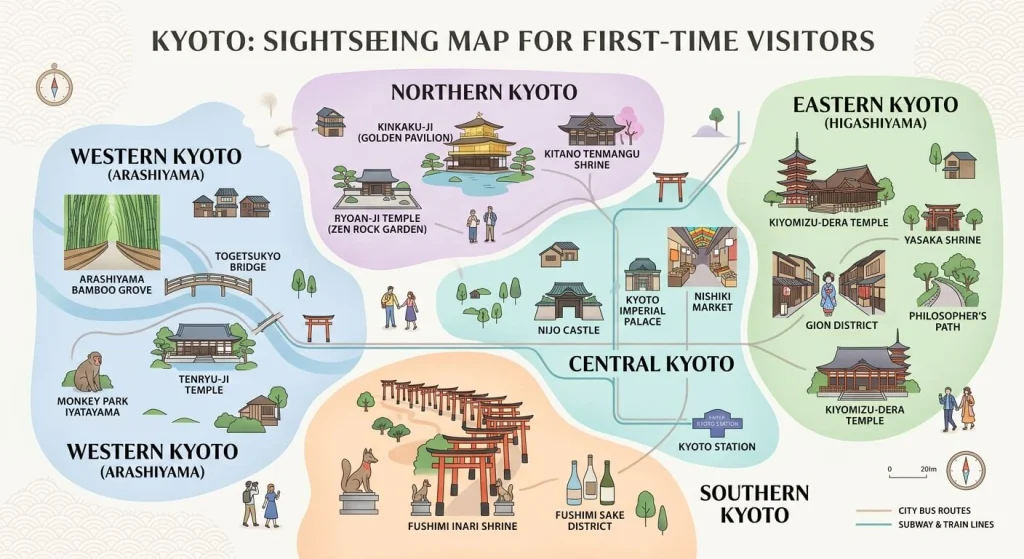
Which Kyoto Area Should You Visit?
| Kyoto Area | Best Attractions | Best For |
|---|---|---|
| Eastern Kyoto | Kiyomizu-dera, Gion, Yasaka Shrine | First-time visitors |
| Northern Higashiyama | Nanzen-ji, Philosopher’s Path, Ginkaku-ji | Walking and temples |
| Western Kyoto | Arashiyama, Tenryu-ji | Nature and scenery |
| Northern Kyoto | Kinkaku-ji, Ryoan-ji | Zen and architecture |
| Southern Kyoto | Fushimi Inari Taisha | Shrines, hiking, photography |
| Central Kyoto | Nishiki Market, Nijo Castle | Food and history |
Eastern Kyoto
Combine Kiyomizu-dera with Sannenzaka, Ninenzaka, Yasaka Shrine, and Gion.
These places work well together and can be explored during the same part of your day.
Northern Higashiyama
Visit Nanzen-ji, walk the Philosopher’s Path, and continue toward Ginkaku-ji.
This creates a logical sightseeing route without crossing the city.
Western Kyoto
Combine Tenryu-ji with Arashiyama Bamboo Grove.
If you have more time, continue exploring the wider Arashiyama area.
Northern Kyoto
Visit Kinkaku-ji and Ryoan-ji during the same trip.
Pairing them reduces the amount of time spent traveling between different parts of Kyoto.
Southern Kyoto
Fushimi Inari Taisha is one of the main attractions in southern Kyoto.
Visit it early if possible. You can then continue to another area of Kyoto later in the day.
What to Skip in Kyoto If You’re Short on Time
Not every famous attraction needs to be on your itinerary.
If you only have one or two days, avoid trying to visit every temple. Choose temples that offer different experiences instead.
You can also skip crossing Kyoto several times in one day. Group attractions by area to spend more time sightseeing and less time on transport.
Consider whether Arashiyama fits your schedule if the bamboo grove is your only reason for visiting western Kyoto. Combining it with Tenryu-ji makes the journey more worthwhile.
Also, do not feel pressured to wait in a long line simply because a food shop is popular online. Kyoto has many places to try local food.
A smaller number of well-planned experiences is usually better than rushing through a long checklist.
If you are visiting Kyoto as part of a larger Japan trip, planning your complete route can help you decide how many days to spend in each city.
How Many Days Do You Need in Kyoto?
Kyoto Itinerary Ideas
1 Day Kyoto Itinerary
Fushimi Inari → Kiyomizu-dera → Gion → Nishiki Market
2 Day Kyoto Itinerary
Day 1: Higashiyama, Gion, temples
Day 2: Arashiyama, Bamboo Grove, Kinkaku-ji
3 Day Kyoto Itinerary
Add tea ceremony, Philosopher’s Path, Nijo Castle, and a nearby day trip.
Three days is a good starting point for a first visit to Kyoto.
One day allows you to see a few major attractions, but your schedule may feel rushed.
Two days give you more time for areas such as Higashiyama, Fushimi Inari, and Arashiyama.
Three days allow you to explore the main sights at a more comfortable pace.
With four or five days, you can add more temples, cultural experiences, museums, northern Kyoto, or nearby day trips such as Nara and Uji.
Kyoto Trip Length at a Glance
| Time in Kyoto | What to Prioritize |
|---|---|
| 1 Day | Higashiyama, Gion, and Fushimi Inari |
| 2 Days | Add Arashiyama or northern Kyoto |
| 3 Days | Major sights, local food, and one cultural experience |
| 4 Days | Add quieter temples, Kurama, or more local experiences |
| 5 Days | Add Nara, Uji, or Lake Biwa |
Getting to Kyoto
Kyoto is well connected with other major Japanese cities.
The Shinkansen is one of the fastest ways to reach Kyoto from cities such as Tokyo. Regular rail services also connect Kyoto with nearby destinations such as Osaka.
For travelers using Japan’s rail network, understanding train options can make moving between destinations much easier. Our Japan train travel guide explains what first-time visitors should know.
Travelers arriving by air usually enter Japan through an airport outside Kyoto. From there, trains, buses, and other transport options connect to the city.
Kyoto Station is the city’s main transport hub.
Always check current train times, fares, and ticket rules before traveling.
Getting Around Kyoto
Kyoto has trains, subway lines, buses, taxis, and cycling routes.
However, no single transport option reaches every attraction.
Trains are useful for destinations such as Fushimi Inari and Arashiyama. Buses connect many temple areas. The subway is useful for some parts of central Kyoto.
Do not rely on buses for every journey. Combining trains, subways, buses, and walking can save time, especially during busy seasons.
Walking is also an important part of exploring Kyoto. Several attractions are close enough to visit on foot.
The easiest approach is to group attractions by area. This reduces travel time and gives you more time to enjoy each place.
Use a navigation app to check the best route for each journey.
Best Time to Visit Kyoto
Kyoto can be visited throughout the year.
Spring is popular because of cherry blossoms and mild temperatures. However, it is also one of the busiest periods.
Autumn attracts visitors because of colorful leaves around temples and gardens.
Summer can be hot and humid. However, it is also festival season, including Gion Matsuri in July.
Winter is colder and can be a good choice for travelers who prefer cooler weather and generally lighter sightseeing crowds.
The best time to visit Kyoto depends on your priorities. Choose spring or autumn for famous seasonal scenery. Consider another season if avoiding peak crowds matters more to you.
Where to Stay in Kyoto
Choosing the right neighborhood can make your trip much easier, especially for first-time visitors. Our guide on where to stay in Kyoto first time explains the best areas depending on your travel style.
The Kyoto Station area is convenient for transport and day trips. It is a practical choice if you plan to use trains often.
Gion and Higashiyama are better for travelers who want traditional streets and easy access to historic attractions.
Downtown Kyoto offers restaurants, shopping, nightlife, and convenient transport.
Choose your area based on what you plan to do rather than choosing a hotel by price alone.
Frequently Asked Questions About Kyoto
What are the top things to do in Kyoto?
For a first visit, prioritize Fushimi Inari Taisha, Kiyomizu-dera, Gion, Kinkaku-ji, Arashiyama, and Nishiki Market.
Is three days enough for Kyoto?
Yes. Three days gives most first-time visitors enough time to explore several major areas without rushing between every attraction.
Is Kyoto worth visiting for only one day?
Yes, but focus on one or two areas. Avoid trying to cover eastern, western, northern, and southern Kyoto in a single day.
What can you do in Kyoto besides temples?
Visit Nishiki Market, join a tea ceremony, rent a kimono, cycle along the Kamo River, explore Gion, try local food, or join a traditional craft workshop.
What is the best area of Kyoto for first-time visitors?
Eastern Kyoto is a strong starting point because Kiyomizu-dera, historic Higashiyama streets, Yasaka Shrine, and Gion can be combined efficiently.
Is Kyoto better than Osaka for sightseeing?
Kyoto is stronger for temples, shrines, traditional neighborhoods, gardens, and historic attractions. Osaka is better known for its urban atmosphere, nightlife, and food scene.
Ready to Plan Your Kyoto Adventure?
Create a better Kyoto trip by choosing your areas, attractions, and experiences before you arrive.
✓ Pick your must-see attractions
✓ Group places by area
✓ Reserve special experiences
✓ Create your daily route
Final Thoughts on the Best Things to Do in Kyoto
The best things to do in Kyoto go far beyond checking temples off a list.
Start with major sights such as Fushimi Inari Taisha, Kiyomizu-dera, Gion, Kinkaku-ji, and Arashiyama. Then add experiences that match your interests.
Try Kyoto food. Join a tea ceremony. Walk through historic neighborhoods. Cycle beside the Kamo River or take a day trip if you have enough time.
Most importantly, do not try to see everything.
Group nearby attractions together and give yourself enough time to enjoy them. A well-planned Kyoto trip is more rewarding than rushing through a checklist of famous places.

2 Comments
Pingback: Best Day Trips From Tokyo: 12 Easy Escapes From the City - myglobejourney.com
Pingback: Best Day Trips From Kyoto The Complete 2026 Guide