
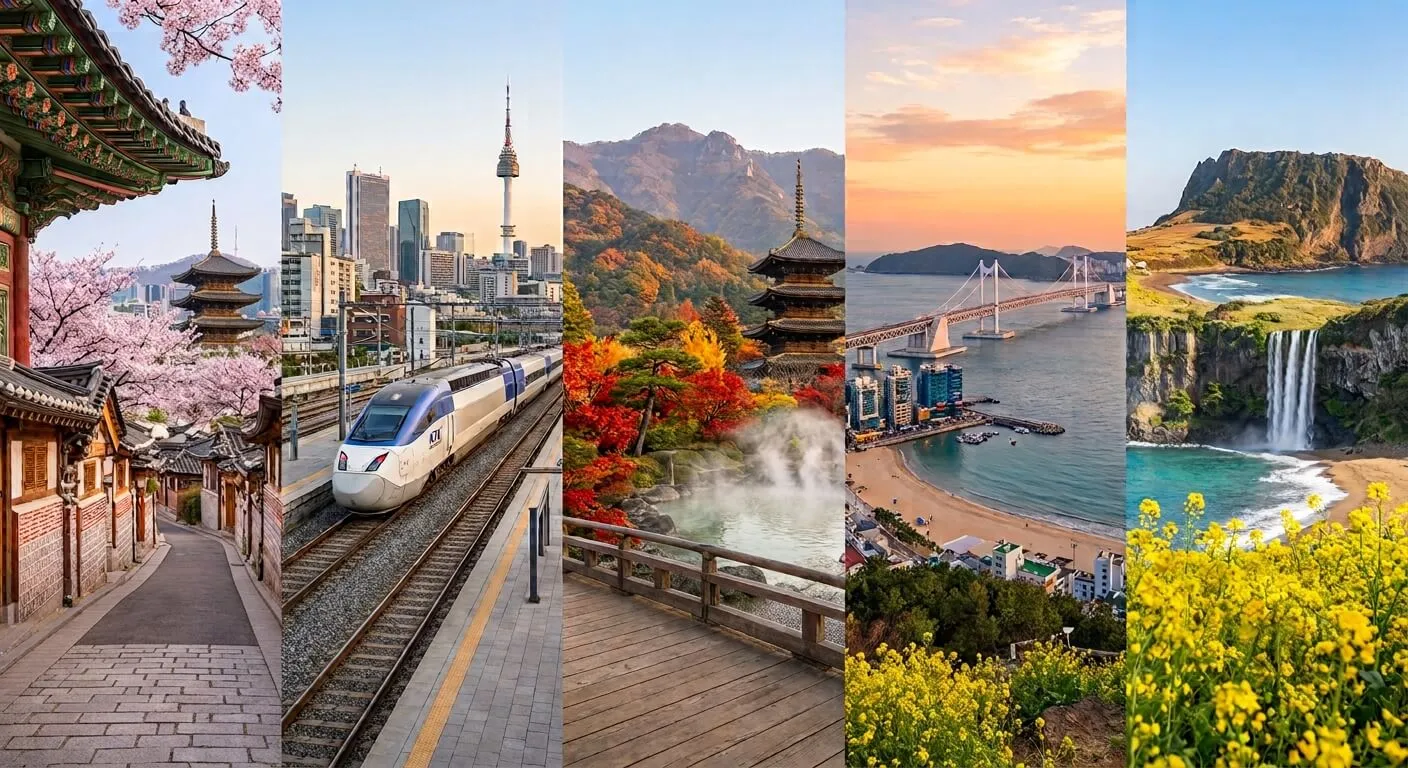

If you are planning your first trip, you may wonder how many days in South Korea are enough.
For most first-time visitors, 7 to 10 days is a good amount of time in South Korea. Seven days works well if you focus on Seoul and one other area. Around 10 days gives you more time for Seoul, Gyeongju, Busan, or another region.
If you want to add Jeju Island or travel at a slower pace, two weeks is even better.
However, there is no perfect trip length for everyone. Your ideal stay depends on your interests, travel pace, and how many places you want to visit.
This guide will help you choose between 5, 7, 10, and 14 days in South Korea.
How Many Days Should You Spend in South Korea?
For most first-time visitors, 7 to 10 days in South Korea is ideal. The right trip length depends on how many places you want to visit and how quickly you like to travel.
Planning tip: If you are flying long-haul, count your full sightseeing days rather than simply counting your arrival and departure dates.
How Many Days in South Korea? Quick Answer
Here is a simple way to choose your trip length.
| Time in South Korea | Best For | Realistic Trip |
| 3–4 days | Short city break | Seoul |
| 5 days | Quick first visit | Seoul + optional day trip |
| 7 days | First-time visitors | Seoul + Busan or Gyeongju |
| 10 days | Balanced first trip | Seoul + Gyeongju + Busan |
| 14 days | Slower multi-region trip | Seoul + Gyeongju + Busan + Jeju |
| 3 weeks | Deeper exploration | Several cities and regions |
For a balanced first trip, around 10 days is a practical sweet spot.
It gives you enough time to see different sides of South Korea without changing hotels every day.
Are You Counting Travel Days?
Before choosing your itinerary, decide what you mean by “seven days” or “ten days.”
There is a major difference between:
- 7 calendar days including international flights
- 7 full sightseeing days in South Korea
This matters even more if you are flying from the United States.
For example, you may arrive in Seoul late in the evening. Your return flight may also leave early in the morning.
As a result, a seven-day vacation may only give you five full sightseeing days.
Therefore, count the number of usable days on the ground before deciding how many cities to visit.
How Many Full Sightseeing Days Will You Actually Have?
Arrival and departure days are often only partial sightseeing days. Use this as a simple planning guide when deciding how much you can realistically fit into your trip.
| Booked Trip | Approx. Full Sightseeing Days | Realistic Plan |
|---|---|---|
| 5 Days | 3–4 days | Mostly Seoul |
| 7 Days | 5–6 days | Seoul + one other destination |
| 10 Days | 8–9 days | Seoul + two other destinations |
| 14 Days | 12–13 days | Multi-region trip + Jeju or mountains |
Once you know your trip length, check the best time to visit South Korea to choose the right season. Read our South Korea travel guide to plan the rest of your trip.
Minimum, Ideal, and Comfortable Time in South Korea
Your ideal trip length also depends on how much you want to see.
Minimum: 4 to 5 Days
Four or five days can work if Seoul is your main goal.
You can visit major palaces, markets, neighborhoods, shopping areas, and food districts.
You may also have time for one day trip.
However, this is not enough time to explore much of the country at a relaxed pace.
Ideal: 7 to 10 Days
Seven to ten days works well for many first-time visitors.
You can explore Seoul and add one or two other destinations.
A 10-day trip also gives you more room for slower mornings, train journeys, and unexpected changes.
Comfortable: About 14 Days
Two weeks gives you much more freedom.
You can visit several regions without rushing.
You may also have time for Jeju Island, mountain areas, or smaller cities.
Which South Korea Trip Length Is Right for You?
Choose your trip length based on what you actually want to see rather than trying to fit as many destinations as possible into one visit.
| If You Want To… | Recommended Stay |
|---|---|
| See Seoul’s main highlights | 4–5 days |
| Visit Seoul plus one other destination | 7 days |
| Visit Seoul, Gyeongju and Busan | 10 days |
| Add Jeju Island | 10–14 days |
| Add hiking or Seoraksan | 10–14 days |
| Travel at a slower pace | 14 days |
| Explore several regions | 14–21 days |
Best all-round option: Around 10 days gives most first-time visitors enough time to experience Seoul and two contrasting destinations without changing hotels every day.
Seoul Only vs Exploring South Korea
A trip to Seoul is different from a trip around South Korea.
If Seoul is your only destination, 4 to 5 days is a useful amount of time.
You can see the main historic areas and still explore modern neighborhoods, cafés, markets, and shopping districts.
However, if you want to see more of the country, plan longer.
| Travel Goal | Suggested Time |
| Seoul only | 4–5 days |
| Seoul + one other area | 7 days |
| Seoul + two other destinations | 10 days |
| Wider South Korea trip | 14 days |
So, ask yourself one question before booking:
Do I want to visit Seoul, or do I want to travel around South Korea?
The answer can change your ideal trip length.
5, 7, 10 or 14 Days: What Can You Realistically See?
These routes keep hotel changes manageable while giving you enough time to enjoy each destination.
Is 5 Days Enough in South Korea?
Yes, five days can be enough for South Korea if you keep your itinerary simple.
For most first-time visitors, Seoul should be the main base.
A five-day trip could include:
Days 1–4: Seoul
Day 5: Seoul or a nearby day trip
Fast-paced travelers could add another destination. However, every extra hotel change takes time away from sightseeing.
Therefore, do not try to fit Seoul, Busan, Gyeongju, and Jeju into five days.
A short trip is usually better when you see fewer places properly.
Is 7 Days Enough in South Korea?
Yes. Seven days is enough for a first trip to South Korea.
You should still limit the number of destinations.
One option is:
Days 1–4: Seoul
Days 5–7: Busan
Another option is:
Days 1–4: Seoul
Days 5–6: Gyeongju
Day 7: Return to Seoul or continue toward Busan
If history is a major interest, choose Gyeongju.
If you prefer beaches, seafood, markets, and a larger second city, Busan may be the better choice.
Jeju is possible on a seven-day trip. However, adding another flight can make the itinerary feel rushed. Planning a different trip length? See our South Korea 7 day itinerary.
How to Spend 10 Days in South Korea
Ten days gives you a better balance between sightseeing and travel.
A simple first-time route is:
Days 1–4: Seoul
Days 5–6: Gyeongju
Days 7–9: Busan
Day 10: Final sightseeing or departure
This route combines three different sides of South Korea.
Seoul gives you modern city life, history, food, shopping, and nightlife.
Gyeongju adds historic sites and traditional culture.
Busan gives you coastal scenery, markets, seafood, and a more relaxed city atmosphere.
You could also replace Gyeongju with another destination if history is not a priority.
How to Spend 14 Days in South Korea
Two weeks gives you enough time for a broader trip.
One possible route is:
Days 1–4: Seoul
Days 5–6: Gyeongju
Days 7–9: Busan
Days 10–13: Jeju Island
Day 14: Departure
Another option is to replace Jeju with Sokcho and Seoraksan if hiking and mountains are more important to you.
A 14-day itinerary also gives you more space for rest.
That matters because travel does not always go exactly as planned. Weather, jet lag, or simply finding a neighborhood you love may make you want to slow down.
How Many Places Should You Visit?
More destinations do not always create a better trip.
Every time you change cities, you need to:
- pack your luggage
- check out
- reach the station or airport
- travel
- find your next hotel
- check in
- unpack again
Even a short train journey can take a large part of the day once these extra steps are included.
A simple rule is:
5 days: one main base
7 days: one or two main bases
10 days: two or three regions
14 days: three or four regions
This gives you more time to enjoy each destination.
How Many Days in Seoul?
Most first-time visitors should allow 3 to 5 days in Seoul.
Three days can cover several major highlights.
Four or five days gives you more time to explore different neighborhoods.
Popular areas and experiences include:
- Gyeongbokgung Palace
- Bukchon Hanok Village
- Insadong
- Myeongdong
- Hongdae
- Gangnam
- traditional markets
- Korean barbecue
- cafés
- shopping districts
You can also use an extra day for a trip outside central Seoul.
Seoul and the DMZ
Some visitors use one of their Seoul days for a DMZ tour.
Remember that a full-day excursion reduces the amount of time you have for Seoul itself.
Therefore, if you want several day trips, consider adding another night in the city.
How Many Days in Busan?
Around 2 to 3 days in Busan works well for most first-time visitors.
Two days can cover several key areas.
Three days gives you a more relaxed pace.
Busan is known for its coast, seafood, markets, temples, and city views.
It also creates a strong contrast with Seoul.
How Many Days in Gyeongju?
Allow around 1 to 2 days in Gyeongju.
One full day can cover several major historic sites.
Two days works better if you enjoy history and want a slower visit.
Gyeongju is a good addition between Seoul and Busan because it adds a different type of experience to the trip.
How Many Days on Jeju Island?
Allow at least two days for Jeju, although 3 to 4 days is better if you want to explore several parts of the island without rushing.
Jeju is larger than many first-time visitors expect.
You also need to account for airport travel and your flight.
Therefore, a very short Jeju visit may not be worth the extra transfer time.
Is Jeju Worth Adding to a First South Korea Trip?
Jeju can be a great addition, but it is not essential for every first visit.
Add Jeju if:
- nature is a major priority
- you enjoy hiking
- you want coastal scenery
- you have around 10 to 14 days
- you do not mind adding a flight
Consider skipping Jeju if:
- you only have five to seven days
- cities and history are more important
- you want to avoid extra transfers
- you prefer a slower mainland trip
Skipping Jeju does not mean you are missing the “real” South Korea.
It simply gives you more time in other places.
Jeju or Gyeongju: Which Should You Choose?
Jeju and Gyeongju offer very different experiences.
Choose Gyeongju if you prefer:
- Korean history
- temples
- cultural sites
- easier mainland travel
- a shorter stop
Choose Jeju if you prefer:
- nature
- hiking
- coastlines
- island scenery
- a longer outdoor-focused stay
For a one-week trip, Gyeongju is usually easier to include.
Jeju makes more sense when you have extra days.
Seoraksan and Sokcho
Sokcho and Seoraksan are good options for travelers who want mountains and hiking.
They work especially well on a longer trip.
However, adding this region means removing time from somewhere else.
If mountains are a major reason for your visit, the trade-off may be worth it.
Andong
Andong is another option for travelers interested in traditional Korean culture.
It often fits more comfortably into a longer itinerary.
If you only have one week, keeping your route around Seoul and one other main destination is usually simpler.
How Many Days in South Korea by Travel Pace?
Two travelers can visit South Korea for the same number of days and have very different trips.
| Trip Length | Slow Pace | Balanced Pace | Fast Pace |
| 5 days | One city | One city + day trip | Two quick stops |
| 7 days | Seoul-focused | Two main bases | Two bases + side trip |
| 10 days | Two bases | 2–3 regions | Several stops |
| 14 days | Three regions | Wider country trip | Multi-region route |
Do not choose a fast itinerary only because it looks impressive on paper.
Think about how much time you want to spend inside stations, airports, and trains.
How Many Days in South Korea From the USA?
Travelers coming from the United States should think about the long international journey.
Arrival and departure days may not be full sightseeing days.
Jet lag can also affect the start of your trip.
Therefore, 7 to 10 full days on the ground is more comfortable than trying to fit a long-haul Korea trip into only a few usable days.
If possible, keep your first evening simple.
You can check into your hotel, eat nearby, and start serious sightseeing the next morning.
Entry Note for U.S. Travelers
Updated August 2026
U.S. citizens can currently visit South Korea without a visa for tourism or business stays of up to 90 days. The current K-ETA exemption is in effect through December 31, 2026. Entry rules can change, so travelers should check official guidance again before departure.
Should You Fly Into Seoul and Out of Busan?
If your route is Seoul → Gyeongju → Busan, an open-jaw flight can reduce backtracking.
This means arriving in Seoul but flying home from the Busan area.
However, compare flight prices first.
Round-trip Seoul flights may offer better schedules or prices from some U.S. cities.
If the price difference is small, ending the trip in Busan can save valuable travel time.
Best Time to Visit South Korea
South Korea has four distinct seasons. Spring and fall are generally mild, summer is hot and humid, and winter is cold and dry.
The season can also change how quickly you want to travel.
Spring
Spring is popular for mild weather and seasonal flowers.
If outdoor sightseeing is a priority, you may want extra time for parks and day trips.
Summer
Summer can be hot and humid.
A slower itinerary can give you more time for indoor breaks.
Avoid filling every day from morning until late at night.
Autumn
Autumn is popular for mild weather and changing leaves.
Hikers may want to add mountain areas such as Seoraksan.
Winter
Winter can be very cold.
However, cities, cafés, snow activities, and winter scenery can still make it a rewarding time to visit.
If skiing is part of your trip, allow extra days outside Seoul.
Where to Stay in South Korea
Your hotel location can affect how much sightseeing you fit into each day.
A cheaper hotel far from the areas you want to visit may cost you more time.
Therefore, choose locations with useful transport links.
Where to Stay in Seoul
Seoul is huge, so different neighborhoods suit different travelers.
Myeongdong
Myeongdong is convenient for first-time visitors who want shopping, food, and a central location.
Insadong
Insadong works well for travelers interested in historic areas and traditional culture.
Hongdae
Hongdae has a younger atmosphere with cafés, shopping, and nightlife.
Gangnam
Gangnam gives you a more modern side of Seoul.
It may suit travelers interested in shopping, dining, K-pop, and K-beauty.
Where to Stay in Gyeongju
Choose a location that keeps the main sights easy to reach.
A central stay can reduce the amount of local travel you need.
Where to Stay in Busan
Busan covers a large area.
Some visitors prefer coastal neighborhoods.
Others choose areas that make train, subway, and market access easier.
Choose based on what you plan to do rather than hotel price alone.
How to Get Around South Korea
South Korea has extensive public transportation in its major cities. Transportation cards such as Tmoney and EZL can be used across public transport networks and offer a convenient alternative to buying separate tickets for each ride.
However, transport time still matters when planning a multi-city trip.
Traveling Between Cities
Rail is useful for routes between major destinations.
Even so, do not look only at the time shown for the train.
You also need time to leave your hotel, reach the station, find your platform, and travel to your next accommodation after arrival.
This is why too many city changes can make a short trip tiring.
Useful Apps and Tools for South Korea
A few tools can make independent travel easier.
Naver Map
Naver Map provides route suggestions and estimated travel times for walking, driving, cycling, and public transport. It also includes business information and reviews.
KORAIL
Use official KORAIL services when checking Korean rail schedules and train tickets.
Tmoney or EZL
Tmoney and EZL are reloadable transportation cards that can be used on public transport.
Papago
Papago is useful for Korean translation and can help with signs, menus, and conversations.
Download the tools you plan to use before leaving home.
What to Eat in South Korea
Food can take up a big part of your trip in the best possible way.
Popular things to try include:
- Korean barbecue
- bibimbap
- fried chicken
- street food
- noodles
- seafood
- traditional markets
- café culture
Do not book every meal before you arrive.
Leave room to find small restaurants and markets along the way.
How Much Does Trip Length Affect Your Budget?
A longer South Korea trip will normally increase your total cost.
The main daily expenses are:
- accommodation
- food
- local transport
- intercity travel
- attractions
- shopping
However, your international airfare does not automatically increase because you stay three extra nights.
For travelers coming from the USA, this matters.
Once you have paid for a long international flight, staying 10 days instead of 7 may offer better value if your budget and vacation time allow it.
When planning your budget, separate:
international airfare
from
daily costs inside South Korea
This makes it easier to compare different trip lengths.
How Many Days by Travel Style?
Your interests can change the answer to how many days in South Korea you need.
First-Time Visitors
Plan around 7 to 10 days if possible.
This gives you enough time for major highlights without trying to see everything.
Solo Travelers
Solo travelers may find it easier to move quickly because they can change plans without coordinating with a group.
Still, leave some free time.
Couples
Couples may prefer a slower route with more time for food, cafés, scenery, and evenings.
Families
Families should avoid changing hotels too often.
Longer stays in each base can make the trip easier.
Food Lovers
Spend extra time in Seoul and Busan.
You may also want to explore local markets and regional food.
Nature Lovers
Consider Jeju, Seoraksan, or other outdoor areas.
You may need more days because these places add travel time.
History and Culture Travelers
Seoul and Gyeongju are strong choices.
Longer trips can also include smaller traditional destinations.
K-Pop, K-Drama, and K-Beauty Fans
If Korean pop culture is a major reason for your trip, spend more time in Seoul.
You may want extra days for shopping, entertainment districts, cafés, beauty stores, pop-up events, and filming locations.
In this case, a seven-day trip does not need to include several cities.
Repeat Visitors
Repeat visitors can spend less time on Seoul’s major first-time attractions.
Instead, use more of the trip for places such as Jeju, Andong, Jeonju, Sokcho, Seoraksan, or smaller coastal areas.
What Not to Do on a Short South Korea Trip
Don’t Try to See All of South Korea in One Week
Seoul, Busan, Gyeongju, Jeju and Seoraksan may all look tempting, but fitting them into a seven-day trip creates too much transfer time.
Every hotel change means packing, checking out, reaching the station or airport, travelling, checking in and unpacking again. Fewer bases often mean more time actually enjoying South Korea.
The biggest mistake is trying to visit too many destinations.
For example, Seoul, Busan, Gyeongju, Jeju, and Seoraksan may all sound attractive.
However, trying to fit all of them into one week will create a lot of transfer time.
Instead, ask yourself:
Which two or three experiences matter most to me?
Then build your route around those priorities.
A simple itinerary is often a better itinerary.
South Korea Travel FAQ
How Many Days in Korea Is Enough?
For many first-time visitors, 7 to 10 days is enough to enjoy Seoul and at least one other part of South Korea.
Is 5 Days Worth It?
Yes.
Five days is worth it if you focus mainly on Seoul and avoid trying to cover the whole country.
Is 7 Days Too Short for South Korea?
No.
Seven days can work very well if you choose one or two main bases.
Is 10 Days Enough for South Korea?
Yes.
Ten days gives first-time visitors a good balance of city time, culture, food, and regional travel.
Are Two Weeks Too Long in South Korea?
No.
Two weeks gives you time to travel more slowly and include destinations such as Jeju or mountain regions.
How Many Days Do You Need in Seoul?
Around 3 to 5 days works well for most first-time visitors.
Add more time if you want several day trips.
How Many Days Do You Need in Busan?
Around 2 to 3 days is enough for many first-time visitors.
How Long Should You Spend on Jeju?
Allow at least two days.
Three or four days is better if you want to explore several parts of the island.
Should I Visit Jeju on a One-Week Trip?
You can, but it may make the trip feel rushed.
For many first-time visitors, Jeju fits better into a 10 to 14-day trip.
What Is the Best Month to Visit South Korea?
There is no single best month for everyone.
Spring and autumn often offer mild weather, while summer and winter suit different activities. South Korea has four distinct seasons, so your ideal time depends on what you want to do.
The Bottom Line
So, how many days in South Korea do you really need?
For most first-time visitors, 7 to 10 days is a practical choice.
Choose around five days if Seoul is your main goal.
Choose seven days if you want Seoul plus one other destination.
Choose around 10 days if you want a balanced trip through Seoul, Gyeongju, Busan, or another region.
Choose two weeks if you want Jeju, mountain areas, more destinations, or a slower pace.
Most importantly, do not measure a successful trip by the number of cities you visit.
Choose the trip length that gives you enough time to actually enjoy South Korea.

2 Comments
Pingback: South Korea 7 Day Itinerary: Seoul & Busan Guide
Pingback: South Korea 10 Day Itinerary: First-Time Route