
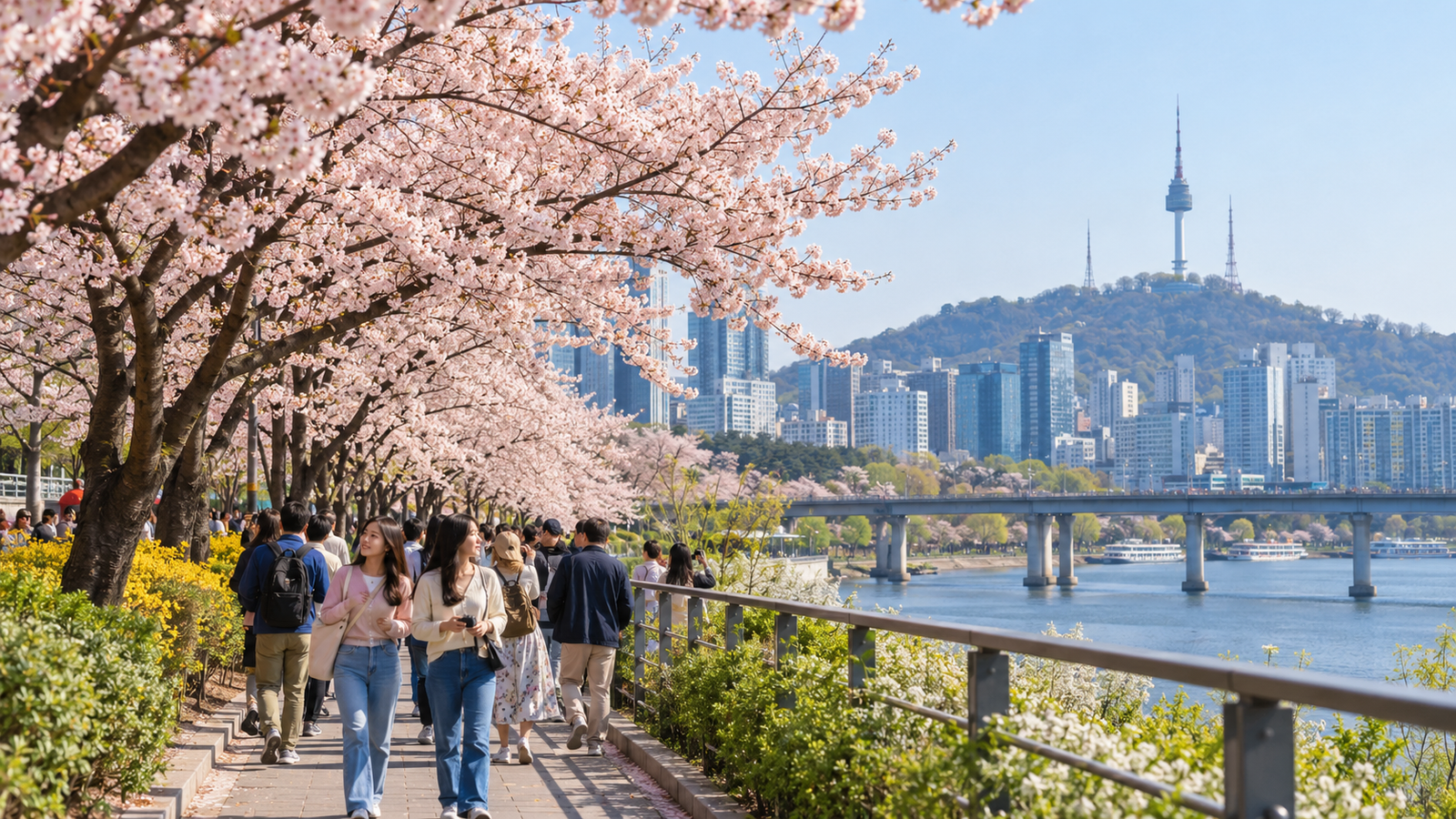

The best time to visit South Korea is during spring (March to May) or fall (September to November). These two seasons bring mild weather, clear skies, and stunning scenery. Spring gives you pink cherry blossoms. Fall gives you red and gold leaves.
But the “best” time depends on you. Do you want warm beach days? Go in summer. Do you love snow and skiing? Winter is your season. This guide breaks down every month. You will learn what to expect from the weather, the crowds, and the festivals. By the end, you will know exactly when to book your trip.
Key Takeaways
- Best overall: April, May, September and October, with mild weather and clear skies.
- Cherry blossoms: late March to mid-April. Fall leaves: mid-October to mid-November.
- Worst month: July, because of the jangma rainy season and high heat.
- Beaches: July and August. Skiing: December to February.
- Cheapest months: January, February and late November.
- Plan around holidays such as Seollal and Chuseok, when transport and hotels get busy.
Part of our South Korea Travel Guide
Planning your trip? Read how many days you need in South Korea and follow our South Korea 7 day itinerary.
Quick Answer: Best Months at a Glance
Short on time? Here is the simple version.
- Best overall: April, May, September, October
- Best for cherry blossoms: Late March to mid-April
- Best for fall leaves: Mid-October to mid-November
- Best for beaches: July and August
- Best for skiing: December to February
- Worst month to visit: July (heavy rain and high heat)
- Cheapest months: January, February, and late November
Now let’s look at each season in detail.
South Korea Travel Calendar
Seoul average high by month, rated for first-time visitors.
Spring in South Korea (March–May)
Spring is one of the best times to visit South Korea. The air turns warm. Flowers bloom across the country. This is peak cherry blossom season. Read our South Korea travel guide to plan the rest of your trip.
What the weather feels like
March starts cool. Average highs sit near 54°F (12°C). By May, temperatures climb to a comfortable 73°F (23°C). Rain is light during these months. Skies stay mostly clear.
Cherry blossoms
Cherry blossoms usually bloom from late March to mid-April. The exact dates shift each year based on temperature. Jeju Island blooms first. Seoul blooms about two weeks later. Popular spots include Yeouido Park in Seoul and Jinhae, a small coastal town famous for its blossom festival.
A word of caution: yellow dust
Every spring, South Korea sees “yellow dust” (hwangsa). This is fine sand blown in from deserts in China and Mongolia. It can irritate your eyes and throat. Check the daily air quality index if you have allergies or asthma. A simple face mask helps on bad dust days.
Should you visit in spring?
Yes, if you want mild weather and beautiful scenery. Just know that popular sites get crowded during peak bloom. Book hotels early.
Summer in South Korea (June–August)
Summer brings heat, humidity, and rain. It is not the most comfortable season. But it has its own charm, especially if you love beaches and festivals.
What the weather feels like
Temperatures often reach the mid-80s°F (29–30°C) in July and August. Humidity makes it feel hotter. June is milder but still warm.
The rainy season (jangma)
Late June through late July is Korea’s rainy season, called jangma. Expect heavy, sudden downpours. Rain can fall for days at a time. Pack a strong umbrella and waterproof shoes.
Why some travelers still choose summer
Beaches come alive in July and August. Busan’s Haeundae Beach fills with sunbathers. Water festivals, like the Boryeong Mud Festival, draw big crowds. If you don’t mind heat and rain, summer offers a fun, high-energy trip.
Should you visit in summer?
Only if beaches and festivals matter more to you than comfort. Pack light clothes, sunscreen, and rain gear.
Fall in South Korea (September–November)
Fall is the second-best season to visit South Korea. Many travelers say it rivals spring for beauty.
What the weather feels like
September starts warm, near 77°F (25°C). By November, temperatures drop to the low 50s°F (11°C). Rain becomes rare. Skies stay clear and blue.
Fall foliage
Leaves start changing color in late September in the northern mountains. The color spreads south through October and into mid-November. Seoraksan National Park and Naejangsan National Park are top spots for viewing.
Typhoon risk in September
Early fall can still bring the tail end of typhoon season. Storms are less common than in summer but still possible. Check the forecast before booking outdoor activities.
Should you visit in fall?
Yes. Fall offers the best mix of comfort, scenery, and lower humidity. October is often called the most pleasant month of the year in South Korea.
Winter in South Korea (December–February)
Winter is cold and dry. It is the least popular season for tourists, but it has real benefits.
What the weather feels like
Seoul often sees temperatures below freezing, especially in January. Snow falls, particularly in the mountains. Coastal cities like Busan stay a bit milder.
Why winter still works
Crowds thin out. Hotel prices drop. If you love snow sports, this is your season. Ski resorts near Pyeongchang and Seoraksan open for the winter. Cozy indoor spots, like hot pot restaurants and traditional bathhouses (jjimjilbang), feel extra good in the cold.
Should you visit in winter?
If you want low prices and fewer tourists, yes. If you hate cold weather, plan for spring or fall instead.
Monsoon Season: What You Need to Know
Many first-time visitors don’t know about jangma, Korea’s monsoon season. Here is what to expect.
- When it happens: Late June to late July, lasting about 30 days
- How much it rains: This period brings a large share of the year’s total rainfall
- What it feels like: Short, heavy bursts of rain, followed by humid, cloudy breaks
- Typhoon risk: Possible, especially in the later weeks
Tips for traveling during jangma
- Pack a compact umbrella and quick-dry clothing
- Plan indoor backup activities, like museums or shopping malls
- Use Korea’s subway system. It runs on time, rain or shine
- Check weather apps daily. Storms can shift fast
You don’t need to cancel a summer trip because of jangma. You just need to plan around it.
Festival Calendar
South Korea holds festivals all year. Here are some of the best-known ones, by season.
| Festival | When | Where |
| Jeju Fire Festival | Late February–early March | Jeju Island |
| Yeon Deung Hoe Lotus Lantern Festival | Early May | Seoul |
| Boryeong Mud Festival | Mid-July | Boryeong |
| Busan Fireworks Festival | October | Busan (Gwangalli Beach) |
| Seoul Lantern Festival | November | Seoul (Cheonggyecheon Stream) |
| Seongsan Sunrise Festival | New Year’s Eve | Jeju Island |
Festival dates can shift slightly each year. Check official tourism sites closer to your travel dates.
Best Time to Visit by City
South Korea’s climate changes a bit from city to city. Here is a quick breakdown.
Seoul
Seoul has hot, humid summers and cold, dry winters. Spring and fall are the sweet spots. Cherry blossoms peak in early April.
Busan
Busan sits on the coast, so it stays a bit milder than Seoul in winter. Summer is popular here because of the beaches. Rain during jangma is lighter than in Seoul.
Jeju Island
Jeju has the mildest winters in South Korea. Cherry blossoms bloom earlier here than anywhere else in the country, often in late March.
Gyeongju
Gyeongju sits inland, so its weather pattern is close to Seoul’s, with cold winters and warm, humid summers. Spring brings cherry blossoms to its palace grounds and historic sites. Fall foliage season draws visitors to its ancient tombs and temples.
Daegu
Daegu runs a little hotter than Seoul in summer, with fewer rainy days. Winters are cold but slightly milder than Seoul’s. Spring and fall stay the most comfortable seasons here too.
Best Time to Visit by Traveler Type
Not every traveler wants the same thing. Use this list to match the season to your goals.
- Budget travelers: Visit in January, February, or late November for lower prices
- Families with kids: Visit in summer, when schools are out and beach towns are lively
- Hikers: Visit in October and November for cool weather and colorful trails
- Photographers: Visit in early April for blossoms or late October for foliage
- Beach lovers: Visit in July or August
- Festival-goers: Visit in spring or summer for major outdoor events
- Winter sports fans: Visit in January for skiing and snowboarding
- K-culture and food lovers: Visit in spring or fall for outdoor food festivals, drama filming location tours, and comfortable weather for fan events and photo spots
Major Holidays to Plan Around
South Korea has two major holidays that affect travel plans.
Seollal (Korean Lunar New Year)
This falls in late January or February, based on the lunar calendar. Many locals travel to their hometowns. Trains and buses book out fast. Many shops and restaurants close for a few days.
Chuseok (Korean Thanksgiving)
This falls in September or early October, also based on the lunar calendar. Like Seollal, it causes heavy domestic travel and closed businesses.
What to do about it
Check the exact dates before you book. If your trip overlaps with either holiday, book transport and hotels well in advance. Some travelers prefer to avoid these weeks entirely.
Cheapest Months to Visit
If your budget matters most, aim for the off-season.
- January and February: Cold weather keeps prices low, except around Seollal
- Late November: After fall foliage crowds leave, but before winter holiday travel picks up
Avoid peak cherry blossom weeks (late March–early April) and Chuseok week if you want the best deals.
Month-by-Month Weather Table
| Month | Seoul Avg. High | Rainfall | Crowd Level | Good For |
| January | 34°F (1°C) | Low | Low | Skiing, budget travel |
| February | 39°F (4°C) | Low | Low | Skiing, budget travel |
| March | 48°F (9°C) | Low-Medium | Medium | Early blossoms |
| April | 63°F (17°C) | Medium | High | Peak cherry blossoms |
| May | 73°F (23°C) | Medium | Medium | Mild weather, hiking |
| June | 79°F (26°C) | High (jangma starts) | Medium | Early summer travel |
| July | 84°F (29°C) | Very High | Medium | Beaches (with rain gear) |
| August | 86°F (30°C) | High | High | Beaches, festivals |
| September | 77°F (25°C) | Medium | Medium | Early fall color |
| October | 66°F (19°C) | Low | High | Peak fall foliage |
| November | 52°F (11°C) | Low | Low-Medium | Late foliage, budget travel |
| December | 37°F (3°C) | Low | Low | Winter festivals |
FAQ
Is July a good time to visit South Korea?
July is one of the least comfortable months. It brings heavy rain from the jangma monsoon and high humidity. If you can, plan your trip for a different month.
What is the rainy season in South Korea called?
It is called jangma. It usually runs from late June to late July.
When do cherry blossoms bloom in South Korea?
Cherry blossoms usually bloom from late March to mid-April. Jeju Island blooms first, followed by the mainland.
Is South Korea very cold in winter?
Yes, especially in Seoul and inland areas. Temperatures often drop below freezing in January.
What is the cheapest month to visit South Korea?
January, February, and late November tend to have the lowest prices, outside of major holidays.
Should I avoid Chuseok or Seollal when planning my trip?
It’s smart to plan around them. Both holidays bring heavy domestic travel, closed shops, and booked-out transport.
Is Busan warmer than Seoul?
Yes. Busan’s coastal location keeps it milder in winter and less humid in summer.
What is the best month to visit Jeju Island?
April is ideal for early cherry blossoms. October is great for mild weather and fewer crowds.
Final Thoughts
There is no single “perfect” month to visit South Korea. It depends on what you want from your trip. If you want the best weather and top scenery, choose spring or fall. If you want lower prices, go in winter. If you want beaches and energy, pick summer, but pack for rain.
Whatever month you choose, South Korea has something worth seeing. Plan around the season that fits your travel style, and you will have a trip to remember.