
South Korea Travel Guide for First-Time Visitors
Planning your first trip can feel like a lot. Where do you start? This South Korea travel guide walks you through every step, from visas to where to stay, so your trip feels simple, not stressful.
South Korea mixes ancient palaces with neon-lit streets. You can explore a royal palace in the morning. You can eat spicy street food in the afternoon. Then you can watch Seoul light up at night. Many travelers first fall in love with Korea through K-dramas or K-pop. The real country is just as exciting to explore in person.
Below, we cover visas, costs, the best time to go, where to stay, and how to get around. Where we have a detailed guide, we link to it so you can dig deeper.
By Alex Morgan, My Globe Journey · Last updated: September 2026
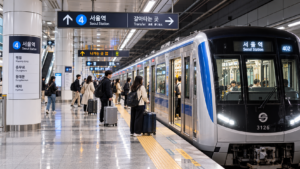
How to Get Around South Korea in 2026: Trains, Buses, Costs & Travel Tips
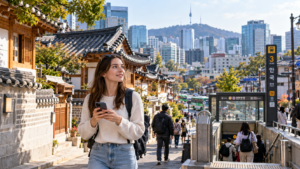
Things to Know Before Visiting South Korea in 2026 First-Time Travel Guide
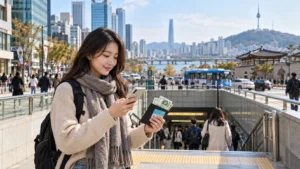
South Korea Trip Cost: How Much Does It Cost to Visit in 2026?
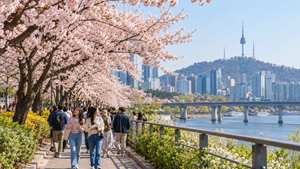
Why Visit South Korea
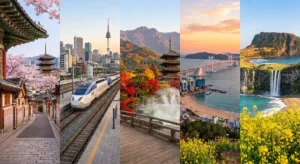
South Korea offers something for every kind of traveler. If you love history, you can walk through centuries-old palaces and temples. If you love food, you can eat some of the boldest flavors in Asia. If you love nature, you can hike mountains right inside Seoul.
South Korea is also very safe and easy to travel. The subways are clean. The trains are fast. Most signs use English alongside Korean in major cities. This makes South Korea a great pick, even for first-time international travelers.
Do You Need a Visa for South Korea?
Most US, Canadian, UK, and Australian travelers do not need a visa for short trips to South Korea. You can usually stay up to 90 days for tourism.
However, there is one important update for 2026. South Korea now requires a digital e-Arrival Card instead of a paper form. You fill it out online within 72 hours before you land. It is free and only takes a few minutes.
There is also a system called K-ETA. Normally, K-ETA is required before you fly. But this rule is currently paused for citizens of many countries, including the US, through the end of 2026. Starting in 2027, K-ETA may become required again.
So, always check the official K-ETA website before you book your flight, since these rules can change.
Best Time to Visit South Korea
South Korea has four full seasons, and each one feels different. Spring brings cherry blossoms and mild weather. Autumn brings cool air and bright red and orange leaves. Summer is hot, humid, and rainy. Winter is cold, but great for skiing and snow festivals.
Most travelers pick spring or autumn. These seasons bring the best weather and the prettiest scenery. They also bring bigger crowds and higher prices.
Many first-time visitors pair South Korea with a trip to Japan, since the two countries are close and easy to combine. If that is your plan, note that South Korea’s cherry blossoms often bloom around the same time as Japan’s. Book your flights between the two countries early, since seats fill up fast during peak bloom season.
For a full month-by-month breakdown, read our guide on the best time to visit South Korea.
For a full month-by-month breakdown, read our guide to the best time to visit South Korea.
How Long Do You Need in South Korea?
The right trip length depends on how many places you want to see, not just a fixed number of days.
About 1 week: Pick one city as your base, either Seoul or Busan. You can fill 7 days easily with neighborhoods, food, and day trips, without ever feeling rushed.
About 2 weeks: You can now combine two or three regions. Seoul and Busan work well together, and you can add Gyeongju in between.
About 3 weeks: You have time to slow down and add places like Jeju Island, along with smaller cities that most first-timers skip.
Most first-time visitors do well with 7 to 10 days. Read our full guide on how many days you need in South Korea to plan your ideal trip length.
Still deciding? See how many days you need in South Korea for 5, 7 and 10-day trip ideas.
How Much Does a Trip to South Korea Cost?
South Korea costs less than Japan in most categories, but it is not a budget destination either. Your total cost depends on your travel style. Here is a simple weekly breakdown for one person, not including flights:
| Travel Style | Weekly Budget (USD) | What You Get |
|---|---|---|
| Budget | $450–$650 | Hostels, street food, subway and buses |
| Mid-Range | $800–$1,200 | Comfortable hotels, mix of casual and nice meals |
| Luxury | $1,800+ | High-end hotels, private tours, fine dining |
For a full cost breakdown by category, check our detailed guide on South Korea trip cost.
Where to Go on Your First Trip
You do not need to see all of South Korea on one trip. Most first-time visitors focus on three places: Seoul, Busan, and Gyeongju.
Seoul is the capital and the best starting point for almost every traveler. You get palaces, markets, nightlife, and easy day trips, including the famous DMZ tour to the North Korean border.
Busan feels very different from Seoul. It is a coastal city with beaches, seafood markets, and a slower pace. It also makes a great base for visiting Gyeongju.
Gyeongju is the best stop for Korean history. This former capital is filled with temples, royal tombs, and traditional architecture. Many travelers visit as a day trip from Busan, but staying overnight lets you see it without rushing.
Exploring Seoul
Seoul is where most first-time trips begin. You can spend anywhere from 3 days to a full week here without running out of things to do.
Explore our full Seoul guides:
- Seoul 3 Day Itinerary
- Best Things to Do in Seoul
- Where to Stay in Seoul First Time
- Best Day Trips from Seoul
Exploring Busan
Busan is South Korea’s second-biggest city, and it offers a completely different pace than Seoul. Think beaches, seafood, and coastal walks.
Explore our full Busan guides:
- Busan 3 Day Itinerary
- Things to Do in Busan
- Where to Stay in Busan
Exploring Gyeongju
Gyeongju rewards travelers who care about Korean history. It is quieter than Seoul or Busan, with temples and tombs spread across the city.
Explore our full Gyeongju guides:
- Is Gyeongju Worth Visiting?
- Gyeongju One Day Itinerary
- Where to Stay in Gyeongju
Getting Around South Korea
South Korea has an excellent public transport system, and you rarely need to rent a car.
Inside cities, you will use the subway, buses, and taxis. Most travelers get a T-money card. This is a rechargeable transit card that works on subways, buses, and even some taxis and convenience stores across the country.
Between cities, the KTX high-speed train connects major cities like Seoul and Busan in under three hours. Express buses are a cheaper option and cover more small towns than the train does.
For full details on trains, buses, and city transport, read our guide on how to get around South Korea.
You can also read our specific transport guides:
- Seoul to Busan Train Guide
- Seoul to Gyeongju Travel Guide
What to Eat in South Korea
Korean food is bold, spicy, and full of flavor. Try bibimbap, a mixed rice dish with vegetables and spicy sauce. Try Korean barbecue, where you grill meat right at your table. Try tteokbokki, a popular spicy rice cake street food.
One thing surprises many first-time visitors. Some restaurants, especially Korean BBQ and hot pot spots, expect you to order for at least two people. This does not mean solo travel is hard here. Soups, rice dishes, and noodle bowls are easy to order and eat alone.
Traveling solo in South Korea is easy overall. The subway system is simple once you get the hang of it, signs are well marked, and locals are generally happy to help if you look lost. Solo travelers make up a large share of first-time visitors here.
Things to Know Before You Go
A few small tips will make your first trip much smoother.
Language: English is not widely spoken outside major tourist areas. Learn a few basic phrases, like annyeonghaseyo (hello) and gamsahamnida (thank you).
Apps: Google Maps does not work well inside South Korea. Download Naver Map or KakaoMap for directions instead. Use Papago for translation, since it handles Korean better than most other apps.
Money: South Korea is highly card-friendly, but keep some cash for small shops and reloading your T-money card.
Last subway trains: Seoul and Busan subways do not run all night. If you are out late, check the last train time, since taxis in busy nightlife areas can be hard to find.
Safety: South Korea is one of the safest countries in the world for travelers. Crime rates are low, and cities are clean and well lit at night. Many first-timers worry about the North Korea border, but daily life in Seoul and other cities is calm and unaffected. Locals rarely think about it, and neither should you.
For a full list of tips, read our guide on things to know before visiting South Korea.
Sample Itineraries for South Korea
Not sure how to put it all together? We have full, day-by-day itineraries ready for you:
Frequently Asked Questions
How many days do I need in South Korea for my first trip? Most first-time visitors need 7 to 10 days to see Seoul, Busan, and Gyeongju without rushing.
Do I need a visa to visit South Korea? Travelers from many countries, including the US, Canada, the UK, and Australia, do not need a visa for stays under 90 days. You will still need to complete a free e-Arrival Card online before you fly.
Is South Korea expensive to visit? South Korea is mid-range in cost, and often cheaper than Japan. A mid-range traveler can expect to spend around $800 to $1,200 per week, not including flights.
What is the best transit card to use in South Korea? A T-money card works on subways, buses, and even some taxis across most of the country. You can buy and reload it at convenience stores.
Is South Korea safe for tourists? Yes. South Korea is one of the safest countries in the world for travelers, with low crime rates and clean, reliable public transport.
Start Planning Your South Korea Trip
South Korea rewards travelers who plan ahead, but it does not have to be complicated. Start with the basics in this South Korea travel guide, then click into the detailed guides above for each part of your trip. From visas to itineraries, we have every step covered.
How We Create Our South Korea Guides
Our South Korea guides are planned around real trip lengths, routes and budgets. When we cover entry rules, transport or prices, we check official sources such as the Korea Tourism Organization, rail operators and government travel pages, and we show prices as ranges for the current year. Always confirm entry requirements before you travel. Learn more on our About page, or contact us if something needs updating.