
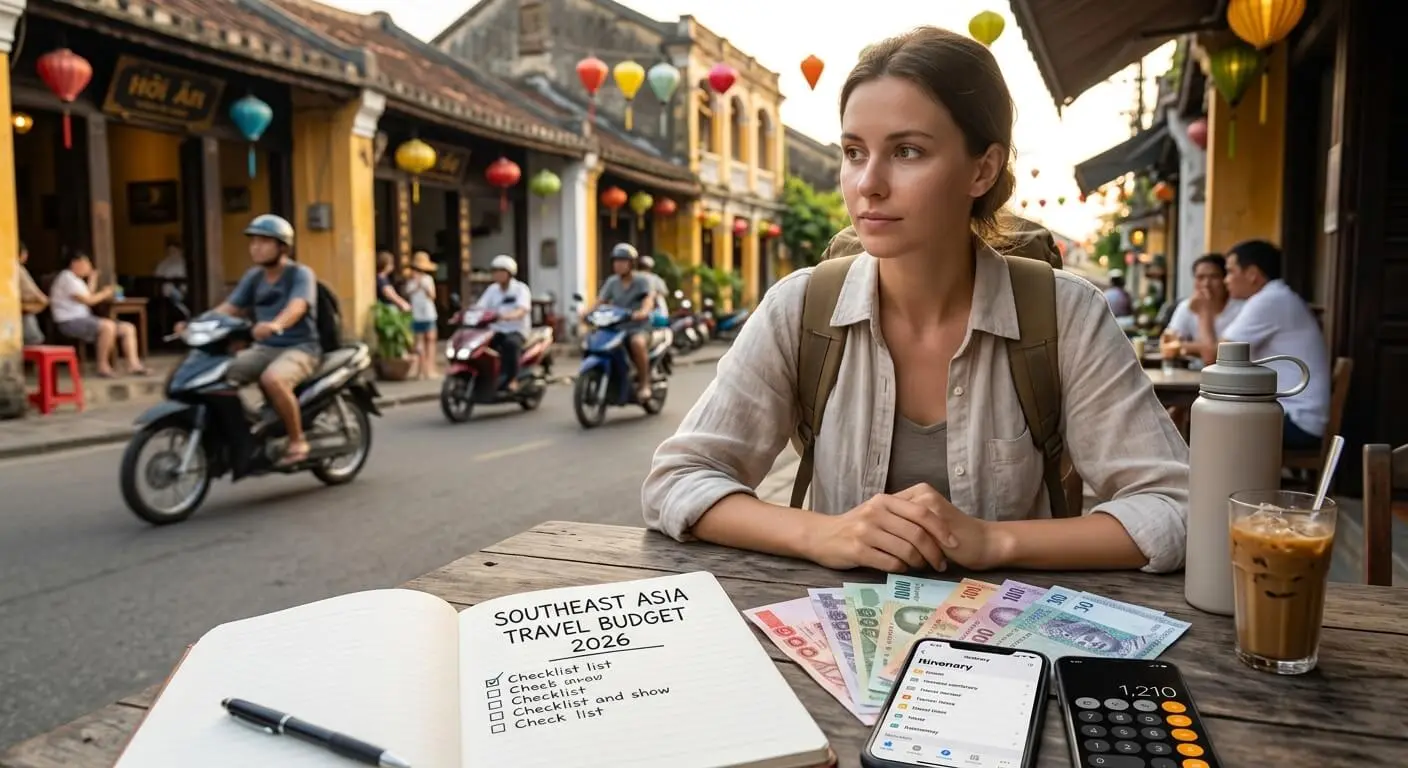

Planning a Southeast Asia travel budget can feel confusing. One traveler may say $25 per day is enough. Another may suggest $100 per day.
Both can be right.
Your daily cost depends on where you go, how fast you travel, where you sleep, what you eat, and what activities you book.
A backpacker staying in dorms will spend much less than someone using private hotels and taking regular flights.
Current 2026 travel guides suggest around $22 to $35 per day for shoestring backpackers. A more comfortable backpacker may spend around $40 to $55 per day. Flashpackers may spend around $60 to $90 per day. Another current guide uses about $50 for backpackers, $100 for mid-range travelers, and $200 for upscale travel.
The difference is important.
There is no single Southeast Asia travel cost that works for everyone.
This guide explains realistic costs for accommodation, food, transport, activities, and different travel styles. It also shows how your budget can change between countries and trip lengths.
General Costs
Southeast Asia remains a good region for budget travel. However, prices can change greatly between countries and destinations. Browse all our Southeast Asia travel guides.
Vietnam, Laos, and Cambodia are usually easier for low-budget travelers. Singapore generally costs more. The Philippines can also require a bigger transport budget because many popular destinations are spread across different islands.
Tourist hotspots can cost more than smaller towns.
For example, a popular beach resort may cost much more than a small inland town in the same country.
How you travel matters just as much as where you travel.
Average Costs for Southeast Asia
Use these figures as a simple starting point.
| Travel Style | Approximate Daily Budget | Approximate Monthly Budget |
| Shoestring backpacker | $22–$35 | $660–$1,050 |
| Comfortable backpacker | $40–$55 | $1,200–$1,650 |
| Flashpacker | $60–$90 | $1,800–$2,700 |
| Mid-range traveler | Around $100 | Around $3,000 |
| Upscale traveler | Around $200+ | Around $6,000+ |
The first three ranges match the current Southeast Asia Backpacker guide. Nomadic Matt currently uses $50, $100, and $200 as backpacker, mid-range, and upscale daily budgets.
These figures are planning ranges, not fixed prices.
Your spending can change because of:
- Destination
- Travel season
- Accommodation
- Food choices
- Alcohol
- Tours
- Flights
- Island hopping
- Shopping
- Travel speed
Slow travel often costs less per day.
Fast travel normally means more bus tickets, flights, transfers, and short hotel stays.
Daily Cost of Backpacking in Southeast Asia
If you need a quick answer, a Southeast Asia travel budget of about $30 to $50 per day can work for many backpackers.
However, the lower end requires careful choices.
Current regional estimates include:
- Street food: about $0.80–$4 per meal
- Local restaurant food: about $4–$12
- Western restaurant food: about $7.50–$17.50
- Hostel bed: about $3.50–$18 per night
- Private accommodation: about $10–$80, depending on property type
- Scooter hire: about $6.50–$21 per day
Nomadic Matt currently gives hostel dorm prices of around $6–$12 in much of the region. Street food is around $2–$5, while casual restaurant meals are around $3–$6.
Singapore and major tourist destinations can cost more.
Therefore, do not build your entire trip around one regional average.
How Much Does a Trip to Southeast Asia Cost?
Your total cost depends on your daily spending and trip length.
Using the regional backpacker ranges above, an estimated on-the-ground budget may look like this:
| Trip Length | Shoestring | Comfortable Backpacker | Flashpacker |
| 1 week | $154–$245 | $280–$385 | $420–$630 |
| 2 weeks | $308–$490 | $560–$770 | $840–$1,260 |
| 3 weeks | $462–$735 | $840–$1,155 | $1,260–$1,890 |
| 1 month | $660–$1,050 | $1,200–$1,650 | $1,800–$2,700 |
| 2 months | $1,320–$2,100 | $2,400–$3,300 | $3,600–$5,400 |
| 3 months | $1,980–$3,150 | $3,600–$4,950 | $5,400–$8,100 |
These totals do not include international flights, travel insurance, visas, or other pre-trip expenses.
They also assume you stay close to one travel style.
A short trip with several flights and expensive tours can sometimes cost more per day than a slow month-long journey.
Cost of Accommodation in Southeast Asia
Accommodation can take a large part of your daily budget.
However, Southeast Asia has many low-cost choices.
A hostel dorm can cost about $3.50 to $18 per night. Hostel private rooms are often around $10 to $45, while double hotel rooms can range from about $10 to $80 in the regional estimates used by Southeast Asia Backpacker.
Nomadic Matt currently gives a more focused range of $6–$12 for hostel dorms, $15–$30 for hostel private rooms, and around $15–$35 for budget hotels in much of the region. Singapore is more expensive.
Couples should compare a private room with the price of two dorm beds.
Sometimes one private double room offers better value per person.
Longer stays can also reduce costs.
Weekly or monthly rates may be cheaper than paying night by night.
Cost of Street Food in Southeast Asia
Street food is one of the easiest ways to control your Southeast Asia travel budget.
Current estimates put basic street food at around $0.80 to $4 per meal.
Thailand and Vietnam are well known for affordable local meals.
Rice dishes, noodles, soups, sandwiches, and local snacks can cost much less than Western-style restaurant food.
Tourist districts usually charge more.
Eating where local people eat can often help you save money.
Cost of Restaurant Food in Southeast Asia
Eating in restaurants does not have to ruin your budget.
A local restaurant meal may cost around $4 to $12. Western-style restaurant food may cost around $7.50 to $17.50 according to current regional estimates.
Another current guide puts casual meals around $3–$6 and sit-down restaurant meals around $10–$20.
Local food normally costs less.
If you eat Western meals every day, your food budget will rise quickly.
A good approach is to mix street food and local restaurants with occasional higher-priced meals.
Cost of Water in Southeast Asia
A large bottle of drinking water often costs around $0.40 to $1.20 in current regional estimates.
Prices may be higher at major tourist attractions.
Many travelers also carry a reusable or filtered water bottle.
Always check local water-safety advice because tap-water conditions differ between destinations.
Cost of Beer in Southeast Asia
Alcohol can increase your budget quickly.
Nomadic Matt currently puts beer at around $1 to $3 in its general Southeast Asia cost guide.
Prices can be higher in tourist bars, beach clubs, rooftop venues, and some countries.
If you plan to travel on $25 to $35 per day, regular nightlife can take a large part of your budget.
Cost of Activities in Southeast Asia
Activities can create a big difference between two travelers with otherwise similar budgets.
Common paid activities include:
- Temple visits
- National parks
- Island tours
- Snorkeling
- Scuba diving
- Cooking classes
- Food tours
- Jungle treks
- Surf lessons
- Boat trips
- Guided tours
Some attractions cost very little.
However, diving, multi-day treks, boat trips, and private tours can cost much more. Southeast Asia Backpacker also notes that frequent tours can quickly reduce a shoestring budget.
Create a separate activity budget.
For example, spending $300 on tours during a 30-day trip adds another $10 to your average daily cost.
Southeast Asia Suggested Budgets
There is no perfect daily budget.
Choose a level that matches how you actually want to travel.
Backpacker: Around $50 Per Day
A budget of around $50 per day gives backpackers reasonable flexibility.
You can stay in hostels and sometimes choose a private room.
You can eat local food and occasional Western meals.
Buses will probably remain your main form of long-distance transport.
However, you should still have space for some attractions, drinks, and occasional transport upgrades.
Nomadic Matt currently uses $50 per day as its backpacker budget.
Travelers who are careful can spend less.
Mid-Range: Around $100 Per Day
A $100 daily budget provides more comfort.
You can often choose private accommodation.
You can eat at restaurants more often.
You can use taxis or rideshare apps and book more paid activities.
You may also take some flights instead of long buses.
Nomadic Matt currently uses around $100 per day as its mid-range estimate.
Your money may stretch further in cheaper countries.
Upscale: Around $200 Per Day
At around $200 per day, travelers can choose better hotels, frequent paid experiences, flights, and more private transport.
Nomadic Matt currently uses $200 per day as its upscale planning budget.
Luxury has no fixed upper limit.
High-end resorts, private villas, fine dining, private drivers, and premium tours can push costs well beyond this amount.
What Does $30, $50, $75, or $100 a Day Look Like?
A daily number is easier to understand when you know what kind of trip it can support.
$30 Per Day
A $30 budget may work in cheaper parts of Southeast Asia.
You will need to make careful choices.
You may need to:
- Stay mainly in hostel dorms
- Eat mostly local food
- Use buses and public transport
- Limit nightlife
- Choose cheap or free activities
- Travel slowly
- Avoid frequent flights
This budget is easier in lower-cost mainland destinations than in Singapore or expensive island areas.
$50 Per Day
A $50 budget gives backpackers more freedom.
You may be able to:
- Stay in good hostels
- Book a private room sometimes
- Eat local food and occasional Western meals
- Use some taxis
- Join regular activities
- Enjoy some nightlife
For many backpackers, this is a practical starting point.
$75 Per Day
A $75 daily budget gives you more comfort.
You can often:
- Stay in private rooms
- Eat at restaurants more often
- Use Grab or taxis when needed
- Join more tours
- Take occasional flights
- Spend more on attractions
This level suits travelers who want more comfort but still watch their spending.
$100 Per Day
A $100 daily budget can provide a comfortable trip in many parts of Southeast Asia.
You may be able to:
- Stay in private hotels
- Eat at good restaurants
- Use taxis and rideshare services
- Take some domestic flights
- Join regular paid tours
- Enjoy nightlife
However, the same $100 may feel less generous in Singapore, luxury resorts, or popular islands.
Southeast Asia Travel Budget by Country
Travel costs change significantly between countries.
Use this table as a planning guide rather than a fixed price list.
| Country | Backpacker Planning Level | General Cost Level |
| Vietnam | About $20–$30/day | Low |
| Laos | Lower end of regional backpacker range | Low |
| Cambodia | Lower end of regional backpacker range | Low |
| Thailand | About $25–$30/day | Low to moderate |
| Malaysia | About $25–$45/day | Moderate |
| Indonesia | Varies strongly by island | Low to moderate |
| Philippines | About $35–$45/day | Moderate |
| Singapore | Higher than most nearby destinations | High |
Indie Traveller currently lists about $25–$30 for Thailand, $20–$30 for Vietnam, $25–$45 for Malaysia, and around $35–$45 for the Philippines. Southeast Asia Backpacker also places Vietnam, Cambodia, and Laos toward the cheaper end of regional backpacking costs.
Thailand Budget
Thailand works for both backpackers and mid-range travelers.
A current Indie Traveller estimate suggests around $25 to $30 per day as a backpacker planning figure.
However, location matters.
Northern Thailand can be easier on a tight budget than famous beach resorts and islands.
Nightlife, island hopping, domestic flights, and tours can increase your costs.
Laos Budget
Laos can work well for shoestring travelers.
Southeast Asia Backpacker places Laos among the countries where careful travelers can stay near the lower end of its regional backpacker range.
Local accommodation and food can be affordable.
However, long transport routes and major tourist activities still need to be included.
Vietnam Budget
Vietnam is one of the easier destinations for travelers who want to stretch their budget.
Indie Traveller currently suggests around $20 to $30 per day for backpackers.
Street food, hostels, buses, and trains can all help control your costs.
Tours, nightlife, and frequent private transport will increase your spending.
Cambodia Budget
Cambodia also works well for lower-cost travel.
Southeast Asia Backpacker places Cambodia toward the cheaper end of its regional backpacker range.
Food and accommodation can be affordable.
However, major attractions, tours, and transport still need their own budget.
Singapore Budget
Singapore normally requires more money than most other stops in Southeast Asia.
Nomadic Matt currently lists hostel dorms at roughly double its usual regional range and private accommodation at even higher levels.
However, Singapore has strong public transport and many affordable local food choices.
You can reduce costs by using trains and buses and choosing simpler accommodation.
Malaysia Budget
Indie Traveller currently suggests around $25 to $45 per day as a backpacker budget for Malaysia.
Accommodation and public transport can provide good value.
Your final budget will depend on whether you focus on major cities, islands, or Malaysian Borneo.
Indonesia Budget
Indonesia can be affordable, but the country is large and costs vary between islands.
Popular parts of Bali can cost more than less visited areas.
Your budget also needs to include:
- Ferries
- Domestic flights
- Island transfers
- Diving
- Surf lessons
- Tours
Transport between islands is often the cost travelers forget.
Philippines Budget
The Philippines can cost more than mainland Southeast Asia because moving between islands may require ferries or flights.
Indie Traveller currently suggests around $35 to $45 per day for backpackers.
Island tours and water activities can also increase your budget.
Give yourself more room if you plan to move between many islands.
Southeast Asia Budget for Solo Travelers vs Couples
Solo travelers and couples do not always spend the same amount per person.
Solo Travelers
Solo travelers can save money with hostel dorms.
However, they usually pay the full cost of:
- Taxis
- Private transfers
- Scooter rentals
- Private rooms
Solo travelers who prefer private accommodation may therefore spend more per person.
Couples
Couples can split many costs.
These may include:
- Hotel rooms
- Taxis
- Grab rides
- Scooter rentals
- Private transfers
For example, a $30 hotel room becomes $15 per person when shared.
Southeast Asia Backpacker also notes that a private twin or double hostel room can sometimes work out better than buying two dorm beds.
Always compare both options.
Mainland Southeast Asia vs Island Travel Costs
Your route can have a major effect on your total spending.
Mainland routes can often use buses and trains.
Travelers can move through parts of Thailand, Laos, Vietnam, Cambodia, and Malaysia without flying between every stop.
Island trips work differently.
In Indonesia and the Philippines, you may need:
- Domestic flights
- Ferries
- Speedboats
- Airport transfers
- Island taxis
- Boat tours
These costs add up.
A traveler spending $35 per day on basic living costs may end up with a much higher average after adding several flights and ferries.
Create a separate transport budget if your itinerary includes many islands.
How Travel Speed Changes Your Budget
Fast travel normally costs more than slow travel.
Each time you move, you may pay for:
- Bus tickets
- Train tickets
- Flights
- Ferries
- Taxis
- Airport transfers
You may also miss weekly or monthly accommodation discounts.
Slow travel reduces the number of transport days.
It can also give you more time to find cheap local food and better-value accommodation.
Visiting six destinations in one month will often cost less than trying to visit 15.
How to Get Around in Southeast Asia
Transport can have a big effect on your budget.
Buses are often one of the cheapest ways to travel between cities.
Nomadic Matt currently estimates many five- to six-hour bus trips at about $5 to $8. Overnight buses may cost around $10 to $15, depending on distance.
Trains are useful in countries such as Thailand and Vietnam.
Overnight transport may also save one night’s accommodation.
Budget airlines can save time, but the cheapest advertised fare is not always the total cost.
Remember to check:
- Baggage charges
- Airport transfers
- Seat fees
- Booking fees
For short trips inside cities, options may include:
- Public buses
- Metro systems
- Trains
- Grab
- Gojek
- Taxis
- Tuk-tuks
Do not automatically choose flights.
If you have enough time, overland transport can help control your budget.
Hidden Southeast Asia Travel Costs to Budget For
Food and accommodation are only part of your real trip cost.
Small expenses can add up over several weeks or months.
ATM Fees
An ATM operator may charge a withdrawal fee.
Your own bank may also charge you.
Frequent small withdrawals can therefore become expensive.
Foreign Transaction Fees
Some cards charge a percentage each time you spend abroad.
Check your card terms before leaving.
Currency Conversion
Be careful when an ATM or payment terminal offers to convert a charge into US dollars.
The offered exchange rate may not be the best available rate.
Checked Baggage
Budget flights often charge separately for checked luggage.
Always compare the final ticket price.
Airport Transfers
A cheap flight can become less attractive if the airport is far from the city.
Include the cost of getting to and from the airport.
SIM Cards and eSIMs
Mobile data is another small cost.
Multi-country travelers may need more than one SIM or data plan.
Laundry
Laundry may seem cheap.
However, regular laundry over a two- or three-month trip still adds to your spending.
Visa and Entry Costs
Entry rules and fees depend on your passport and destination.
Always check official government information before traveling.
Ferries and Island Transfers
Island hopping may require several types of transport.
You may need ferries, speedboats, taxis, and local transfers.
Scooter Expenses
The rental price is not the only cost.
You may also need money for:
- Fuel
- Parking
- Deposits
- Equipment
- Possible damage
Make sure you have the correct license and insurance for the destination before riding.
Nightlife
Alcohol, clubs, beach parties, and late-night taxis can increase your spending quickly.
Create a separate nightlife budget if this is important to you.
How Much Emergency Money Should You Keep?
Do not plan to spend every dollar you have.
Keep emergency money separate from your daily budget.
You may need it for:
- Medical problems
- Last-minute transport
- Lost bank cards
- Lost phones
- Missed connections
- Unexpected accommodation
- Route changes
There is no perfect amount for every traveler.
Your emergency reserve should be large enough to cover several unexpected travel days and an urgent transport change.
Treat this money as backup funds, not spending money.
When to Go to Southeast Asia
Travel dates can affect your budget.
There is no single high season for the whole region.
Weather patterns vary between countries.
Peak periods can bring higher room rates and stronger demand.
Shoulder seasons may offer better value.
However, do not choose travel dates only because accommodation is cheap.
Heavy rain can affect ferries, islands, outdoor activities, and transport.
Check the season for every country on your itinerary.
This is especially important on long multi-country trips.
Budget-Saving Tips for Travel in Southeast Asia
You do not need to remove every fun activity to travel cheaply.
A few smart choices can make a large difference.
Eat local food.
Street food and local restaurants usually cost less than Western-style restaurants.
Travel slowly.
Fewer travel days mean fewer bus, ferry, and flight costs.
Use buses and trains.
Overland travel can cost less than frequent flights.
Watch alcohol spending.
Several cheap drinks every night can become a large monthly expense.
Use public transport.
Metro systems and buses often cost less than taxis.
Compare private rooms.
Couples should compare one private room with two dorm beds.
Choose tours carefully.
Spend money on the activities that matter most to you.
Check baggage fees.
Always compare the final price of a flight.
Keep an emergency fund.
Do not include every dollar you own in your spending budget.
Pre-Trip Expenses Before You Go
Your final Southeast Asia travel budget should include costs before you arrive.
International Flights
International airfare can be one of the biggest upfront costs, especially for travelers flying from the United States.
Prices vary widely by:
- Departure city
- Destination
- Season
- Booking date
- Baggage
- Connections
Keep your international flight separate from your daily travel budget.
Travel Insurance
Insurance costs depend on your age, destination, trip length, activities, and level of cover.
Compare policies carefully.
Visa and Entry Costs
Rules vary by passport and country.
Check official immigration or government sources before traveling.
Vaccinations
Your needs and costs depend on your health, travel plans, and home country.
Ask a qualified health professional for advice before travel.
Luggage and Equipment
You may need:
- Backpack or suitcase
- Locks
- Travel adapters
- Clothing
- Packing accessories
- Travel equipment
Do not buy equipment you will not use.
Banking Costs
Check whether your debit or credit card charges:
- Foreign transaction fees
- ATM fees
- Currency conversion fees
Small banking charges can add up on a long trip.
Mobile Data
Add the cost of local SIM cards or an eSIM to your budget.
How We Calculated These Southeast Asia Travel Costs
Travel prices change constantly.
No daily budget should be treated as a guaranteed price.
The estimates in this guide compare current regional travel guides and common spending categories such as:
- Accommodation
- Food
- Local transport
- Long-distance transport
- Activities
- Travel style
A shoestring backpacker does not spend the same amount as a traveler using private hotels and regular flights.
Country averages also have limits.
A major tourist island can cost more than a small town in the same country.
Use these figures as planning ranges.
Then check current accommodation, transport, entry requirements, and activity prices for your own dates before booking.
Frequently Asked Questions About Southeast Asia Travel Budget
Is $30 a Day Enough for Southeast Asia?
It can be enough in some cheaper destinations.
You will usually need hostels, local food, buses, slow travel, and limited paid activities.
It will be harder in Singapore and expensive island destinations.
Is $50 a Day Enough for Southeast Asia?
Yes, $50 per day can be a useful budget for many backpackers.
It gives you more flexibility for accommodation, food, transport, activities, and occasional extras.
How Much Money Do I Need for One Month in Southeast Asia?
Using current regional backpacker ranges, a shoestring traveler may spend around $660 to $1,050 for 30 days.
A more comfortable backpacker may spend around $1,200 to $1,650.
A flashpacker may spend around $1,800 to $2,700.
International flights, insurance, visas, and pre-trip costs should be added separately.
Which Southeast Asian Countries Are Cheapest to Travel?
Vietnam, Laos, and Cambodia are commonly placed toward the cheaper end of Southeast Asian backpacking costs.
Thailand can also be affordable, especially outside expensive resort areas.
Your actual cost still depends on your travel style.
Which Southeast Asian Destinations Cost More?
Singapore usually requires a higher budget.
Island-heavy travel can also increase costs because of flights, ferries, transfers, and tours.
Should International Flights Be Included in My Daily Budget?
It is usually clearer to keep them separate.
First calculate your on-the-ground daily spending.
Then add international flights, insurance, visas, equipment, and other pre-trip costs.
Final Thoughts
A good Southeast Asia travel budget is not simply the lowest amount you can survive on.
It should match the kind of trip you want.
For many backpackers, $30 to $50 per day can be a useful starting range. Travelers who want private rooms, regular tours, taxis, flights, and better restaurants should plan for more.
Your route matters too.
A month spent mainly in Vietnam, Laos, and Cambodia will not cost the same as a trip that includes Singapore, popular Indonesian islands, and several destinations in the Philippines.
Start with three things:
- Choose your countries.
- Decide your travel style.
- Decide how quickly you want to move.
Then calculate your daily costs and add transport, activities, pre-trip expenses, and emergency money.
That will give you a much more realistic idea of how much your Southeast Asia trip will actually cost.

2 Comments
Pingback: Southeast Asia 3 Week Itinerary: The Best 21-Day Route
Pingback: Southeast Asia 2 Week Itinerary: Best 14-Day Route