

Planning a trip should feel exciting. However, researching a travel destination can quickly become overwhelming.
You may find hundreds of blogs, videos, reviews, social media posts, and travel guides. Some may give different advice. Others may be outdated.
This makes it difficult to know what to trust.
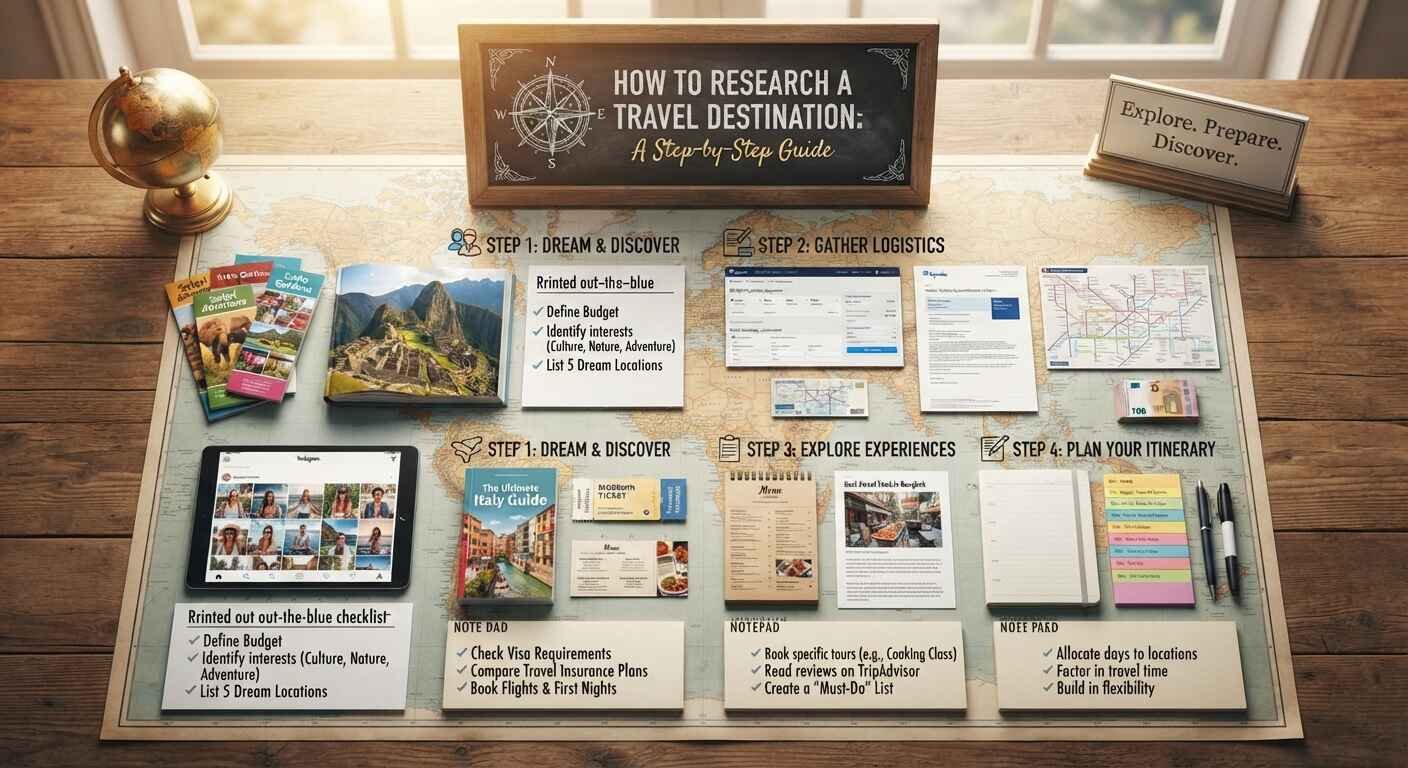
If you want to know how to research a travel destination, focus on four things:
What to research, where to find the information, how to verify it, and how to organize it.
Good research helps you choose a destination that fits your budget, time, interests, and travel style. It can also help you avoid hidden costs, poor hotel locations, bad weather, difficult transport, and unrealistic plans. Find more step-by-step guides in Plan Your Trip.
Use this guide to research your destination with more confidence before you book.
Start With Initial Online Research
Begin with a broad search about the destination.
You do not need to plan every detail at this stage.
Your first goal is to understand what the destination is like and whether it interests you.
Research basic information such as:
- Main attractions
- Popular cities and neighborhoods
- Best time to visit
- Weather
- Typical costs
- Transportation
- Accommodation
- Food
- Culture
- Safety
- Day trips
Google Search and travel blogs can give you an overview.
YouTube can help you see what a destination looks and feels like.
Reddit and travel forums can show common traveler experiences.
Instagram and TikTok can help you discover places that you may not find in traditional travel guides.
However, do not depend on one source.
One traveler may love a destination while another may dislike it.
Use several sources before making an important decision.
Research the Destination, Duration, and Best Time to Go
Next, decide whether the destination fits the amount of time you have.
A large country may require more time to explore. A single city may work better for a shorter trip.
Check the places you want to visit on a map.
Then research the real travel time between them.
Ask yourself:
- How many days do I have?
- How many places can I visit without rushing?
- Are the attractions close together?
- How long will transportation take?
- Will I lose full days traveling between cities?
This is especially important for first-time international travelers.
It is easy to build an itinerary that looks possible on a map but feels exhausting in real life.
Leave enough time to enjoy the destination.
Check the High Tourism Season
Research when most travelers visit.
Peak season may offer popular weather conditions and more tourism services. However, it can also mean higher prices and larger crowds.
Hotels may sell out faster.
Popular attractions may require advance reservations.
Research:
- Peak season
- Shoulder season
- Low season
- School holidays
- Public holidays
- Festivals
- Major events
- Seasonal closures
Budget-conscious travelers may find better value during shoulder season.
Couples may prefer quieter months.
Families may need to travel during school holidays, so booking earlier may be more important.
Choose a season that matches your own travel needs.
Check Weather for Your Exact Travel Dates
Do not only search for the destination’s average annual weather.
Research conditions for the month you plan to visit.
Check:
- Temperature
- Rainfall
- Snow
- Humidity
- Storm seasons
- Strong winds
- Daylight hours
Weather can affect more than comfort.
It may affect:
- Road trips
- Ferries
- Hiking
- Beaches
- Outdoor attractions
- Transportation
- Opening hours
A destination can look perfect in travel photos but feel very different during another season.
Research the conditions you are likely to experience during your actual trip.
Research the Real Cost of the Trip
One of the biggest travel planning mistakes is looking only at flight or hotel prices.
Research the total trip cost.
Include:
- Flights
- Hotels
- Local transportation
- Airport transfers
- Food
- Attractions
- Tours
- Visa fees
- Travel insurance
- SIM or eSIM costs
- Taxes
- Tips
- ATM fees
- Card fees
Then estimate your average daily spending.
This is especially useful for travelers who want good value without choosing the cheapest possible option.
A destination with cheap flights may still be expensive once accommodation, food, and transportation are included.
You should know the realistic cost before you book.
Consider Your Personal Schedule
A destination also needs to fit your real life.
Think about how much time you can take away from:
- Work
- School
- Family
- Other responsibilities
You may find a destination you love, but it may not work well for a short trip.
Do not force a two-week itinerary into seven days.
Choose a trip that fits your available time.
Decide What Main Attractions Matter to You
Make a short list of experiences you really want.
These may include:
- Beaches
- Museums
- National parks
- Historic sites
- Food markets
- Shopping
- Famous landmarks
- Cultural attractions
- Nature
- Nightlife
Then research each important attraction.
Check:
- Location
- Opening days
- Opening hours
- Entrance cost
- Advance booking
- Average visit time
- Seasonal closures
- Transport options
This helps you create a realistic trip.
It also stops you from adding attractions simply because they appear on every travel website.
Check Whether the Destination Fits Your Travel Style
A popular destination is not automatically the right destination for you.
Think about what you want from the trip.
Are you looking for:
- Relaxation
- Adventure
- Culture
- History
- Food
- Beaches
- Nature
- Nightlife
- Luxury
- Budget travel
Then research based on your traveler type.
First-Time International Travelers
Focus more on:
- Visa rules
- Airports
- Currency
- SIM or eSIM options
- Transportation
- Local customs
- Language
- Safety
Solo Travelers
Research:
- Safe neighborhoods
- Transportation at night
- Common scams
- Social activities
- Walkability
- Emergency information
Family Travelers
Check:
- Child-friendly areas
- Family accommodation
- Transport convenience
- Food options
- Healthcare
- Trip pace
Couples
Research:
- Accommodation areas
- Romantic experiences
- Seasonality
- Restaurants
- Day trips
- Overall trip cost
Budget-Conscious Travelers
Focus on:
- Accommodation costs
- Transportation
- Free attractions
- Local food
- Tourist passes
- ATM and card fees
- Seasonal prices
Research should match the kind of traveler you are.
Check Visa and Entry Requirements Early
Do not wait until the end of your planning to research entry rules.
Check them before spending large amounts of money.
Research whether you need:
- A visa
- An eVisa
- Electronic travel authorization
- Passport validity
- Blank passport pages
- Proof of onward travel
- Additional entry documents
Requirements depend on your passport and destination.
Use official government, immigration, consulate, or embassy websites.
U.S. citizens can also check the U.S. State Department’s destination information.
Do not depend on TikTok, Reddit, or an old travel blog for entry rules.
Rules can change.
Important information should always be verified with an official source.
Research Health Requirements
Health research is especially important when traveling internationally.
Check whether your destination has any specific health risks or requirements.
Research:
- Recommended vaccines
- Health risks
- Food and water concerns
- Medication restrictions
- Hospitals
- Pharmacies
- Travel insurance
U.S. travelers can use CDC Travelers’ Health information for destination-specific guidance.
If you take prescription medication, check whether you can legally bring it into the country.
Also check whether your insurance covers medical care, cancellations, delays, and emergency evacuation abroad.
Health planning is easier before departure than after a problem happens.
Find the Best Way to Move Around
Transportation can change the entire travel experience.
Research how people normally move around your destination.
Options may include:
- Trains
- Buses
- Metro systems
- Taxis
- Ride-sharing services
- Rental cars
- Ferries
- Domestic flights
Do not only compare ticket prices.
Check:
- Travel time
- Frequency
- Operating hours
- Payment methods
- Reservations
- Luggage rules
- Last train or bus times
A destination with easy public transport may be simple for solo travelers.
Families may prefer areas with fewer transfers.
Road-trip travelers should research parking, road conditions, tolls, and driving rules.
Research Travel Time, Not Just Distance
Distance can be misleading.
Two places may look close on a map but take hours to reach.
Traffic, ferries, mountain roads, train changes, and limited buses can increase travel time.
Always check door-to-door travel time.
This makes your itinerary more realistic.
It also helps you decide whether a day trip is actually worth doing.
Decide Whether to Travel Independently or Take a Tour
Some destinations are easy to explore without help.
Others may be easier through organized travel.
Compare:
- Independent travel
- Guided day tours
- Multi-day tours
- Road trips
- Cruises
- Resort stays
Think about:
- Cost
- Convenience
- Flexibility
- Safety
- Travel time
- Comfort
Independent travel may offer more freedom.
A tour may make remote areas or difficult routes easier.
Choose the option that fits your budget and travel style.
Research the Logistics
Small details can create big problems if you ignore them.
Research your arrival before you travel.
Check how you will get from the airport, train station, or bus terminal to your accommodation.
Research:
- Airport transport
- Public transport hours
- Taxi options
- Late-night arrival options
- Average travel time
- Ticket payment methods
Also research:
- Currency
- Cash use
- Credit cards
- ATM access
- Tipping
- Power plugs
- Emergency numbers
First-time travelers may find these details especially useful.
Knowing them in advance can reduce stress after arrival.
Research Where to Stay Before Booking a Hotel
Do not choose a hotel based only on price or reviews.
Research the neighborhood first.
Open Google Maps and mark:
- Main attractions
- Public transport
- Airport connections
- Train stations
- Restaurants
- Shopping areas
- Neighborhoods
- Day-trip departure points
Then compare possible areas.
Ask:
- Is this area close to what I want to see?
- Can I walk to important places?
- Is public transport nearby?
- How long will airport transfers take?
- Is the area suitable at night?
- Does it match my budget?
- Does it fit my travel style?
A cheaper hotel far from everything may cost more once you add transport.
It may also waste valuable vacation time.
Try a 15-Minute Map Check
Spend 15 minutes studying the destination on Google Maps before booking accommodation.
Save your most important attractions.
Then look at where they are located.
You may quickly discover that most of your planned activities are in one area.
This can make choosing accommodation much easier.
It also lowers the risk of booking in the wrong neighborhood.
Find Things to Do Beyond the Main Attractions
Once you understand the destination, research activities in more detail.
Use:
- Official tourism websites
- Attraction websites
- Travel blogs
- Google Maps
- YouTube
- Recent reviews
Look beyond famous attractions.
You may discover:
- Local markets
- Small museums
- Neighborhoods
- Food experiences
- Walking routes
- Parks
- Viewpoints
- Events
- Day trips
This is especially useful if you want more authentic local experiences.
However, do not add something simply because it went viral.
Ask whether you would actually enjoy it.
Use Social Media for Discovery, Not Final Verification
Instagram, TikTok, Pinterest, and YouTube can be useful travel research tools.
They can help you discover:
- Restaurants
- Beaches
- Neighborhoods
- Hotels
- Viewpoints
- Attractions
However, social media often shows the best part of an experience.
A beach video may not show the crowds.
A restaurant post may not show the prices.
A hotel video may not show how far it is from the city center.
Use social media for ideas.
Then verify important details with recent reviews and official sources.
Ask People Who Have Been There
Personal experience can add useful context.
Ask:
- Friends
- Family
- Coworkers
- Other travelers
- Local contacts
You can also use:
- Reddit communities
- Travel forums
- Expat groups
- Destination-specific Facebook groups
Ask practical questions.
For example:
- Which neighborhood is easiest?
- Is public transport simple?
- Which attractions feel overcrowded?
- Are there common scams?
- Which areas are good for food?
- What surprised you about the destination?
Personal advice can be useful.
However, verify official rules separately.
Learn About Local Culture and Customs
Researching a destination is not only about hotels and attractions.
You should also understand basic local culture.
Research:
- Greetings
- Dress expectations
- Tipping
- Dining habits
- Religious customs
- Photography rules
- Local laws
- Public behavior
- Useful local phrases
Learning a few words in the local language can also help.
You do not need to become an expert.
The goal is to avoid disrespectful or uncomfortable situations.
Research Food Before You Arrive
Food can be a major part of the travel experience.
Research:
- Traditional dishes
- Local markets
- Restaurant areas
- Typical food prices
- Dining times
- Dietary options
Travelers with allergies or special diets should research food options early.
Save several restaurants near:
- Your hotel
- Main attractions
- Transport stations
This can save time when you are tired or hungry.
Research Internet, SIM, and Connectivity
Phones now play an important role in travel.
You may need your phone for:
- Maps
- Transport
- Translation
- Hotel bookings
- Tickets
- Communication
Research:
- Local SIM cards
- eSIM options
- Roaming costs
- Mobile coverage
- Hotel Wi-Fi
- Public Wi-Fi
Knowing your connectivity options can give you more confidence when arriving in a new country.
Download Offline Maps
Internet access can fail.
Download important map areas before leaving home.
Save:
- Hotel
- Airport
- Train station
- Main attractions
- Restaurants
- Hospitals
- Transport points
Also save important addresses and booking information.
Remember that some map features may have limited functions when you are offline.
Offline maps should be a backup, not your only plan.
Research Safety and Common Scams
Safety research should be based on current information.
Check:
- Travel advisories
- Common scams
- Neighborhoods
- Transportation safety
- Emergency numbers
- Local laws
Solo travelers may want to research nighttime transport and neighborhood safety in more detail.
Families may want to check nearby medical services.
Government travel websites are useful for official information.
Recent traveler experiences can help you understand common day-to-day problems.
U.S. citizens can also consider the Smart Traveler Enrollment Program for international trips.
Check Local Events and Current Conditions
Research your destination more than once.
Do your main research while planning.
Then check important information again shortly before departure.
Look for:
- Weather forecasts
- Transport disruptions
- Strikes
- Road closures
- Major events
- Attraction closures
- Local holidays
- Travel advisories
- Entry-rule changes
Something that was correct when you booked may change before you travel.
A final check gives you greater peace of mind.
Organize Your Travel Research in One Place
Travel research becomes difficult when information is spread across many apps and websites.
Keep important details together.
You can use:
- A spreadsheet
- Google Docs
- A notes app
- Google Maps saved places
- A travel planning app
Save:
- Hotel addresses
- Flight details
- Transport information
- Attraction hours
- Booking confirmations
- Ticket prices
- Restaurant ideas
- Estimated costs
- Emergency details
- Important links
You can also make separate Google Maps lists for:
- Hotels
- Restaurants
- Attractions
- Day trips
Good organization can reduce information overload.
It also makes your research easier to use during the trip.
Book Flights After Understanding the Destination
A cheap airfare can feel exciting.
However, do not let a low flight price make the full decision for you.
Before booking, confirm:
- Entry requirements
- Trip length
- Weather
- Budget
- Transportation
- Accommodation
- Main attractions
A cheap flight is not a good deal if the destination does not fit your budget, interests, or available time.
How to Find Reliable Travel Information
One of the hardest parts of destination research is knowing which source to trust.
Different sources are useful for different questions.
Level 1: Official Sources
Use official sources for important facts.
Examples include:
- Government websites
- Embassies
- Immigration authorities
- Tourism boards
- Airport websites
- Transport authorities
- Health authorities
Use them for:
- Entry rules
- Safety
- Health requirements
- Laws
- Official transport information
Level 2: Direct Sources
Go directly to the business or service.
Examples include:
- Airlines
- Hotels
- Train companies
- Attractions
- Tour operators
Use these for:
- Prices
- Booking rules
- Opening hours
- Schedules
- Restrictions
Level 3: Recent Traveler Experiences
Use recent traveler content to understand real experiences.
Useful sources include:
- Google Reviews
- TripAdvisor
- Travel forums
- Recent travel blogs
Look for patterns instead of depending on one review.
If many recent travelers mention the same issue, investigate it further.
Level 4: Inspiration Sources
Use:
- YouTube
- TikTok
These are excellent for discovering ideas.
However, they should not be your final source for important facts.
A simple rule can help:
The more important the information is to your trip, the closer you should get to the original or official source.
Use the Three-Layer Travel Research Method
If all this research feels overwhelming, divide it into three layers.
Layer 1: Can I Go?
Research:
- Passport
- Visa
- Safety
- Health
- Basic budget
If the destination does not work at this stage, you can stop.
Layer 2: Should I Go?
Research:
- Weather
- Season
- Crowds
- Activities
- Travel style
- Overall value
Now decide whether the destination is actually right for you.
Layer 3: How Will I Travel?
Research:
- Flights
- Transportation
- Accommodation
- Attractions
- Food
- Connectivity
This gives you a clear research order.
It also reduces information overload.
Use the Five-Question Destination Test
Before spending hours researching, answer five questions:
- Can I legally and practically visit?
- Can I afford the full trip?
- Is it a good time to visit?
- Can I move around comfortably?
- Does the destination match what I enjoy?
If several answers are no, consider another destination.
It may be better to choose a trip that fits you than force a destination that does not.
How Much Travel Research Is Enough?
Some travelers keep researching because they are worried about missing something.
You do not need to know everything.
You have probably researched enough when you understand:
- Entry requirements
- Safety
- Weather
- Budget
- Transportation
- Accommodation areas
- Main experiences
- Local customs
- Connectivity
- Emergency basics
At that point, you should feel confident enough to make informed decisions.
Leave some room for discovery.
A good trip does not need every minute planned.
Travel Destination Research Checklist
Before booking, check:
- Passport requirements
- Visa requirements
- Weather
- Season
- Safety
- Health information
- Travel budget
- Flight options
- Transportation
- Main attractions
- Neighborhoods
- Accommodation
- Travel times
After booking, research:
- Airport transfer
- Local transport
- Restaurants
- SIM or eSIM
- Currency
- Local customs
- Emergency information
- Offline maps
- Attraction reservations
Before departure, check again:
- Weather forecast
- Travel advisories
- Transport disruptions
- Local events
- Closures
- Entry-rule changes
- Booking confirmations
Final Thoughts
Learning how to research a travel destination is not about reading every travel website you can find.
It is about researching the right information in the right order.
Start with the questions that can decide whether the trip is possible.
Check entry rules, budget, safety, weather, and health.
Then research transportation, neighborhoods, accommodation, attractions, food, culture, and connectivity.
Use social media for inspiration.
Use traveler reviews for real experiences.
Use official sources for important facts.
Most importantly, research for your own travel style.
The right destination is not simply the most popular place.
It is a place that fits your time, budget, interests, comfort level, and expectations.
Good research gives you more confidence, more control over your trip, better value for your money, and greater peace of mind before you leave home.
Frequently Asked Questions
How do you research a travel destination?
Start with a broad overview. Then research entry requirements, safety, weather, budget, transportation, accommodation, attractions, food, culture, and connectivity. Compare several sources and verify important facts with official websites.
What should I research before traveling?
Research passport and visa rules, health information, safety, weather, costs, transportation, neighborhoods, accommodation, attractions, food, culture, local laws, connectivity, and emergency information.
What are the best sources for travel research?
Use official government and tourism websites for rules and important facts. Use airline, hotel, transport, and attraction websites for direct information. Use Google Reviews, TripAdvisor, Reddit, travel blogs, YouTube, and social media for experiences and ideas.
How do I know if travel information is reliable?
Check who published it, when it was updated, and whether other reliable sources agree. Important information such as entry rules and safety guidance should be confirmed through official sources.
Is social media useful for travel research?
Yes. Social media is useful for discovering attractions, restaurants, hotels, neighborhoods, and experiences. However, verify prices, rules, opening hours, and safety information elsewhere.
How far in advance should I research a destination?
Start early enough to understand entry rules, flight options, accommodation, seasonality, and attractions that require advance booking. Check important information again before departure.
How do I research a destination as a first-time international traveler?
Pay extra attention to visas, airport transfers, currency, transportation, language, local customs, SIM options, health information, and safety.
How much research should I do before traveling?
Research until you understand the important decisions that affect your trip. Once you are confident about entry, safety, budget, timing, transportation, accommodation, and main activities, you do not need to plan every detail.

1 Comment
Pingback: How to Choose a Travel Destination: A Simple Guide