
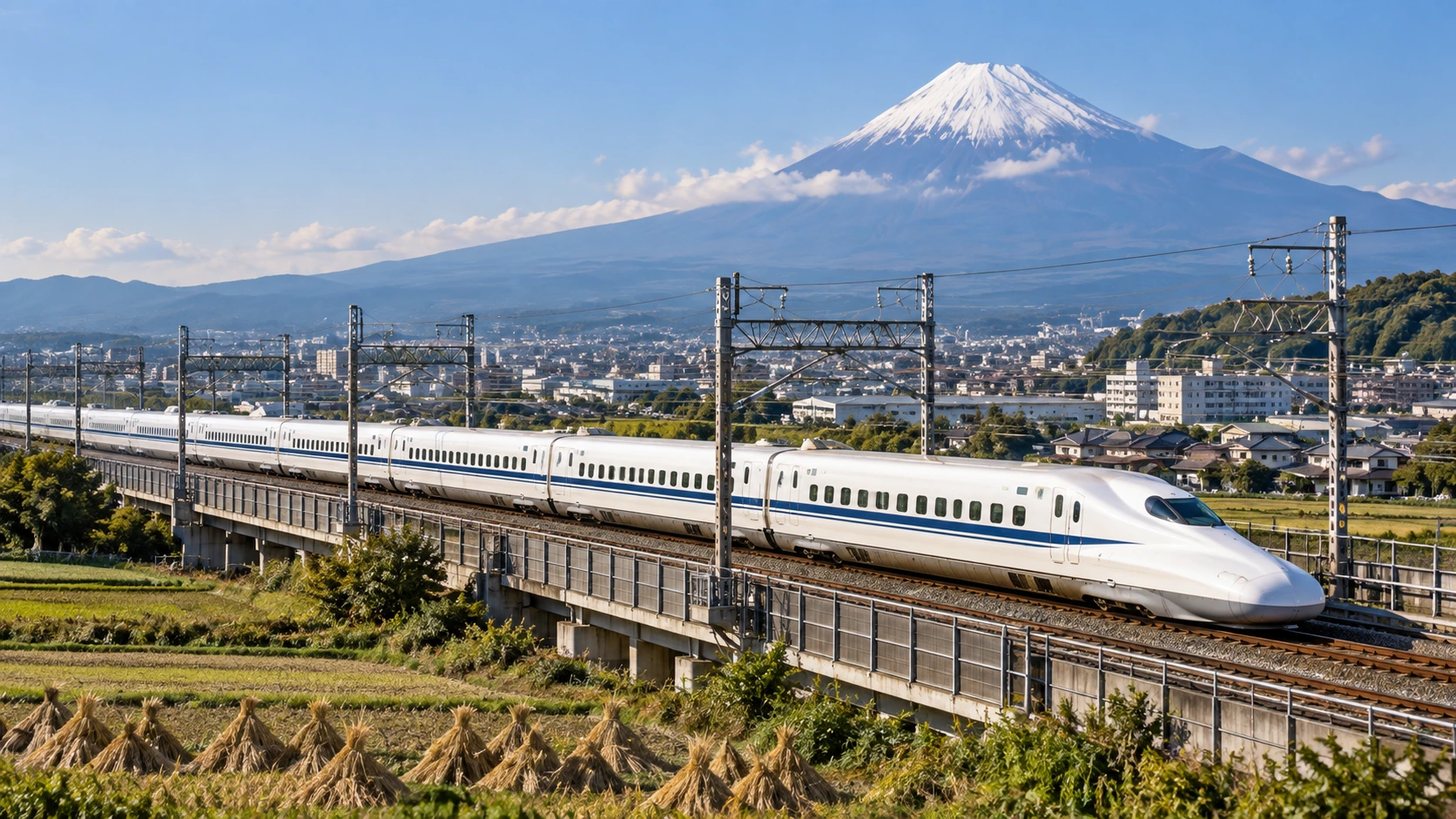

Traveling from Tokyo to Kyoto is easy once you understand your options. For most visitors, the Shinkansen bullet train is the fastest and simplest choice.
However, it is not your only option. You can also travel by highway bus, plane, or rental car. The best choice depends on your budget, schedule, luggage, and Japan itinerary.
This Tokyo to Kyoto travel guide explains each option in simple terms. You will learn how long the journey takes, how much it costs, where to buy tickets, which train to choose, and what to expect when you arrive in Kyoto. Compare neighborhoods in our guide to where to stay in Tokyo.
Tokyo to Kyoto: Quick Answer
The Tokaido Shinkansen is the best way to travel from Tokyo to Kyoto for most tourists.
The fastest Nozomi trains take about 130 minutes from Tokyo Station to Kyoto Station. Hikari trains usually take about 170 minutes, depending on the service. Compare areas in our guide to where to stay in Kyoto.
Here is a quick comparison.
| Traveler | Best Choice |
| First-time visitor | Nozomi Shinkansen |
| JR Pass holder | Hikari Shinkansen |
| Budget traveler | Highway bus |
| Family | Reserved Shinkansen seat |
| Traveler with large luggage | Reserved baggage space or luggage delivery |
| Want Mount Fuji views | Fuji-side window seat |
| Coming from Haneda Airport | Board at Shinagawa |
| Want more comfort | Green Car |
For most travelers, the Shinkansen saves enough time to justify its higher price.
Tokyo to Kyoto: Cost & Time at a Glance
| Method | One-Way Cost | Journey Time | Door-to-Door* |
|---|---|---|---|
| Nozomi Shinkansen | ~¥14,000 | ~2 hr 10 min | ~3–4 hrs |
| Hikari Shinkansen | ~¥14,000 (or JR Pass) | ~2 hr 50 min | ~4 hrs |
| Highway Bus | Lowest cost | 7–9 hrs | 7–9+ hrs |
| Flight | Medium | ~1 hr in air | 4–5 hrs |
| Rental Car | Higher (+ tolls/fuel) | 5–7+ hrs | 5–7+ hrs |
*Door-to-door includes hotel-to-station/airport transfers, check-in, and arrival transfer. Prices are estimates — always confirm before booking.
How Far Is Tokyo From Kyoto?
Tokyo and Kyoto are about 514 km, or roughly 319 miles, apart by rail.
Despite the distance, the fastest Shinkansen can complete the journey in a little over two hours.
This is one reason rail travel works so well between the two cities. You travel from central Tokyo directly to central Kyoto without needing airport transfers.
Comparison of Transportation Methods From Tokyo to Kyoto
There are four main ways to travel between Tokyo and Kyoto.
| Transport | Approximate Journey Time | Cost Level | Best For |
| Nozomi Shinkansen | About 2 hr 10 min | Higher | Speed and convenience |
| Hikari Shinkansen | About 2 hr 50 min | Higher | JR Pass users |
| Kodama Shinkansen | Around 3 hr 40 min | Higher | Travelers with flexible plans |
| Highway bus | Around 7–9 hr | Low | Budget travelers |
| Flight | Often 4–5 hr door to door | Medium | Certain airport-based trips |
| Rental car | Around 5–7+ hr | Higher | Road trips |
A flight may appear faster because the time in the air is short. However, you must also travel to an airport, arrive early, pass through security, collect luggage, and travel from an Osaka-area airport to Kyoto.
The Shinkansen connects the two city centers. That makes it the better choice for most tourists.
Shinkansen: The Best Way From Tokyo to Kyoto
The Shinkansen is the most popular option for good reason.
It is fast, frequent, clean, and comfortable. You also avoid airport security and long airport transfers.
Trains for Kyoto leave from both Tokyo Station and Shinagawa Station.
The three main Tokaido Shinkansen services are Nozomi, Hikari, and Kodama.
Nozomi vs Hikari vs Kodama
The trains use the same high-speed railway, but they make different numbers of stops.
| Train | Approximate Tokyo to Kyoto Time | Best For |
| Nozomi | About 2 hr 10 min | Most travelers |
| Hikari | About 2 hr 50 min | Standard JR Pass users |
| Kodama | Around 3 hr 40 min | Travelers who need smaller stations |
The Nozomi is the fastest.
It makes fewer stops and runs often. It is usually the best choice if you are buying a normal ticket.
The Hikari is slower but is useful for travelers using the normal coverage of a Japan Rail Pass.
The Kodama stops at every station. As a result, it takes much longer to reach Kyoto.
Tokyo Station or Shinagawa Station: Which Should You Use?
You do not have to start your journey at Tokyo Station.
Tokaido Shinkansen trains also stop at Shinagawa.
Tokyo Station is usually convenient if you are staying around Marunouchi, Ginza, or other central and eastern parts of Tokyo.
Shinagawa Station can be easier if you are staying in southern Tokyo or coming from Haneda Airport.
Kyoto’s official tourism information recommends the route from Haneda Airport to Shinagawa by the Keikyu Airport Line, followed by the Tokaido Shinkansen to Kyoto. The full journey can take about 2 hours and 30 minutes with suitable connections.
Choose the station that makes your total trip easier. There is little value in crossing Tokyo just to board at Tokyo Station if Shinagawa is much closer.
Types of Shinkansen Seats
Travelers normally choose between an Ordinary Car and a Green Car.
Ordinary Car
Ordinary Cars are comfortable for most travelers.
Seats offer good legroom, and there is space for smaller luggage. Depending on the train and date, you may choose a reserved or non-reserved seat.
A reserved seat gives you a specific train, car, and seat.
This is the easiest choice during busy periods.
Green Car
The Green Car is the premium section.
Seats are wider, there is more legroom, and each row has fewer passengers.
It costs more, so most budget and mid-range visitors will be fine in an Ordinary Car.
Choose Green Car when extra comfort and a quieter environment matter more than price.
Reserved vs Non-Reserved Seats
A reserved ticket gives you an assigned seat.
A non-reserved ticket gives you more flexibility, but a seat is not guaranteed.
Reserved seats are especially useful for families, couples who want to sit together, travelers with luggage, and anyone visiting during a busy holiday period.
There is also an important peak-season rule.
During selected major travel periods, all Nozomi seats are reserved. Hikari and Kodama continue to offer non-reserved seating, although they may also become crowded.
Check the rule for your travel date before you arrive at the station.
Best Shinkansen Seat for Mount Fuji
You may see Mount Fuji during the Tokyo to Kyoto journey if the weather is clear.
When traveling from Tokyo toward Kyoto, Mount Fuji is on the right side of the train.
In a normal Ordinary Car with a 3+2 seat layout, Seat E is the Fuji-side window seat.
The layout is usually:
Seat Layout: Ordinary Car (Tokyo → Kyoto direction)
Mount Fuji appears on the right side of the train
Seat E = best Fuji view (Ordinary Car)
In the Green Car, Seat D is the Fuji-side window instead.
In a Green Car, the Fuji-side window is normally Seat D.
Try to reserve the correct side if seeing Mount Fuji matters to you. However, clouds can hide the mountain even when the rest of the weather looks good.
Tokyo to Kyoto Shinkansen Price
The exact cost depends on your train, seat, season, and booking product.
A normal SmartEX reserved Ordinary Car seat is around ¥14,000 one way from Tokyo to Kyoto. Nozomi is slightly more expensive than Hikari or Kodama. SmartEX also changes reserved-seat fares slightly during off-peak, peak, and busiest seasons.
For planning, using about ¥14,000 per adult one way is a useful estimate.
Always check the current price before booking.
How to Buy Tokyo to Kyoto Shinkansen Tickets
There are three simple ways to buy your ticket.
SmartEX
SmartEX is the official online reservation service for the Tokaido, Sanyo, and Kyushu Shinkansen.
It supports Nozomi, Hikari, and Kodama reservations. Travelers can select reserved seats, Green Cars, or non-reserved travel.
SmartEX allows bookings well before travel and also supports QR tickets and compatible IC cards. Standard SmartEX reservations can generally be changed before departure under the product rules.
This is one of the easiest booking methods for international visitors.
JR Ticket Machines
Shinkansen ticket machines are available at major stations.
Many have English menus.
You can choose your destination, train, departure time, seat type, and seat position.
JR Ticket Office
You can also buy a ticket from a staffed JR counter.
This is useful if you have a complicated route, large luggage, or questions about seating.
Can You Get Cheaper Shinkansen Tickets?
Yes.
SmartEX has discounted Hayatoku fares for travelers who book early.
Ticket Options at a Glance
| Fare Type | Price (Adult) | Book By | Changeable? |
|---|---|---|---|
| Standard SmartEX | ~¥14,000 | Anytime | Yes |
| EX Hayatoku 21 (Nozomi) | ¥12,430 | 21+ days ahead | No — refund & rebook only |
| EX Hayatoku 7 (Hikari/Kodama) | ¥11,940 (¥5,970 child) | 7+ days ahead | No — fixed to reserved train |
| JR Pass + Nozomi Supplement | +¥4,960 on top of pass | Anytime | Yes |
Hayatoku fares have blackout dates during major holidays and limited seat allocation.
EX Hayatoku 21
EX Hayatoku 21 is designed for travelers who can book at least 21 days before departure.
For Tokyo to Kyoto, the adult Nozomi fare is ¥12,430 for an eligible reserved Ordinary Car seat. Seats are limited, and the product is not available during certain busy travel periods.
EX Hayatoku 21 cannot be changed after booking. If your plans change, you normally need to refund the reservation and book again.
EX Hayatoku 7
EX Hayatoku 7 is another useful option.
For travel within the Tokaido Shinkansen section, the Tokyo to Kyoto fare on eligible direct Hikari or Kodama trains is ¥11,940 per adult and ¥5,970 per child. You must book at least seven days before travel.
Seats are limited, and the fare has exclusion dates during busy periods such as Golden Week, Obon, and New Year.
If your plans are fixed, these fares can save money.
If your schedule may change, a normal SmartEX fare gives you more flexibility.
Is the Japan Rail Pass Worth It for Tokyo to Kyoto?
Do not buy a nationwide Japan Rail Pass only because you are traveling from Tokyo to Kyoto.
The official online price of a 7-day Ordinary Japan Rail Pass is ¥50,000.
For purchases through overseas JR-designated agencies, the 7-day Ordinary Pass is also ¥50,000 through September 30, 2026. It rises to ¥53,000 for agency purchases made on or after October 1, 2026. The official online price currently remains ¥50,000.
A single Tokyo to Kyoto ticket costs much less.
Even a Tokyo to Kyoto round trip usually does not make the nationwide pass worthwhile.
Japan Rail Pass Cost Example
| Example Itinerary | General Verdict |
| Tokyo → Kyoto | Usually not worth buying the pass |
| Tokyo → Kyoto → Tokyo | Usually not worth buying the pass |
| Tokyo → Kyoto → Hiroshima → Tokyo | Compare the individual fares carefully |
| Several expensive JR trips within seven days | The pass may become competitive |
Do the math based on your exact itinerary.
Even a trip that includes Tokyo, Kyoto, and Hiroshima does not automatically mean the JR Pass is cheaper.
Can You Use the JR Pass on Nozomi?
Yes, but an extra ticket is required.
Japan Rail Pass holders can use Nozomi by buying a special Nozomi/Mizuho ticket.
The current extra charge for Tokyo to Kyoto is ¥4,960.
If you do not want to pay the supplement, use Hikari instead.
How to Ride the Shinkansen From Tokyo to Kyoto
The process is simple.
Reach Tokyo Station or Shinagawa Station with enough time to find the correct area. For a first journey, arriving about 20 to 30 minutes early is comfortable.
Follow signs for the Tokaido Shinkansen.
Check your booking for your train name, departure time, car number, and seat number.
The platform markings show where each car will stop. Stand near your car number before the train arrives.
When the train arrives, board promptly and store your luggage.
If you have a reserved seat, sit in the seat shown on your ticket or booking.
Traveling From Tokyo to Kyoto With Large Luggage
Measure large suitcases before your journey.
JR Central uses the total of:
length + width + height
Bags with total dimensions of 160 cm or less do not require an oversized baggage reservation.
Bags measuring 161 cm to 250 cm require a reservation for a seat with an oversized baggage area on the Tokaido Shinkansen.
Bags over 250 cm cannot be brought onboard under the normal baggage rules.
| Bag Size | Rule |
| Up to 160 cm | No oversized reservation required |
| 161–250 cm | Oversized baggage reservation required |
| Over 250 cm | Cannot normally be brought onboard |
There is no extra charge for reserving a seat with an oversized baggage area.
However, if you bring oversized luggage without the required reservation, JR Central can charge a ¥1,000 baggage fee.
Consider Luggage Forwarding
Japan’s luggage delivery services can make city-to-city travel much easier.
Instead of carrying several large bags through Tokyo Station and Kyoto Station, you can send luggage ahead to your hotel.
This is especially helpful for families or travelers carrying several suitcases.
What Happens If You Miss Your Shinkansen?
The answer depends on your ticket.
If you miss a train booked with a normal SmartEX reserved-seat fare, you can generally use a non-reserved Ordinary Car seat on a later train on the same day that covers the same route.
Hayatoku tickets work differently.
These discounted products are valid only for the train and facilities you reserved. If you miss the train, you cannot simply use the discounted ticket on another service. You may need to buy another ticket.
If you realize that you will be late, change an eligible standard SmartEX reservation before your booked train departs.
First and Last Shinkansen From Tokyo to Kyoto
Shinkansen services start early in the morning and continue into the evening.
Current schedules normally begin around the 6 AM hour, while the final useful Kyoto-bound departures leave Tokyo during the 9 PM hour.
However, you should always check the timetable for your exact date. JR Central notes that extra trains can operate depending on the season, events, and day of the week.
Be careful with very late departures.
You still need to travel from Kyoto Station to your hotel after arriving.
Tokyo to Kyoto Door-to-Door Travel Time
Do not compare a one-hour flight with a two-hour Shinkansen journey without looking at the full trip.
Flying also involves getting to a Tokyo airport, arriving before departure, security, boarding, baggage collection, and traveling from an Osaka-area airport to Kyoto.
The Shinkansen takes you directly from central Tokyo to Kyoto Station.
For many travelers, the complete hotel-to-hotel Shinkansen journey takes around three to four hours, depending on where the hotels are located.
That is why the train often beats flying even though a flight is shorter in the air.
Highway Bus: The Cheapest Option
A highway bus can save a lot of money.
Daytime and overnight services operate between Tokyo and Kyoto.
Many standard bus tickets fall within the lower-cost travel range, although the exact fare changes by operator, date, and seat type.
Common Tokyo departure areas include Busta Shinjuku and terminals around Tokyo Station and Yaesu.
Premium buses can cost more because they offer wider seats and more privacy.
An overnight bus can also save one hotel night.
The main disadvantage is time. A bus may take seven to nine hours or longer depending on traffic.
For a short Japan trip, the extra hours lost may be more valuable than the money saved.
Where to Book a Highway Bus
The best options are the bus operator’s official website, a trusted Japanese highway bus booking platform, or a ticket counter at the departure terminal.
Before booking, check the departure terminal carefully.
Tokyo has several large bus terminals, so do not assume every Kyoto bus leaves from the same place.
Flying From Tokyo to Kyoto
Kyoto does not have a major commercial airport.
You would normally fly from Tokyo to an airport in the Osaka region, such as Osaka Itami Airport or Kansai International Airport, and then travel onward to Kyoto.
Flying can make sense if you are already at a Tokyo airport or find a very low fare.
For travelers starting in central Tokyo, the Shinkansen is usually easier.
Where to Book Flights
You can book through the airline’s official website or a trusted flight comparison service.
Always include the cost and time of airport transfers when comparing the flight with the Shinkansen.
A cheap airfare is not necessarily the cheapest total trip.
Tokyo to Kyoto by Rental Car
Driving gives you more freedom, but it is rarely the best choice for a simple city-to-city journey.
Costs can include the rental car, fuel, highway tolls, parking, and one-way drop-off fees.
Traffic can also increase the journey time.
A rental car makes more sense if Tokyo and Kyoto are only part of a wider road trip through smaller towns or rural areas.
If your only goal is getting from central Tokyo to central Kyoto, take the train.
Where to Book a Rental Car
You can book through major Japanese rental companies, international rental brands, or trusted comparison sites.
Check the full price before booking.
One-way fees, highway tolls, fuel, and parking can make the final cost much higher than the basic rental rate.
How to Get From Haneda Airport to Kyoto
Travelers landing at Haneda Airport can continue directly to Kyoto without staying in Tokyo.
The easiest route is:
Haneda Airport → Shinagawa Station → Kyoto Station
Take the Keikyu Airport Line to Shinagawa. Then transfer to the Tokaido Shinkansen.
Kyoto Tourism estimates the full route at about 2 hours 30 minutes under suitable connections.
This is one reason Shinagawa is a useful Shinkansen station for international visitors.
How to Get From Narita Airport to Kyoto
The common route is:
Narita Airport → Tokyo Station → Kyoto Station
Take the Narita Express toward Tokyo Station. Then change to the Tokaido Shinkansen.
Kyoto Tourism gives an approximate journey time of 3 hours 10 minutes from Narita to Kyoto.
If Kyoto is your first destination, you do not need to spend a night in Tokyo just to make the transfer.
However, allow extra time for immigration, baggage collection, and delays after an international flight.
Airport-to-Kyoto Routes at a Glance
From Haneda Airport (~2h 30m)
From Narita Airport (~3h 10m)
Times are estimates with suitable connections; add extra time for immigration and baggage after an international flight.
Example Tokyo to Kyoto Journey Timeline
Here is a simple example of a morning journey.
| Time | Example Plan |
| 7:30 AM | Leave your Tokyo hotel |
| 8:00 AM | Arrive at Tokyo Station |
| 8:10 AM | Find the platform and buy food |
| 8:30 AM | Board the Nozomi |
| Around 9:10 AM | Watch for Mount Fuji if weather is clear |
| Around 10:40 AM | Arrive at Kyoto Station |
| Around 11:00 AM | Continue to your hotel |
These times are only an example.
Your actual schedule depends on your hotel and selected train.
The important point is that you do not need to lose a whole travel day when moving from Tokyo to Kyoto.
Local Transportation After Arriving in Kyoto
Kyoto Station is a major transport hub.
From there, you can continue by subway, JR train, private railway, bus, or taxi.
If your hotel is near Kyoto Station, you may be able to walk.
For Gion or Higashiyama, you may need a bus, train connection, subway, or taxi.
For Arashiyama, rail is often more useful than traveling across the city by bus.
Save the route from Kyoto Station to your accommodation before leaving Tokyo.
That small step makes arrival much easier.
Is a Tokyo to Kyoto Day Trip Worth It?
A day trip is possible.
The Shinkansen is fast enough to leave Tokyo early and return at night.
However, Kyoto’s main attractions are spread across different parts of the city.
A large part of your day can disappear while moving between stations, temples, neighborhoods, and your return train.
For most first-time visitors, an overnight stay is better.
If Kyoto is one of the main reasons for your Japan trip, stay for at least two or three nights.
How Many Days Should You Spend in Tokyo and Kyoto?
There is no perfect split.
For a seven-day trip, you could spend about three to four days in Tokyo and two to three days in Kyoto.
For a ten-day trip, four days in Tokyo and three days in Kyoto leaves time for Osaka, Nara, or another destination.
With two weeks, you can add places such as Hiroshima without rushing.
The Tokyo to Kyoto transfer itself does not require a full travel day when you use the Shinkansen.
When Is the Best Time to Travel From Tokyo to Kyoto?
You can make the journey throughout the year.
Spring is popular because of cherry blossoms. Late March and early April can be very busy.
Golden Week is another major domestic travel period. Trains and hotels can fill early.
Summer is hot and humid, while Obon can create another period of heavy travel.
Seasonal Booking Guide
| Period | Crowd Level | Book Ahead By |
|---|---|---|
| Late Mar–Early Apr (cherry blossom) | Very High | 3–4 weeks |
| Golden Week (late Apr–early May) | Very High | 4+ weeks |
| Summer (Jun–Aug) / Obon (mid-Aug) | High (Obon) / Moderate otherwise | 2–3 weeks (Obon) |
| November (autumn colors) | Very High | 3–4 weeks |
| Late Dec–Early Jan | High | 3+ weeks |
| Other periods | Low–Moderate | Few days to 1 week |
During peak periods, all Nozomi seats are reserved — Hikari/Kodama non-reserved seating may still be crowded.
November is popular because of Kyoto’s autumn colors.
Late December and early January also bring strong domestic travel demand.
During designated major peak periods, all Nozomi seats are reserved.
Reserve early if your trip falls during a major Japanese holiday.
Tokyo to Kyoto With Kids
The Shinkansen is a good choice for families.
The journey is much shorter than taking a bus, and children can move more easily than on a flight.
Reserved seats help families sit together.
Think about stroller space, suitcase size, food, toilets, and seat reservations before travel.
SmartEX offers child booking options, and JR rules apply child fares when a young child uses their own reserved seat.
If you are carrying a stroller and several large bags, luggage forwarding can make the journey easier.
Tokyo to Kyoto for Travelers With Reduced Mobility
Travelers who need accessible seating should plan ahead.
Wheelchair-accessible seats and station assistance are available on Shinkansen services.
Allow extra time for large stations such as Tokyo and Shinagawa.
If you require help boarding, transferring, or storing luggage, arranging assistance before travel can make the journey easier.
Where to Stay Before and After the Journey
Your hotel location can change how easy the trip feels.
In Tokyo, staying close to a useful rail connection can make reaching Tokyo Station or Shinagawa easier.
In Kyoto, the Kyoto Station area is convenient for travelers with large luggage, early departures, or several train-based day trips.
Travelers who want a more traditional Kyoto atmosphere may prefer areas closer to Gion, Higashiyama, or central Kyoto.
Choose your hotel based on the full itinerary, not only the Shinkansen station.
✅ Pre-Departure Checklist
- ☐ ☐Confirmed departure station (Tokyo Station vs Shinagawa)
- ☐ Saved train name, departure time, car number & seat number
- ☐ Measured large luggage (under 160cm, or reserved oversize space if 161–250cm)
- ☐ Checked if travel date falls in a peak period requiring extra booking lead time
- ☐ Phone charged (for QR ticket, maps, translation)
- ☐ Planned route from Kyoto Station to hotel in advance
- ☐ Arriving 20–30 min early if this is your first Shinkansen trip
- ☐ Picked a seat (E in Ordinary Car / D in Green Car) if you want Mount Fuji views
Practical Tokyo to Kyoto Travel Tips
Book ahead if you are traveling during a major holiday, cherry blossom season, or autumn foliage season.
Save your train number, departure time, car, and seat number on your phone.
Arrive earlier for your first Shinkansen journey because Tokyo Station is large.
You can also buy an ekiben, or train bento, before boarding.
Keep your phone charged because you may need it for your QR ticket, directions, translation, and Kyoto transport after arrival.
Finally, measure large luggage before your travel day. This avoids problems at the station.
Common First-Timer Mistakes
One common mistake is going to the wrong departure station. Check whether your booking starts at Tokyo or Shinagawa.
Another is assuming all Shinkansen trains take the same amount of time. Nozomi, Hikari, and Kodama have different stopping patterns.
Some travelers also buy a Japan Rail Pass without comparing the actual cost of their route.
Large luggage can cause problems if you do not check the 160 cm rule in advance.
Another mistake is comparing flight time with Shinkansen time instead of comparing the complete door-to-door journey.
Finally, do not take the last train to Kyoto without checking how you will reach your hotel after arrival.
Frequently Asked Questions
What is the best way to travel from Tokyo to Kyoto?
The Shinkansen is the best option for most tourists. It is fast, comfortable, frequent, and travels directly from central Tokyo to Kyoto Station.
How long is the bullet train from Tokyo to Kyoto?
A Nozomi takes about 130 minutes. Hikari takes about 170 minutes depending on the service.
How much is the Tokyo to Kyoto Shinkansen?
Plan on roughly ¥14,000 one way for a normal adult reserved ticket. Early SmartEX fares can reduce the cost.
What is the cheapest Shinkansen ticket from Tokyo to Kyoto?
Eligible EX Hayatoku 7 Hikari or Kodama tickets are currently ¥11,940 from Tokyo to Kyoto when booked at least seven days ahead. Availability and blackout dates apply.
Is the JR Pass worth it for Tokyo to Kyoto?
Usually not if Tokyo to Kyoto is your only major train journey. Even a return trip normally costs less than a nationwide 7-day pass.
Can I use the JR Pass on Nozomi?
Yes, but you need an extra Nozomi/Mizuho ticket. The current Tokyo to Kyoto supplement is ¥4,960.
Do I need to book the Shinkansen in advance?
Not always. However, booking ahead is strongly recommended during major holidays and popular travel seasons.
Which side should I sit on to see Mount Fuji?
Choose the right side when traveling from Tokyo to Kyoto. Seat E is normally the Fuji-side window in an Ordinary Car.
Can I bring a large suitcase on the Shinkansen?
Yes. However, luggage with total dimensions of 161 to 250 cm requires a reservation for an oversized baggage area.
What happens if I miss my Shinkansen?
With a normal SmartEX reserved ticket, you can generally use a later same-day train in a non-reserved Ordinary Car seat. Hayatoku discounted fares do not have this protection.
Should I board at Tokyo Station or Shinagawa?
Use whichever is easier from your hotel. Shinagawa is especially convenient if you are coming from Haneda Airport.
Can you visit Kyoto as a day trip from Tokyo?
Yes, but it is a long day. Staying overnight is usually a better choice for first-time visitors.
Final Thoughts
For most travelers, the easiest way to get from Tokyo to Kyoto is simple:
Take the Tokaido Shinkansen.
Choose Nozomi if you want the fastest journey. Choose Hikari if you want to use a standard Japan Rail Pass without paying the additional Nozomi ticket.
Book ahead during busy seasons. Measure large luggage before traveling. Choose the right side if you want a chance to see Mount Fuji.
Also think beyond the train itself.
Choose the best Tokyo departure station, compare the real cost of tickets and passes, and plan how you will travel from Kyoto Station to your hotel.
Once those details are sorted, traveling between Tokyo and Kyoto is one of the easiest parts of a Japan trip.

7 Comments
Pingback: How Much Does a Japan Trip Cost? 2026 Budget Guide
Pingback: Japan Train Travel Guide How to Travel Japan by Train - myglobejourney.com
Pingback: Japan Rail Pass Worth It in 2026? Costs & Routes
Pingback: Tokyo vs Kyoto: Where to Spend More Days? (2026 Guide)
Pingback: Japan 7 Day Itinerary for First-Time Visitors
Pingback: Where to Stay in Kyoto: 5 Best Areas for First-Timers
Pingback: Kyoto to Osaka Travel Guide: Best Trains, Cost & Time