
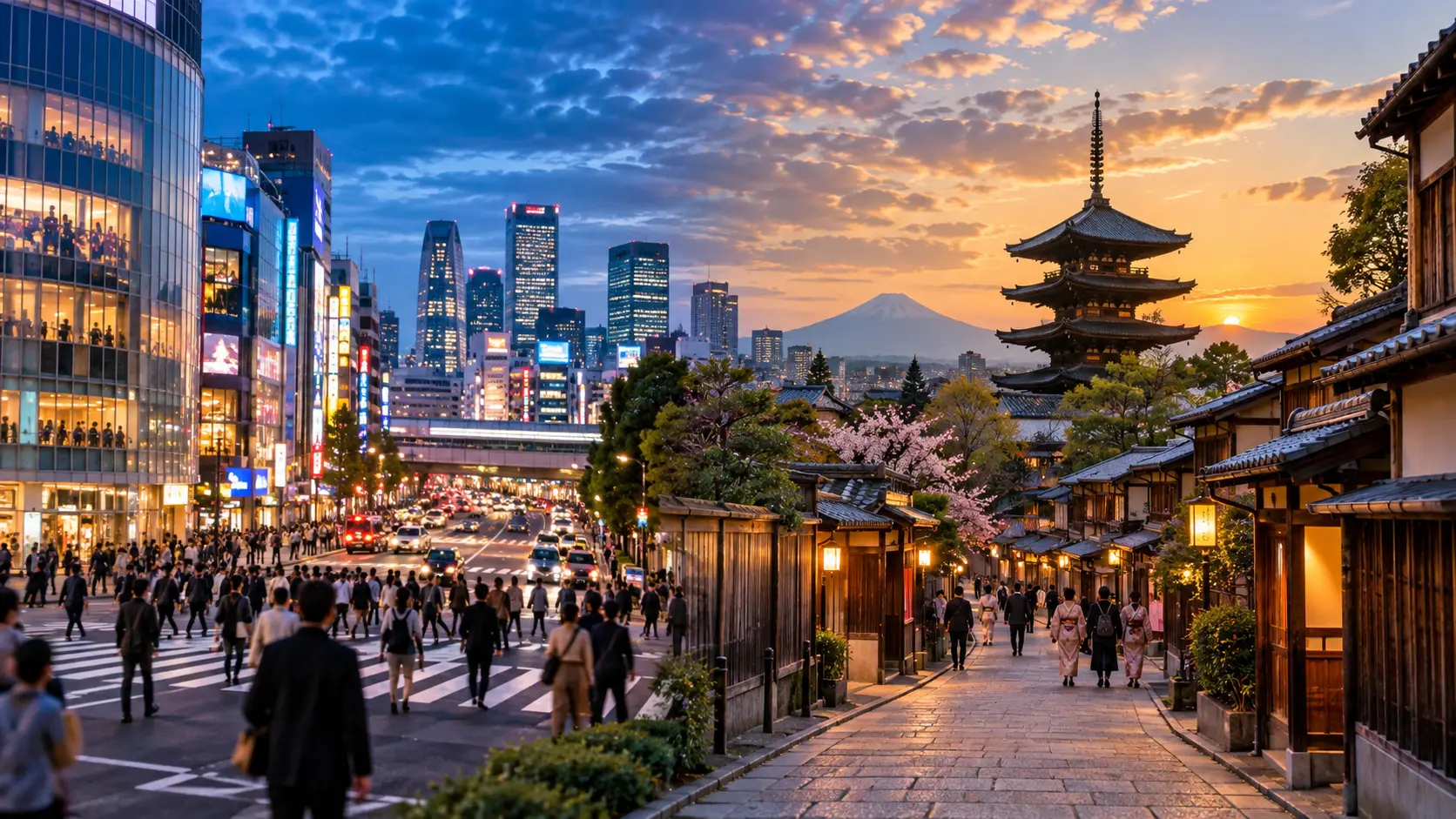

Tokyo and Kyoto are two of the most popular cities in Japan. However, first-time visitors often face one difficult question: Tokyo vs Kyoto: where should you spend more days?
A 4-day Tokyo and 3-day Kyoto split is a practical starting point for many first-time visitors. Tokyo has many large neighborhoods and a wider mix of modern attractions. Kyoto needs time too because its temples, shrines, gardens, and historic districts are spread across several areas.
If you are building your entire week around these cities, our Japan 7 day itinerary shows how this split can fit into a wider first-time trip.
Still, there is no perfect split for everyone.
Food lovers, shoppers, families, and nightlife fans may want more time in Tokyo. History lovers, photographers, and travelers who want traditional Japanese culture may prefer equal time or an extra day in Kyoto.
Your interests, travel pace, day trips, and number of full sightseeing days should decide the final split.
The Takeaway
If you want a quick answer, start with this guide:
| Total Sightseeing Days | Tokyo | Kyoto | Best For |
| 4 days | 3 | 1 | Very fast trip |
| 5 days | 3 | 2 | Short first visit |
| 6 days | 3 | 3 | Balanced trip |
| 7 days | 4 | 3 | First-time visitors |
| 8 days | 4–5 | 3–4 | Comfortable trip |
| 9 days | 5 | 4 | Slower sightseeing |
| 10 days | 5–6 | 4–5 | Both cities plus extra experiences |
A 4-day Tokyo and 3-day Kyoto split works well if you have seven full sightseeing days.
However, this is a starting point, not a rule.
Spend more time in Tokyo if you enjoy modern neighborhoods, shopping, food variety, nightlife, and entertainment.
Spend more time in Kyoto if temples, gardens, history, photography, and traditional culture are the main reasons for your Japan trip.
How Much Time Should You Spend in Tokyo and Kyoto?
Ideally, give Tokyo and Kyoto at least six or seven full sightseeing days together.
Tokyo usually works well with three to five days. Kyoto often needs three or four days for a comfortable first visit.
If you are still deciding the length of your overall trip, see our guide to how many days in Japan before choosing your city split.
You can visit both cities with less time. However, the trip will feel faster.
If you only have four days in Japan, visiting both cities may not be the best use of your time. You will lose part of a day traveling and changing hotels.
The Tokaido Shinkansen journey from Tokyo to Kyoto takes about 130 minutes. However, you also need time to reach the station, board the train, collect your luggage, travel to your hotel, and check in.
Therefore, do not treat every transfer day as a full sightseeing day.
There is also an important difference between days and nights.
Four nights in Tokyo do not always mean four full days in Tokyo. Your arrival and departure times can reduce the amount of time you actually have.
When planning your trip, count full sightseeing days separately.
Mini Guide for Kyoto vs Tokyo
Tokyo and Kyoto show visitors two very different sides of Japan.
Tokyo is large, fast, modern, and full of variety.
Kyoto has a stronger focus on history, temples, shrines, gardens, and traditional streets.
You should not think of them as competing destinations. They work well together.
Tokyo
Tokyo is a strong choice for travelers who want:
- Modern Japanese culture
- Shopping
- Anime and gaming
- Nightlife
- Food variety
- Trendy neighborhoods
- Museums
- Observation decks
- Theme parks
- Day trips
Tokyo also rewards travelers who enjoy exploring different neighborhoods.
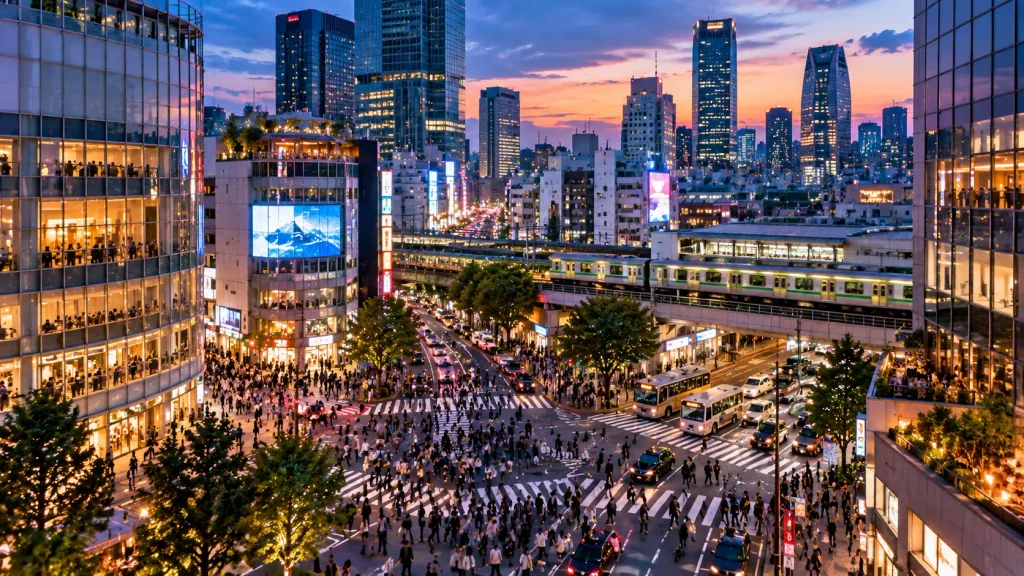
Shinjuku does not feel like Asakusa. Shibuya feels different from Ueno. Ginza offers another experience again.
where to stay in Tokyo for your first visit
Tokyo Metropolis has about 14 million residents and includes 23 special wards, as well as cities, towns, villages, and islands.
Its scale is one reason many first-time visitors choose to spend an extra day there.
Kyoto
Kyoto is ideal for travelers interested in:
- Temples
- Shrines
- Japanese gardens
- Traditional streets
- Historic architecture
- Tea culture
- Buddhist history
- Photography
- Seasonal scenery
- Slower sightseeing
Central Kyoto can feel more manageable than Tokyo’s major sightseeing districts. However, Kyoto’s famous attractions are spread across different parts of the city.
Fushimi Inari is in southern Kyoto.
Arashiyama is in the west.
Kinkaku-ji is in the northwest.
Gion and Kiyomizu-dera are in eastern Kyoto.
Trying to see all of these places in one or two days can become tiring.
Tokyo vs Kyoto at a Glance
If you are still deciding how to divide your time, this quick comparison shows how Tokyo and Kyoto differ for a first visit.
| Factor | Tokyo | Kyoto |
|---|---|---|
| Ideal first visit | 3 to 5 full days | 3 to 4 full days |
| Best for | Food, shopping, nightlife and pop culture | History, temples, gardens and traditional culture |
| Travel style | Fast-paced with lots of variety | Slower cultural sightseeing |
| Getting around | Trains and subways | Trains, buses and walking |
| Popular day trips | Hakone, Kamakura, Nikko and Mount Fuji areas | Nara, Uji, Osaka and Himeji |
| Nightlife | Much wider choice | Generally quieter |
| Shopping | Excellent variety | Good, with more traditional options |
| Traditional culture | Plenty to explore | A major reason to visit |
| Modern attractions | Huge variety | More limited |
| 7-day starting split | 4 full days | 3 full days |
Why Kyoto and Tokyo Are Japan’s Top Two Destinations
Tokyo and Kyoto work well together because they offer very different experiences.
Tokyo gives you skyscrapers, shopping centers, entertainment districts, small local streets, pop culture, and a huge food scene.
Kyoto gives you temples, shrines, gardens, historic neighborhoods, and traditions that have developed over centuries.
For a first Japan trip, visiting both cities gives you a wider view of the country.
You can see modern Japan in Tokyo and then experience a more traditional side of the country in Kyoto.
That contrast is one of the main reasons the Tokyo-Kyoto route remains so popular.
Ways to Compare Kyoto With Tokyo
Before deciding where to spend more days, think about your travel style.
The right answer depends on what you want from your trip.
Expanse
Tokyo is much larger and more complex.
You may spend one day around Shibuya and Harajuku, another around Asakusa and Ueno, and another in Shinjuku.
Trying to cross the city several times each day can waste time.
For this reason, Tokyo works best when you group nearby neighborhoods together.
Kyoto feels more compact, but its major attractions are still spread across several sightseeing areas.
Tokyo usually needs more time because of its scale.
Kyoto needs careful planning because of the location of its major sights.
Getting There and Around
Both cities have strong public transportation.
Tokyo relies heavily on trains and subways. Once you understand the system, moving between major areas becomes much easier.
Kyoto uses trains, subways, buses, and walking.
Some famous temples are not directly beside major train stations. Therefore, local travel can take longer than first-time visitors expect.
It is better to group nearby Kyoto attractions together.
For example, explore Gion and Higashiyama on the same day.
Keep Arashiyama for another day.
This saves time and reduces unnecessary travel.
Things to Do
Tokyo offers greater variety.
You can visit a shrine in the morning, explore a shopping district in the afternoon, eat ramen for dinner, and end the night at an observation deck or bar.
Kyoto focuses more heavily on culture and history.
You can visit temples, gardens, traditional neighborhoods, markets, museums, tea experiences, and riverside areas.
Travelers who enjoy many different types of activities may find it easier to fill extra days in Tokyo.
However, travelers who want slow cultural experiences may prefer more time in Kyoto.
Hotels
Both cities offer a wide range of accommodations.
You can find:
- Hostels
- Business hotels
- Apartments
- Luxury hotels
- Traditional stays
In Tokyo, your neighborhood can change the feel of your entire stay.
Shinjuku works well for transportation and nightlife.
Shibuya is good for shopping and modern city life.
Asakusa offers a more traditional atmosphere.
Ginza suits travelers interested in shopping and luxury hotels.
In Kyoto, staying near Kyoto Station makes transportation easier.
Gion and Higashiyama place you closer to traditional streets and temples.
Choose your hotel location carefully because long daily journeys can reduce your sightseeing time.
Day Trips and Excursions
Day trips can completely change your Tokyo vs Kyoto day split.
Popular trips from Tokyo include:
- Hakone
- Kamakura
- Nikko
- Mount Fuji areas
Popular trips from Kyoto include:
- Nara
- Uji
- Osaka
- Himeji
If you want several day trips from Tokyo, add extra nights there.
If Kyoto will also be your base for Nara or Uji, four or five nights in Kyoto can make sense.
Do not count a full day trip as a Kyoto or Tokyo sightseeing day.
Modern Tokyo vs Traditional Kyoto
The classic difference is simple.
Tokyo represents modern Japan more strongly.
Kyoto places more focus on traditional Japan.
In Tokyo, you can move between neon streets, skyscrapers, historic temples, fashion districts, gaming areas, and small restaurants in one day.
In Kyoto, many of the most famous experiences involve temples, shrines, gardens, historic streets, and traditional neighborhoods.
However, Tokyo is not only modern.
Kyoto is not only traditional either.
Both cities combine old and new.
The difference is mainly about which side of Japan is more visible during a typical visit.
Big Tokyo vs Small Kyoto
Tokyo’s scale is one reason to consider spending more days there.
You cannot understand the city by visiting only Shibuya Crossing and one temple.
Different neighborhoods offer different experiences.
Four or five days allow you to explore several parts of the city without constantly rushing.
Kyoto may feel smaller, but major attractions are spread across different areas.
More time in Kyoto also lets you start sightseeing early.
Kyoto’s official tourism organization recommends visiting popular areas during quieter times and provides congestion forecasts to help visitors avoid the busiest periods.
An extra Kyoto day can therefore improve the quality of your trip, even if you do not add many more attractions.
Expensive Tokyo vs Cheap Kyoto
Do not assume Tokyo is always expensive and Kyoto is always cheap.
Both cities can suit different budgets.
Tokyo has luxury hotels and fine dining. However, it also has business hotels, casual restaurants, noodle shops, and convenience stores.
Kyoto has affordable hotels and restaurants too.
However, traditional ryokan stays, special meals, and premium cultural experiences can raise your costs.
Your travel style matters more than the city name.
Therefore, cost alone should not decide where you spend your extra day.
how much a trip to Japan costs
What Is Special About Tokyo and Kyoto?
Tokyo is special because of its scale and variety.
You can spend several days exploring and still feel that you have only seen part of the city.
Kyoto is special because history feels much closer.
A morning walk through Higashiyama feels very different from an evening in Shinjuku.
Kyoto can also feel especially peaceful before the main daytime crowds arrive. The city’s official tourism organization actively promotes early-morning sightseeing as a way to enjoy popular areas at quieter times.
This contrast is one reason a first trip to Japan feels more complete when it includes both cities.
Tokyo or Kyoto: Which Is Best for You?
Your interests should decide where your extra day goes.
Best Food Scene? Tokyo vs Kyoto
Best for sheer food variety: Tokyo
Tokyo offers an enormous range of restaurants.
You can find:
- Sushi
- Ramen
- Yakitori
- Tempura
- Curry
- International food
- Fine dining
- Cafes
- Small local restaurants
Kyoto also has a strong food identity.
It is a better match for travelers especially interested in traditional Kyoto cuisine, matcha, tofu dishes, seasonal meals, and Japanese sweets.
Choose Tokyo for variety.
Choose Kyoto if traditional food culture is more important to you.
Best for History Lovers? Tokyo vs Kyoto
Best for history and traditional culture: Kyoto
Kyoto should get more time if Japanese history is one of your main interests.
The city has temples, shrines, gardens, historic neighborhoods, and traditional architecture.
Three days can cover many famous sights.
Four or five days let you move more slowly and explore beyond the busiest attractions.
Best for Families? Tokyo vs Kyoto
Often better for families seeking more activity variety: Tokyo
Tokyo gives children and teenagers a wider mix of activities.
Families can combine cultural sights with:
- Shopping
- Character stores
- Museums
- Observation decks
- Entertainment
- Theme parks
Kyoto can still be excellent for families, especially those interested in history, crafts, outdoor sightseeing, and traditional culture.
The best choice depends on your children and their interests.
Things to Do: Highlights in Tokyo and Kyoto
Popular Tokyo experiences include:
- Shibuya
- Shinjuku
- Asakusa
- Ueno
- Harajuku
- Ginza
- Akihabara
- Tokyo Skytree
- Tokyo Tower
- Meiji Shrine
Popular Kyoto experiences include:
- Fushimi Inari
- Kiyomizu-dera
- Gion
- Arashiyama
- Kinkaku-ji
- Nishiki Market
- Philosopher’s Path
- Higashiyama
Do not try to see everything.
Choose areas that match your interests.
A shorter list with enough time at each place often creates a better trip.
Best Nightlife: Tokyo or Kyoto?
Best for nightlife: Tokyo
Tokyo offers far more nightlife choices.
Areas such as Shinjuku, Shibuya, and Roppongi remain active late into the evening.
Kyoto nights are often quieter outside its busiest entertainment areas.
That can be a benefit if you prefer relaxed evenings and early sightseeing.
If nightlife is important to you, give Tokyo more time.
Easiest to Get Around? Tokyo vs Kyoto
Tokyo’s transportation system can look confusing at first.
However, trains and subways connect most major sightseeing areas.
Kyoto is smaller, but some attractions require buses, trains, or longer walks.
Therefore, Kyoto is not always faster to explore simply because the city feels smaller.
The easiest approach is to organize Kyoto sightseeing by area.
Which Is More Expensive? Tokyo vs Kyoto
There is no clear winner.
Both cities offer budget, mid-range, and luxury choices.
Tokyo may lead to more spending because there is so much shopping and entertainment.
Kyoto can become expensive if you book a luxury ryokan or premium cultural experiences.
Your hotel and travel style will usually have a bigger effect than the city itself.
Best Time to Visit? Weather and Festivals in Kyoto and Tokyo
Spring and fall are popular in both cities.
Kyoto is especially attractive during cherry blossom and fall foliage periods.
However, these seasons can also bring large crowds.
If seasonal Kyoto scenery is one of your main goals, an extra day can give you more flexibility.
Tokyo has a wider range of indoor attractions.
That can make planning easier during very hot, rainy, or cold weather.
Should You Visit Both Tokyo and Kyoto?
Yes, if you have enough time.
For most first-time visitors, Tokyo and Kyoto should not be an either-or decision.
The cities complement each other.
However, avoid forcing both into a very short itinerary.
If you only have three or four full sightseeing days in Japan, choosing one city may create a better trip.
With six or seven full sightseeing days, combining both becomes much easier.
7-day Japan itinerary for first-time visitors
How Many Days Do You Need in Kyoto? What About Tokyo?
For Tokyo:
2 days: Major highlights only.
3 days: Good for a short first visit.
4 days: Strong starting point for first-time visitors.
5 days: Better neighborhood depth or a day trip.
6+ days: Good for slower travel and more day trips.
For Kyoto:
2 days: Major highlights.
3 days: Good first visit.
4 days: Comfortable cultural trip.
5 days: Good for slow travel or a nearby day trip.
6+ days: Better for deep exploration and the wider Kansai region.
The important question is not only how many days you have.
Ask what each extra day will actually add to your trip.
Where Should Your Extra Day Go?
Quick Decision: Where Should Your Extra Day Go?
Give Tokyo the Extra Day If…
You care most about shopping, nightlife, food variety, anime and gaming, entertainment, modern attractions or exploring different neighborhoods.
Give Kyoto the Extra Day If…
You care most about temples, gardens, Japanese history, photography, traditional culture, historic streets or slower sightseeing.
No strong preference? A practical starting point for seven full sightseeing days is 4 days in Tokyo and 3 days in Kyoto.
If you have one extra day, your interests should decide where you spend it.
Tokyo is usually the better choice if you want more neighborhoods, shopping, nightlife, entertainment, or food variety.
Kyoto is often the better choice if you want more time for temples, gardens, history, traditional culture, and slower sightseeing.
| Give the Extra Day to Tokyo If You… | Give the Extra Day to Kyoto If You… |
| Love shopping | Love Japanese history |
| Want more nightlife | Want more temples and shrines |
| Enjoy anime and gaming | Enjoy gardens |
| Want more food variety | Want traditional Japanese culture |
| Like busy city neighborhoods | Prefer slower travel |
| Are traveling with teens | Enjoy photography |
| Want a Tokyo day trip | Want a Nara or Uji day trip |
| Prefer modern attractions | Prefer historic streets |
If you have no strong preference, an extra Tokyo day is a practical choice for many first-time visitors.
However, travelers visiting Japan mainly for history and traditional culture may get more value from an extra Kyoto day.
What Does One Extra Day Actually Give You?
An extra day does not simply mean adding another attraction.
It can change the pace of your whole trip.
What an Extra Day in Tokyo Gives You
2 days: You can see major highlights, but the trip will feel fast.
3 days: You can explore several famous areas, such as Shibuya, Shinjuku, Asakusa, and Ueno.
4 days: You can explore neighborhoods in more depth instead of rushing between attractions.
5 days: You have time for special interests, museums, shopping, or a day trip.
6 or more days: You can slow down and explore less touristy neighborhoods.
Tokyo becomes more rewarding when you stop treating it as a list of attractions and start exploring individual areas.
What an Extra Day in Kyoto Gives You
2 days: You can see several major temples and famous districts.
3 days: You can cover more of Kyoto’s main sightseeing areas.
4 days: You can slow down and enjoy gardens, historic streets, markets, and cultural experiences.
5 days: You have room for a nearby day trip or quieter parts of Kyoto.
6 or more days: You can explore Kyoto more deeply and use it as a base for other Kansai destinations.
An extra Kyoto day is especially valuable if you want to avoid turning every day into a race between temples.
Tokyo vs Kyoto by Travel Pace
Your travel pace should also affect your day split.
Some travelers enjoy long days from early morning until late at night.
Others prefer relaxed meals, slow walks, and fewer attractions.
| Travel Style | Tokyo | Kyoto |
| Fast-paced traveler | 3 days | 2 days |
| Average traveler | 4 days | 3 days |
| Relaxed traveler | 5 days | 4 days |
| Slow traveler | 5–6 days | 4–5 days |
Fast travelers can see the major sights in less time.
However, they may miss the local feel of each city.
Slow travelers should add more days instead of filling every hour with attractions.
This matters in Kyoto because temples, gardens, and historic streets are often more enjoyable when you have time to slow down.
Tokyo vs Kyoto for First-Time and Repeat Visitors
Your ideal split may change if this is not your first Japan trip.
First-Time Visitors
First-time visitors often benefit from giving Tokyo slightly more time because there are many famous neighborhoods and different types of experiences.
A 4-day Tokyo and 3-day Kyoto split is a practical starting point if you have seven full sightseeing days.
However, history and culture lovers may prefer an equal split.
Repeat Visitors
Repeat visitors do not need to follow the same plan.
If you have already seen Shibuya, Shinjuku, Asakusa, and Tokyo’s other major areas, you may not need another long Tokyo stay.
You could give Kyoto more time for:
- Quieter temples
- Gardens
- Local neighborhoods
- Traditional experiences
- Nearby towns
Repeat visitors can also explore beyond the busiest areas in both cities.
Your past trips should influence your day split.
Tokyo vs Kyoto Day-Split Calculator
Still unsure where to spend more days?
Use this simple score.
Give Tokyo one point for every statement that matches your trip:
- I love shopping.
- I want nightlife.
- I enjoy anime or gaming.
- I want lots of food choices.
- I prefer modern city experiences.
- I enjoy exploring different neighborhoods.
- I want museums and entertainment.
- I plan to take day trips from Tokyo.
Give Kyoto one point for every statement that matches your trip:
- I love temples and shrines.
- I enjoy Japanese history.
- I want traditional streets.
- I enjoy gardens.
- Photography is important to me.
- I prefer slower travel.
- I want traditional cultural experiences.
- I plan to visit Nara, Uji, or other nearby Kansai destinations.
Your Result
Tokyo leads by three or more points:
Spend one or two extra days in Tokyo.
The scores are close:
Choose a balanced split, such as three days in each city or four days in Tokyo and three days in Kyoto.
Kyoto leads by three or more points:
Give Kyoto the extra day.
This is not a strict rule.
It is simply a quick way to match your itinerary with the experiences you care about most.
Recommended Itineraries for Tokyo and Kyoto
Your ideal itinerary depends on how you count your travel time.
Remember that nights, calendar days, and full sightseeing days are not the same thing.
Recommended Itinerary for 6 Full Sightseeing Days
If you have six complete sightseeing days, a balanced split is:
Days 1–3: Tokyo
Transfer: Tokyo to Kyoto
Days 4–6: Kyoto
Your arrival, transfer, and departure time should be planned separately when possible.
If your six-day trip includes the arrival and transfer days, you will have less usable sightseeing time.
Recommended Itinerary for 1 Week
Sample 7-Day Tokyo and Kyoto Split
Here is one simple way to turn the 4-day Tokyo and 3-day Kyoto split into a practical sightseeing plan.
This is a sample structure rather than a fixed itinerary. Adjust the neighborhoods and attractions around your interests, hotel location, opening hours and travel pace.
If you have seven full sightseeing days, try:
Days 1–4: Tokyo
Transfer: Tokyo to Kyoto
Days 5–7: Kyoto
This gives you a true four-day Tokyo and three-day Kyoto split.
If you mean seven nights rather than seven full sightseeing days, your itinerary will look different.
For example:
Night 1: Tokyo arrival
Nights 2–4: Tokyo
Night 5: Kyoto after transfer
Nights 6–7: Kyoto
That gives you fewer than seven complete sightseeing days.
Always check your flight and train times before deciding how many days each city really gets.
Count Full Sightseeing Days, Not Just Nights
A seven-night Japan trip does not automatically give you seven full sightseeing days. Your arrival, departure, Tokyo-to-Kyoto transfer and any day trips can reduce your usable time. Count those separately before deciding how many days to give each city.
Extended Itineraries
Longer trips give you more freedom.
You can add day trips, quieter neighborhoods, and slower days.
9-Day Itinerary Including Osaka and Hakone
One possible split is:
- 4 days Tokyo
- 1 day Hakone
- 3 days Kyoto
- 1 day Osaka
This works well if you want several different experiences.
9-Day Itinerary Including Osaka
Another option is:
- 4 days Tokyo
- 3 days Kyoto
- 2 days Osaka
This gives all three cities useful time without making the itinerary too busy.
10-Day Itinerary Including Hakone
For ten sightseeing days, consider:
- 5 days Tokyo
- 1 day Hakone
- 4 days Kyoto
You can also reduce Tokyo to four days and use an extra Kyoto day for Nara or Uji.
The Full Itinerary
A good Tokyo and Kyoto itinerary should measure usable sightseeing time, not only hotel nights.
Your arrival day may be affected by jet lag.
Your Tokyo-to-Kyoto travel day may only give you part of a day.
Your departure day may offer little or no sightseeing time.
This is especially important for travelers arriving from the United States after a long flight.
Do not build a packed first day and assume you will have the same energy as you do later in the trip.
When planning, count:
- Full sightseeing days
- Arrival days
- Transfer days
- Departure days
- Day trips
This gives you a more realistic itinerary.
How Far Is Kyoto From Tokyo?
Tokyo to Kyoto at a Glance
The train journey is only part of your transfer day. Allow additional time for getting to the station, finding your platform, luggage, local transportation and hotel check-in.
Tokyo and Kyoto are hundreds of kilometers apart, but the Shinkansen makes the journey easy.
JR Central states that the Tokyo-to-Kyoto journey takes about 130 minutes by Tokaido Shinkansen.
Still, the train journey is not the only time you need to count.
Allow time for:
- Reaching Tokyo Station
- Finding the correct platform
- Boarding
- Getting through Kyoto Station
- Local transportation
- Hotel check-in
How Much Time Do You Ideally Need for Each?
For a first trip, a useful starting range is:
Tokyo: 3 to 5 full days
Kyoto: 3 to 4 full days
Fast travelers may need less.
Slow travelers may want more.
If you plan several day trips, add extra nights to your base city.
How to Travel Between Tokyo and Kyoto
The Tokaido Shinkansen is the easiest option for most visitors traveling between Tokyo and Kyoto.
The journey is fast enough to make both cities easy to include in one Japan trip.
However, avoid filling your transfer day with too many fixed bookings.
Luggage, station navigation, hotel check-in, and local transportation can take longer than expected.
Leaving some free time makes the travel day much less stressful.
Is It Easy to Get From Tokyo to Kyoto?
Yes.
Tokyo and Kyoto are easy to combine because of the Shinkansen.
However, Kyoto should not normally be treated as a day trip from Tokyo.
A round trip would use several hours before you include local transportation and sightseeing.
If Kyoto matters enough to include in your trip, staying overnight is usually a better choice.
Which City Should You Visit First If Doing Both?
For many international visitors, starting in Tokyo is practical.
A large number of international trips enter Japan through the Tokyo area.
Tokyo also gives you plenty of flexible activities while you adjust to Japan.
However, there is no rule saying Tokyo must come first.
Your flight route should help decide.
Pros of Starting in Tokyo
Starting in Tokyo can work well because:
- Many international flights arrive in the Tokyo area
- You can adjust to jet lag
- Public transportation is excellent
- You have many flexible first-day activities
- You can travel to Kyoto later by Shinkansen
Pros of Starting in Kyoto
Starting in Kyoto may work better if you enter Japan through Kansai International Airport.
It also lets you begin with a slower cultural experience before ending your trip in busy Tokyo.
Some travelers prefer this because Tokyo shopping can then be saved for the end of the trip.
Transportation Tips
Avoid unnecessary backtracking.
If your flight options allow it, arriving through Tokyo and departing through the Kansai region can save time.
The reverse route can work too.
This is often more efficient than returning to your first city only to catch a flight home.
Packing light can also make city changes easier.
Sample Itineraries by Interest
For culture lovers:
3 days Tokyo + 4 days Kyoto
For food and shopping:
5 days Tokyo + 3 days Kyoto
For families seeking variety:
5 days Tokyo + 3 days Kyoto
For photographers:
3 days Tokyo + 4 days Kyoto
For anime and gaming fans:
5 days Tokyo + 2 or 3 days Kyoto
For first-time visitors with no strong preference:
4 days Tokyo + 3 days Kyoto
Other FAQs About Visiting Tokyo and Kyoto
Which Is Better to Visit, Tokyo or Kyoto?
Neither city is better for everyone.
Choose Tokyo if you prefer:
- Shopping
- Food variety
- Nightlife
- Pop culture
- Modern neighborhoods
- Entertainment
Choose Kyoto if you prefer:
- Temples
- History
- Gardens
- Traditional culture
- Photography
- Slower sightseeing
If this is your first trip and you have enough time, visit both.
Is Kyoto Calmer Than Tokyo?
Kyoto often feels calmer outside its busiest sightseeing areas.
However, famous places such as Gion, Kiyomizu, Fushimi Inari, and Arashiyama can become very crowded.
The official Kyoto Travel Congestion Forecast tracks busy conditions around several popular sightseeing areas and encourages visitors to change their time or location when needed.
Early morning can be especially useful for popular attractions.
Is Kyoto More Expensive Than Tokyo?
Not always.
Both cities have budget, mid-range, and luxury options.
Your hotel dates, neighborhood, season, restaurants, and activities have a bigger effect on cost.
Do not change your Tokyo-Kyoto day split only because you assume one city will always be cheaper.
Is 3 Days Enough in Tokyo?
Three full days can cover several major Tokyo areas.
However, you will need to choose carefully.
Four or five days are better if you want more neighborhood exploration, shopping, nightlife, or a day trip.
Is 3 Days Enough in Kyoto?
Yes, three full days can give first-time visitors a good introduction to Kyoto.
You can explore several major sightseeing areas.
However, four days will feel more relaxed and give you more freedom to visit popular attractions early or explore quieter areas.
Can You See Tokyo and Kyoto in 7 Days?
Yes.
Seven full sightseeing days are enough for both cities.
A practical split is four days in Tokyo and three days in Kyoto.
However, make sure your seven days are actually full sightseeing days.
If arrival, departure, and transfer days are included, you will have less usable time.
Should You Visit Tokyo or Kyoto First?
Tokyo first is practical for travelers arriving through the Tokyo area.
Kyoto first makes sense for travelers entering Japan through Kansai.
The best order depends more on your flights and overall route than on the cities themselves.
Should You Stay in Kyoto and Day Trip to Osaka?
This can work well.
Kyoto and Osaka are close enough that many travelers visit one while staying in the other.
If your main interest is Kyoto’s temples and traditional neighborhoods, staying in Kyoto and visiting Osaka for a day can reduce hotel changes things to do in Osaka.
Is Kyoto Worth More Days Than Tokyo?
It can be.
Kyoto deserves more days if your trip focuses on temples, traditional culture, gardens, photography, slow travel, or nearby Kansai destinations.
Tokyo deserves more days if you prefer modern neighborhoods, food variety, entertainment, shopping, nightlife, or Tokyo-based day trips.
Final Thoughts: Tokyo vs Kyoto, Where Should You Spend More Days?
So, Tokyo vs Kyoto: where should you spend more days?
There is no universal answer.
For many first-time visitors, four full days in Tokyo and three full days in Kyoto is a practical starting point.
Tokyo can justify more time because of its scale, neighborhood variety, shopping, food, entertainment, and day-trip choices.
Kyoto can justify equal or greater time if temples, gardens, history, photography, and traditional Japanese culture are your main interests.
Give your extra day to Tokyo if you love food variety, shopping, nightlife, anime, entertainment, and modern city life.
Give your extra day to Kyoto if you love history, gardens, traditional streets, photography, cultural experiences, and slower travel.
Most importantly, count full sightseeing days, not just hotel nights.
The best itinerary is not the one that includes the most attractions.
It is the one that gives you enough time to enjoy the places you came to Japan to experience.