
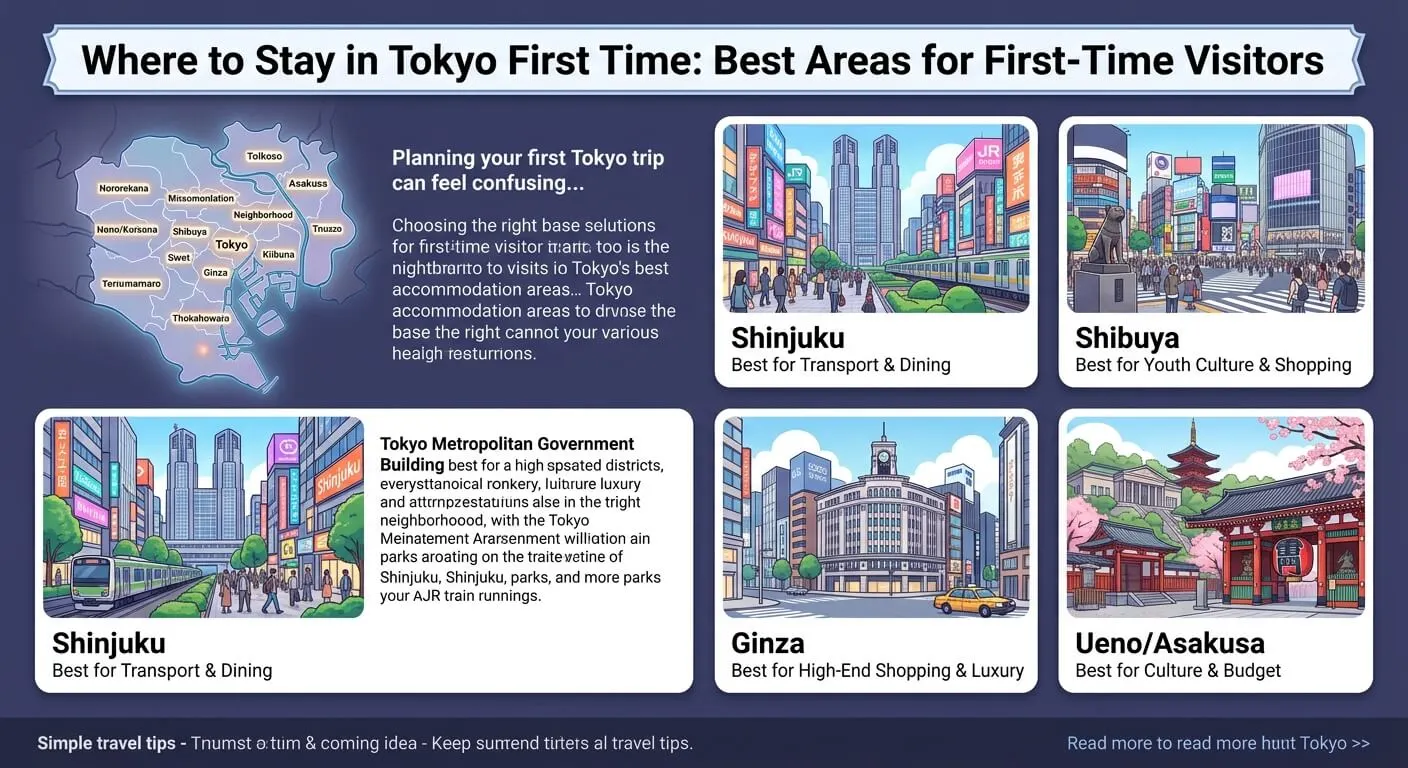

Planning your first Tokyo trip can feel confusing. The city is huge, and every neighbourhood offers something different. So, where to stay in Tokyo first time?
For most first-time visitors, Shinjuku and Shibuya are the easiest all-around choices. Both have excellent transport, restaurants, shopping, and things to do at night.
However, they are not right for everyone.
Choose Asakusa if you want traditional Tokyo. Pick Ueno for value, museums, and easy Narita access. Stay in Ginza for shopping and a more polished atmosphere. Tokyo Station works well if transport and onward travel matter most. Meanwhile, Akasaka offers a quieter central location.
The best place to stay depends on your budget, Japan itinerary, airport, travel style, and preferred atmosphere.
This guide compares the main Tokyo areas so you can choose the right base for your first trip.
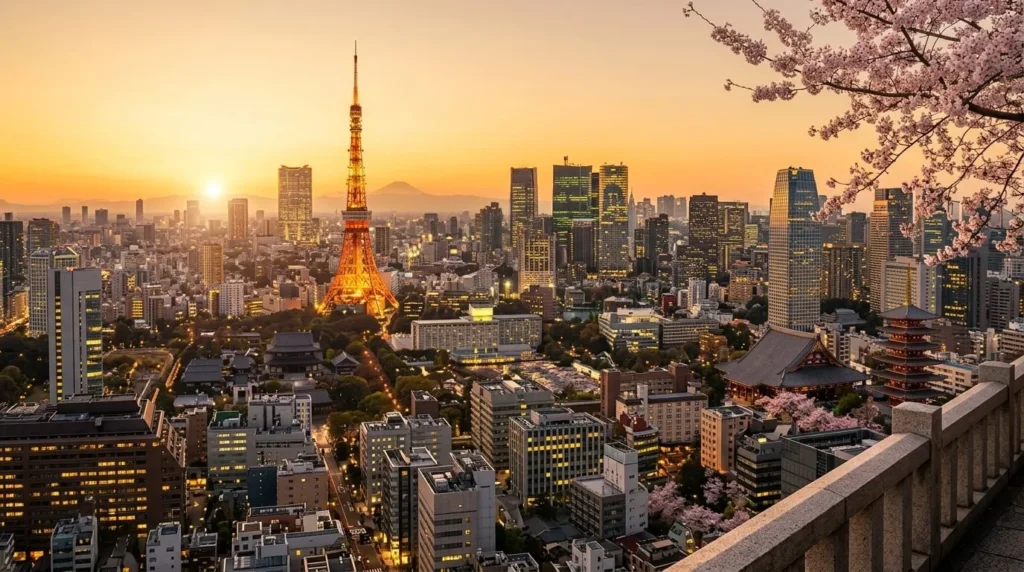
Where Should You Stay in Tokyo First Time? Quick Answer
For most first-time visitors, Shinjuku is the easiest overall choice because of its transport links, restaurants, shopping, and nightlife. However, the best area depends on your travel style.
| Traveller Type | Best Area |
|---|---|
| First-time visitor | Shinjuku |
| Nightlife & restaurants | Shinjuku / Shibuya |
| Traditional Tokyo experience | Asakusa |
| Budget + airport access | Ueno |
| Luxury shopping & style | Ginza |
| Travelling to Kyoto next | Tokyo Station |
Things to Consider When Choosing Where to Stay in Tokyo
Tokyo does not have one simple city centre.
Instead, it has several major districts connected by trains and subway lines.
Choosing the right area can save you time every day.
Before booking a hotel, consider what you want from your Tokyo trip.
Tokyo Areas at a Glance
Each Tokyo neighbourhood offers a different experience. Compare the main areas before choosing your hotel.
| Area | Best For | Atmosphere | Budget |
|---|---|---|---|
| Shinjuku | First timers, nightlife, restaurants | Busy & energetic | Mid |
| Shibuya | Shopping and modern Tokyo | Young & lively | Mid |
| Ginza | Luxury and couples | Polished & stylish | High |
| Asakusa | Culture and temples | Traditional & relaxed | Low-Mid |
| Ueno | Value and museums | Local & practical | Low-Mid |
| Tokyo Station | Transport connections | Central & efficient | High |
| Akasaka | Quiet central stay | Calm & polished | Mid |
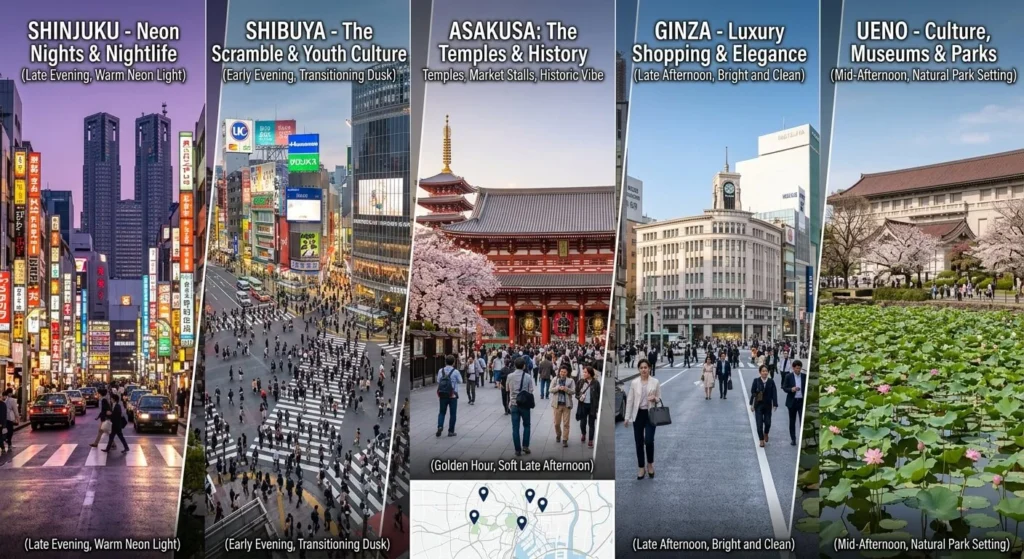
The Top Activities You Want to Do
Start with your sightseeing plans.
Write down the places you want to visit most.
These may include:
- Shibuya Crossing
- Meiji Shrine
- Harajuku
- Senso-ji Temple
- Tokyo Skytree
- Ginza
- Ueno Park
- Akihabara
- Imperial Palace
- Shinjuku
- Tokyo Disney Resort
Next, look at where these places are located.
If most of your plans are in western Tokyo, Shinjuku or Shibuya may work well.
If you want temples, museums, and older neighbourhoods, Asakusa or Ueno may be better.
You do not need to stay beside every attraction. Tokyo has an excellent public transport system.
However, the right hotel location can reduce long transfers and tiring walks.
What Vibes Are You Looking For?
Each Tokyo neighbourhood feels different.
Do you picture bright signs, busy streets, shopping, bars, and modern Tokyo?
Consider Shinjuku or Shibuya.
Would you rather wake up near temples and traditional streets?
Look at Asakusa.
Do you want museums, markets, and a slightly calmer base?
Consider Ueno.
Do you prefer designer shops, smart restaurants, and polished streets?
Choose Ginza.
The area around your hotel becomes part of your travel experience.
Think about how you want your neighbourhood to feel in the morning and at night.
Transportation Options
Transport should be one of your biggest factors.
A hotel may look central on a map. However, the nearest station and train lines matter more.
Try to stay near a useful JR or Tokyo Metro station.
Also check the real walking distance between the hotel and station entrance.
Large Tokyo stations can have many exits.
A hotel described as being five minutes from Shinjuku Station may still require a longer walk to reach the train line you need.
If you have children, heavy luggage, a stroller, or limited mobility, also check for lifts and step-free routes.
Good transport can make a normal hotel more useful than a luxury hotel in a poor location.
Type of Lodging
Tokyo has accommodation for almost every budget and travel style.
Hotels
Hotels are the easiest option for most first-time visitors.
Tokyo has simple business hotels, mid-range hotels, luxury properties, and apartment hotels.
Many offer:
- Private bathrooms
- Wi-Fi
- Reception services
- Housekeeping
- Luggage storage
- Laundry facilities
- Breakfast options
Always check the room size before booking.
A hotel may have excellent reviews but still feel too small if you have large suitcases.
Airbnbs and Apartments
Apartments can work well for families and longer stays.
They may offer:
- More space
- Kitchens
- Washing machines
- Separate sleeping areas
- Larger living areas
However, location still matters.
A large apartment far from a useful station may be less convenient than a smaller central hotel.
Hostels
Hostels are useful for solo travellers and people on a smaller budget.
Tokyo has modern hostels with dorm rooms and private rooms.
Before booking, check:
- Locker size
- Luggage storage
- Bathroom setup
- Quiet hours
- Distance from public transport
Capsule Hotels
Capsule hotels are a unique Japanese accommodation experience.
Guests sleep in compact private pods instead of normal hotel rooms.
They can be fun for one night.
However, they may not suit travellers with lots of luggage or people who want more personal space.
For a first Tokyo visit, a normal hotel is usually easier for a longer stay.
Love Hotels
Love hotels are mainly designed for couples booking rooms for short periods or overnight stays.
Some travellers use them because rooms can be larger or more unusual.
However, booking systems and services may differ from normal hotels.
A standard hotel is usually simpler for a first visit.
Pricing
Tokyo hotel prices vary widely and should be considered when calculating your overall Japan trip cost
The cost depends on:
- Location
- Season
- Day of the week
- Room size
- Hotel category
- Local events
- How early you book
Central areas such as Ginza may cost more.
Areas such as Ueno and Asakusa may offer better value.
Do not choose a hotel only because it is cheap.
A cheaper hotel far from useful transport can cost you more time every day.
Instead, compare price with location and convenience.
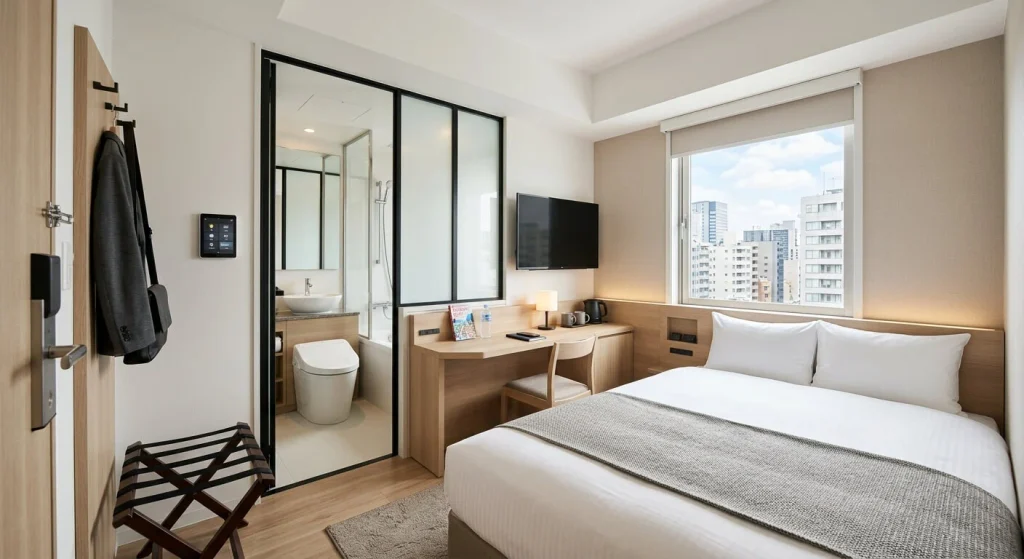
Hotel Rooms Can Be Very Small
Tokyo hotel rooms can feel smaller than rooms many American visitors are used to.
This is especially common in business hotels.
Before booking, check:
- Room size
- Bed width
- Number of beds
- Bathroom size
- Luggage space
- Wardrobe space
- Desk space
Do not rely only on photographs.
Wide-angle pictures can make small rooms appear larger.
If two people have large suitcases, make sure there is enough room to open them.
Our Favorite Hotels
The best Tokyo hotel is not always the most luxurious one.
For first-time visitors, location often matters more.
A practical hotel should ideally have:
- A useful station nearby
- Restaurants within walking distance
- Convenience stores nearby
- Easy connections to major attractions
- Enough room for your luggage
Popular options across the main areas include:
- Hotel Gracery Shinjuku
- ONSEN RYOKAN YUEN SHINJUKU
- Shibuya Tokyu REI Hotel
- Shibuya Excel Hotel Tokyu
- MUJI Hotel Ginza
- Mitsui Garden Hotel Ginza-gochome
- Hotel Gracery Asakusa
- Asakusa Tobu Hotel
- MIMARU Tokyo Asakusa Station
Choose the neighbourhood first.
Then compare hotels inside that area.
Shinjuku: Best Overall for First-Time Visitors
Best for: First-time visitors, nightlife, restaurants, shopping, and transport.
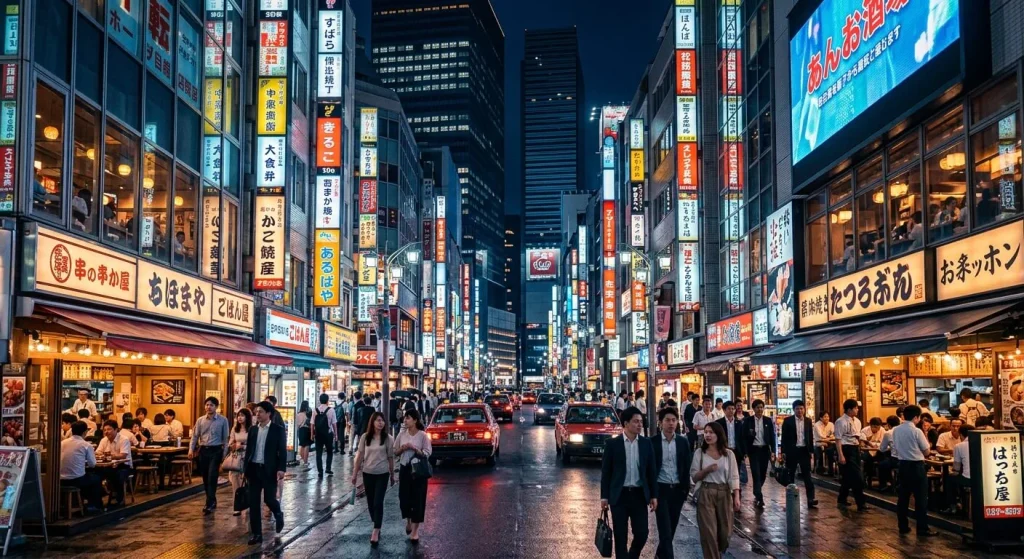
Shinjuku is one of the most popular places to stay in Tokyo.
It has bright lights, department stores, restaurants, entertainment, and excellent transport.
Shinjuku Station is also one of Tokyo’s major transport hubs.
Different parts of Shinjuku offer different experiences.
West Shinjuku has skyscrapers, offices, and larger hotels.
East Shinjuku has more shopping and entertainment.
Kabukicho is known for nightlife.
The southern area is useful for shopping and transport.
Where to Stay in Shinjuku
Popular options include:
- ONSEN RYOKAN YUEN SHINJUKU
- Hotel Gracery Shinjuku
- WPU Hotel Shinjuku
When comparing hotels, check which side of the station they are on.
Two hotels can both use “Shinjuku” in their address but offer very different experiences.
Unpopular Truths About Shinjuku
Shinjuku is convenient, but it is not perfect.
The station is huge and can confuse first-time visitors.
Some streets are crowded.
Parts of the area stay busy late into the night.
That is great for nightlife lovers.
However, travellers who prefer quiet evenings may be happier elsewhere.
You also do not need to stay in Shinjuku simply because it is famous.
Choose it because it fits your plans.
Shibuya: Best for Modern Tokyo and Shopping
Best for: Younger travellers, couples, shopping, restaurants, and nightlife.
Shibuya is another excellent area for a first Tokyo trip.
It is famous for Shibuya Crossing, but the neighbourhood offers much more.
You will find:
- Fashion stores
- Cafes
- Restaurants
- Bars
- Shopping centres
- Entertainment
- Easy access to Harajuku
- Easy access to Omotesando
Shibuya feels young, modern, and energetic.
Where to Stay in Shibuya
Popular options include:
- lyf Shibuya Tokyo
- Shibuya Tokyu REI Hotel
- Book Tea Bed Shibuya
- Shibuya Excel Hotel Tokyu
Shibuya works especially well if your itinerary includes Harajuku, Meiji Shrine, and western Tokyo.
However, it can be crowded and lively at night.
Travellers who prefer calmer evenings may prefer Ginza, Ueno, Asakusa, or Akasaka.
Ginza: Best for Luxury and Style
Best for: Couples, shopping, restaurants, luxury travellers, and a polished atmosphere.
Ginza feels very different from Shinjuku and Shibuya.
The streets are more refined.
The neighbourhood is known for designer shops, department stores, restaurants, galleries, and premium hotels.
It works well for travellers who want central Tokyo without the nightlife-heavy feeling of Shinjuku.
Where to Stay in Ginza
Popular choices include:
- Super Hotel Premier Ginza
- Mitsui Garden Hotel Ginza-gochome
- MUJI Hotel Ginza
Ginza is also useful if your plans include Tokyo Station, Tsukiji, or the Imperial Palace area.
The main drawback is price.
Hotels and restaurants can cost more than in some other parts of Tokyo.
Asakusa: Best for Traditional Tokyo
Best for: Traditional culture, temples, families, slower evenings, and travellers seeking value.
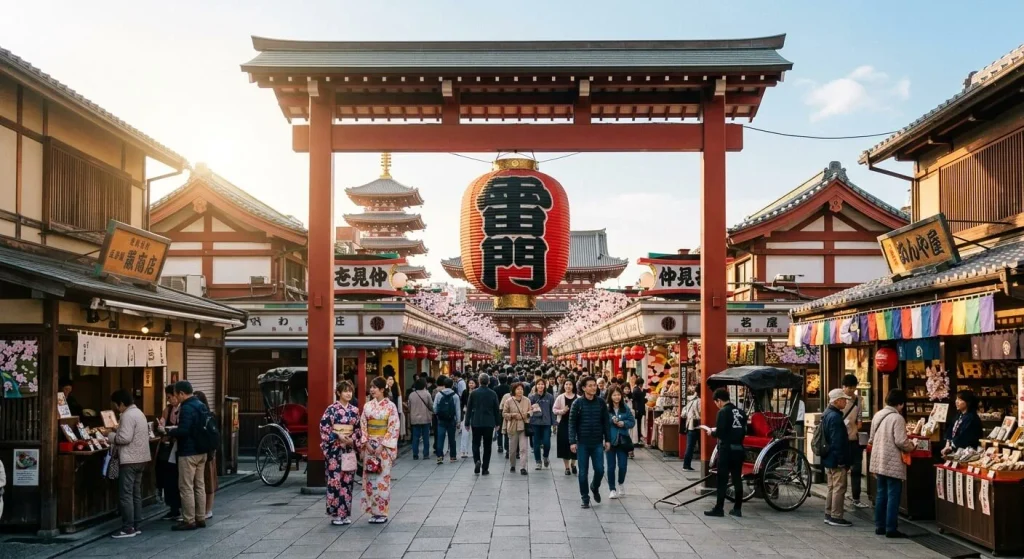
Asakusa shows a different side of Tokyo.
Instead of giant screens and fashion centres, you will find temples, older streets, traditional shops, and views towards Tokyo Skytree.
Senso-ji Temple is the area’s main landmark.
Visitors can also explore Kaminarimon Gate and Nakamise shopping street.
For many travellers, Asakusa offers a calmer start and end to the day.
Where to Stay in Asakusa
Popular options include:
- Hotel Gracery Asakusa
- Asakusa Tobu Hotel
- The Gate Hotel Kaminarimon
- MIMARU Tokyo Asakusa Station
- Capsule hotels
The main weakness is location.
Repeated trips to Shinjuku and Shibuya may take longer.
Still, Asakusa is a strong choice if culture and atmosphere matter more than nightlife.
Ueno: Good Value and Easy Narita Access
Best for: Budget travellers, families, museum lovers, and visitors arriving from Narita Airport.
Ueno is one of the most useful Tokyo areas that first-time visitors often overlook.
It has good transport, restaurants, museums, parks, shopping, and a more relaxed atmosphere than Shinjuku or Shibuya.
Ueno Park is one of the main attractions.
The area also gives easy access to museums, temples, and cultural sights.
Nearby Ameyoko is known for shops, food, and busy market streets.
Another advantage is airport access.
The Keisei Skyliner connects Narita Airport with the Ueno area.
Ueno can also offer better hotel value than Tokyo’s most famous districts.
The main downside is nightlife.
It does not have the same late-night energy as Shinjuku or Shibuya.
Choose Ueno if you want transport, museums, value, and a practical location.
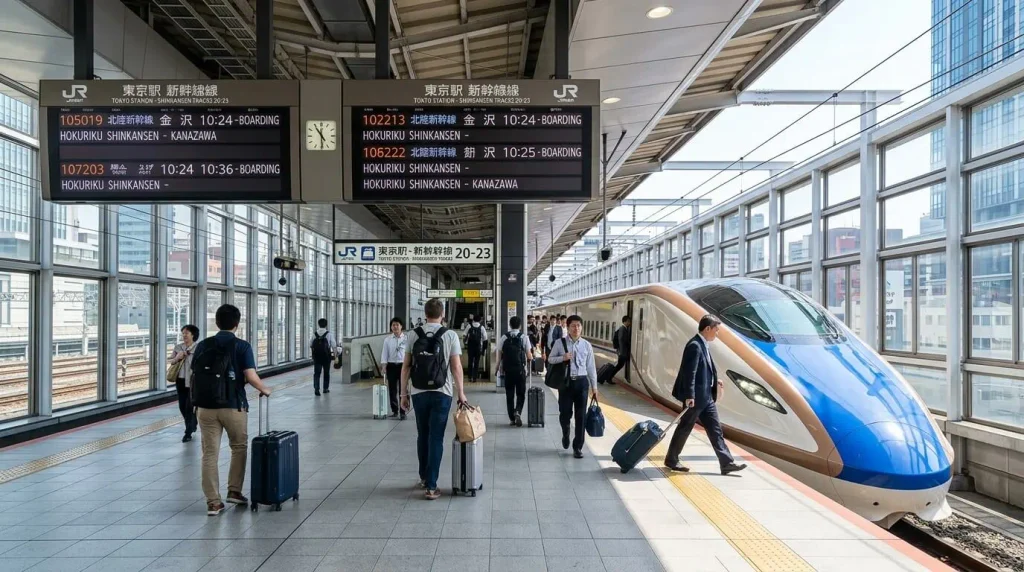
Tokyo Station: Best for Transport and Shinkansen Travel
Best for: Train travel, short stays, business travellers, and visitors continuing to Kyoto or Osaka.
Tokyo Station is one of Japan’s most important transport hubs.
It connects local trains, metro services, and Shinkansen bullet trains.
This makes it a strong choice if Tokyo is only one part of a longer Japan trip.
The surrounding area also has:
- Restaurants
- Shopping
- Department stores
- Office towers
- Ginza nearby
- Imperial Palace nearby
- Nihonbashi nearby
Tokyo Station does not have the same nightlife as Shinjuku.
However, few areas can match it for transport convenience.
Akasaka: Best for a Quieter Central Stay
Best for: Couples, business travellers, food lovers, and people who want quieter evenings.
Akasaka receives less attention than Shinjuku or Shibuya.
That can be part of its appeal.
It has restaurants, hotels, offices, and good subway connections.
The atmosphere generally feels more mature and calmer than Tokyo’s busiest entertainment districts.
Where to Stay in Akasaka
Popular options include:
- Hotel Mystays Premier Akasaka
- Sotetsu Fresa Inn Tokyo-Akasaka
- Via Inn Prime Akasaka
Akasaka may not have a famous attraction outside your hotel.
However, its central position can work well if you plan to explore many parts of Tokyo.
Shinjuku vs Shibuya: Which Is Better?
Both are excellent for first-time visitors.
However, they suit slightly different travellers.
| Factor | Shinjuku | Shibuya |
| Transport | Excellent | Excellent |
| Nightlife | Excellent | Excellent |
| Shopping | Excellent | Excellent |
| Younger atmosphere | Good | Excellent |
| Restaurants | Excellent | Excellent |
| Day trips | Excellent | Good |
| Quiet evenings | Limited | Limited |
| First-time convenience | Excellent | Excellent |
Choose Shinjuku if transport and a huge range of restaurants, hotels, and nightlife matter most.
Choose Shibuya if fashion, modern culture, Harajuku, and a younger atmosphere are higher priorities.
For general first-time convenience, Shinjuku has a small advantage.
Ueno vs Asakusa: Which Is Better?
Both work well for travellers interested in eastern Tokyo.
Choose Ueno if you want:
- Better transport
- Museums
- Shopping
- Easy Narita access
Choose Asakusa if you want:
- Temples
- Traditional streets
- A calmer atmosphere
- A stronger old-Tokyo feel
Ueno is more practical.
Asakusa offers more traditional character.
Best Tokyo Area by Traveller Type
Different travellers need different things from their hotel location.
| Traveller Type | Area to Consider |
| First-time visitor | Shinjuku |
| Young traveller | Shibuya |
| Couple | Ginza or Shibuya |
| Family | Asakusa or Ueno |
| Solo traveller | Shinjuku or Shibuya |
| Budget traveller | Ueno or Asakusa |
| Luxury traveller | Ginza |
| Nightlife traveller | Shinjuku or Shibuya |
| Traditional culture lover | Asakusa |
| Museum lover | Ueno |
| Travelling to Kyoto next | Tokyo Station |
| Quiet central stay | Akasaka |
There is no perfect neighbourhood for everyone.
Choose the area that matches how you actually travel.
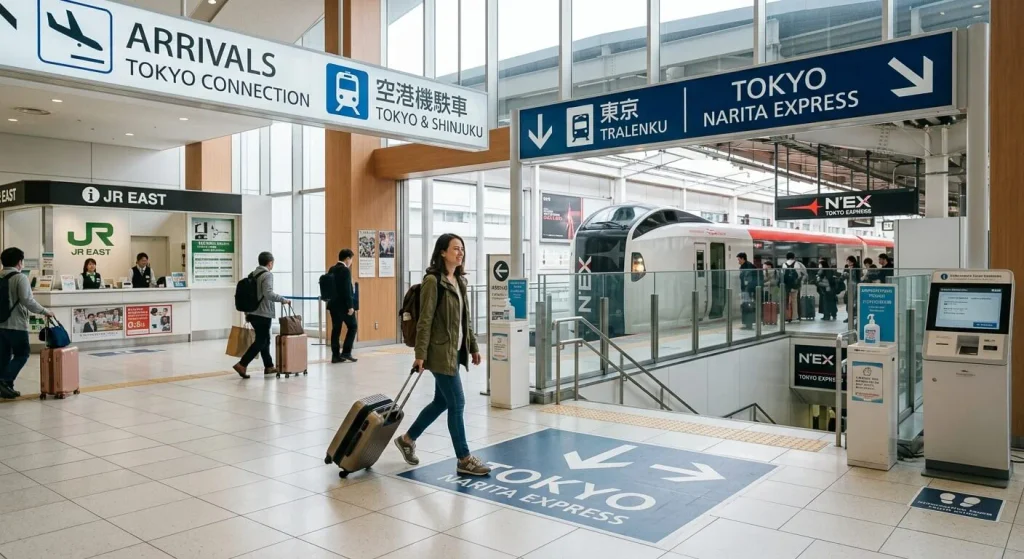
Best Area Based on Haneda or Narita Airport
Your arrival airport can affect your hotel choice.
Arriving at Haneda Airport
Haneda is closer to central Tokyo.
Areas such as Shinagawa, Tokyo Station, Ginza, and Shinjuku can work well depending on your route.
Shinagawa is especially useful if airport access and onward train travel matter.
Arriving at Narita Airport
Ueno can be convenient because of the Keisei Skyliner.
Tokyo Station is another practical choice.
However, do not choose a hotel only because of airport access.
You normally travel between your hotel and airport only twice.
Daily sightseeing convenience often matters more.
Best Area If You Are Going to Kyoto or Osaka Next
If Tokyo is the first stop on a longer Japan trip, plan for departure day too.
Tokyo Station is one of the easiest places to stay before travelling to Kyoto or Osaka by Shinkansen.
You can reach the bullet train without crossing Tokyo with heavy luggage.
Shinagawa can also be useful because many Tokaido Shinkansen trains stop there.
Shinjuku and Shibuya are still possible.
However, you will need to travel to a Shinkansen station first.
Which Tokyo Area Works Best for Your Itinerary?
Your sightseeing plans can help you choose the best base.
| Main Trip Focus | Area to Consider |
| Shibuya, Harajuku, Meiji Shrine | Shibuya |
| Shinjuku and western Tokyo | Shinjuku |
| Senso-ji and Tokyo Skytree | Asakusa |
| Museums and Ueno Park | Ueno |
| Ginza and central Tokyo | Ginza |
| Imperial Palace and train travel | Tokyo Station |
| Restaurants and quiet evenings | Akasaka |
Do not choose your hotel only because a neighbourhood is famous.
Look at where you plan to spend most of your time.
Choose Your Area Based on Your First 24 Hours
Think about what happens after you arrive.
Ask yourself:
- Which airport am I using?
- What time will I arrive?
- Will I have large luggage?
- What will I do the next morning?
- Am I leaving Tokyo soon for another city?
Someone arriving late at Haneda and going to Kyoto shortly after may prefer Tokyo Station or Shinagawa.
A traveller arriving from Narita who wants museums may prefer Ueno.
Someone planning Shibuya, Harajuku, and Meiji Shrine on day one may prefer Shibuya.
Your first 24 hours can reveal which area will make your trip easier.
Think About Where You Will Spend Your Evenings
Most travellers choose hotels based on daytime attractions.
Evening plans matter too.
If you expect to finish most nights in bars, restaurants, and entertainment areas, Shinjuku or Shibuya may save you late-night travel.
If you prefer quiet evenings, consider Ginza, Ueno, Asakusa, or Akasaka.
Ask yourself:
Where will I probably be at 10 PM?
Your answer can help you choose a better hotel location.
Best Tokyo Area Based on Trip Length
2–3 Days
Choose convenience first. Shinjuku, Shibuya, or Tokyo Station make it easier to reach major attractions quickly.
4–5 Days
You have more flexibility. Consider Ginza, Asakusa, Ueno, or Akasaka depending on your travel style.
6+ Days
Longer stays allow you to choose based on atmosphere, comfort, and hotel space.
Where to Stay Based on How Many Days You Have
Trip length can change which neighbourhood works best.
2 to 3 Days
Choose maximum convenience.
Shinjuku, Shibuya, or Tokyo Station can help you move between major attractions quickly.
4 to 5 Days
You have more flexibility.
Asakusa, Ueno, Ginza, and Akasaka become stronger options because you have more time.
6 to 7 Days or More
For longer stays, comfort and atmosphere become more important.
You may prefer a quieter area or a larger hotel room.
A slightly longer train ride may matter less during a longer trip.
What American Travellers Should Know About Tokyo Hotels
Tokyo hotels can feel different from hotels in the United States.
The biggest difference is often room size.
A standard room may be smaller than you expect.
Check the actual room dimensions before booking.
Also check:
- Bed dimensions
- Space around the bed
- Suitcase storage
- Bathroom size
- Laundry access
- Breakfast options
- Luggage storage
- Check-in time
- Check-out time
Families should also look for connecting rooms or apartment-style hotels.
Do not judge a Tokyo hotel only by its star rating.
Location and room size may matter more.
Tokyo Neighbourhoods at a Glance
| Area | Best For | Atmosphere |
| Shinjuku | First timers and nightlife | Busy and energetic |
| Shibuya | Shopping and modern culture | Young and lively |
| Ginza | Luxury and couples | Polished and stylish |
| Asakusa | Tradition and temples | Historic and relaxed |
| Ueno | Value and museums | Practical and local |
| Tokyo Station | Transport and onward travel | Central and efficient |
| Akasaka | Restaurants and quiet evenings | Calm and polished |
There is no single best area for every traveller.
The right choice depends on your plans.
Where to Avoid Staying on a First Tokyo Trip
“Avoid” does not mean these areas are bad.
It simply means they may not be the easiest base for most first-time visitors.
Roppongi
Roppongi is known for nightlife, restaurants, museums, and international businesses.
Some travellers love it.
However, other areas may offer a better mix of transport and sightseeing for a first trip.
Akihabara
Akihabara is famous for anime, manga, gaming, and electronics.
It is worth visiting if those interests appeal to you.
However, you do not need to stay there unless Akihabara is a major part of your trip.
Outer Areas
Hotels farther from central Tokyo can be cheaper.
However, always check travel times.
Saving money is less useful if you spend an extra hour on trains every day.
For a first visit, convenience is usually worth paying a little more for.
Important Tips for Booking Hotels in Tokyo
Choosing the right neighbourhood is only half the job.
You also need the right hotel inside that area.
Stay Near Useful Public Transport
A hotel within an easy walk of a good station will make sightseeing simpler.
Check the Station, Not Only the Area Name
Tokyo neighbourhoods can be large.
Two hotels in the same area may have very different transport connections.
Check Room Size
Room dimensions matter, especially when travelling with large bags.
Check Bed Size
Do not assume every double bed will be the size you expect.
Read the room details.
Check Smoking Rules
If you need a non-smoking room, confirm this before booking.
Ask About Luggage Storage
Many hotels can store luggage before check-in or after check-out.
This can make arrival and departure days easier.
Check Your Walking Route
A hotel may be five minutes from a station entrance.
However, reaching the platform you need may take longer.
Look at Your Full Itinerary
Check how long it takes to travel from your hotel to your main attractions.
Book Earlier During Busy Seasons
Popular hotels and room types can sell out.
Booking earlier usually gives you more choice.
Before Booking a Tokyo Hotel, Check These 10 Things
Tokyo Hotel Booking Checklist
Before confirming your hotel, check these important details:
Also check the cancellation policy.
A hotel that performs well across these points is usually a better choice than one selected only because it is cheaper.
Tokyo Accommodation Tax
Tokyo has an accommodation tax that may apply to some hotel stays.
The amount depends on the accommodation charge per person per night.
Rules can change, so check the latest information before travelling.
Also check whether taxes are already included in your booking price.
Some booking websites include them in the total.
Others may require payment at the hotel.
Our Quick Tokyo Recommendation
If this is your first trip to Tokyo, these are the easiest choices:
- 🥇 Shinjuku: Best overall choice for most visitors
- 🥈 Shibuya: Best for modern Tokyo, shopping, and nightlife
- 🥉 Asakusa: Best for traditional culture and temples
- 💰 Ueno: Best value and airport convenience
- ✨ Ginza: Best for luxury and couples
Final Thoughts on Where to Stay in Tokyo First Time
So, where to stay in Tokyo first time?
For most first-time travellers, Shinjuku is the strongest all-around choice because of its transport, restaurants, shopping, and nightlife.
Choose Shibuya if modern Tokyo, fashion, Harajuku, and a younger atmosphere matter more.
Stay in Asakusa for temples, traditional streets, and calmer evenings.
Choose Ueno for museums, good value, and useful Narita Airport access.
Pick Ginza for shopping, restaurants, and a more polished stay.
Choose Tokyo Station if transport and Shinkansen travel are your main priorities.
Finally, consider Akasaka if you want a quieter central location.
Before booking, compare four things:
Location, transport, room size, and price.
If your hotel performs well in all four areas, you have probably found a good base.
Tokyo may look overwhelming on a map.
However, once you understand the main neighbourhoods, choosing where to stay becomes much easier.

1 Comment
Pingback: How Much Does a Japan Trip Cost? 2026 Budget Guide