
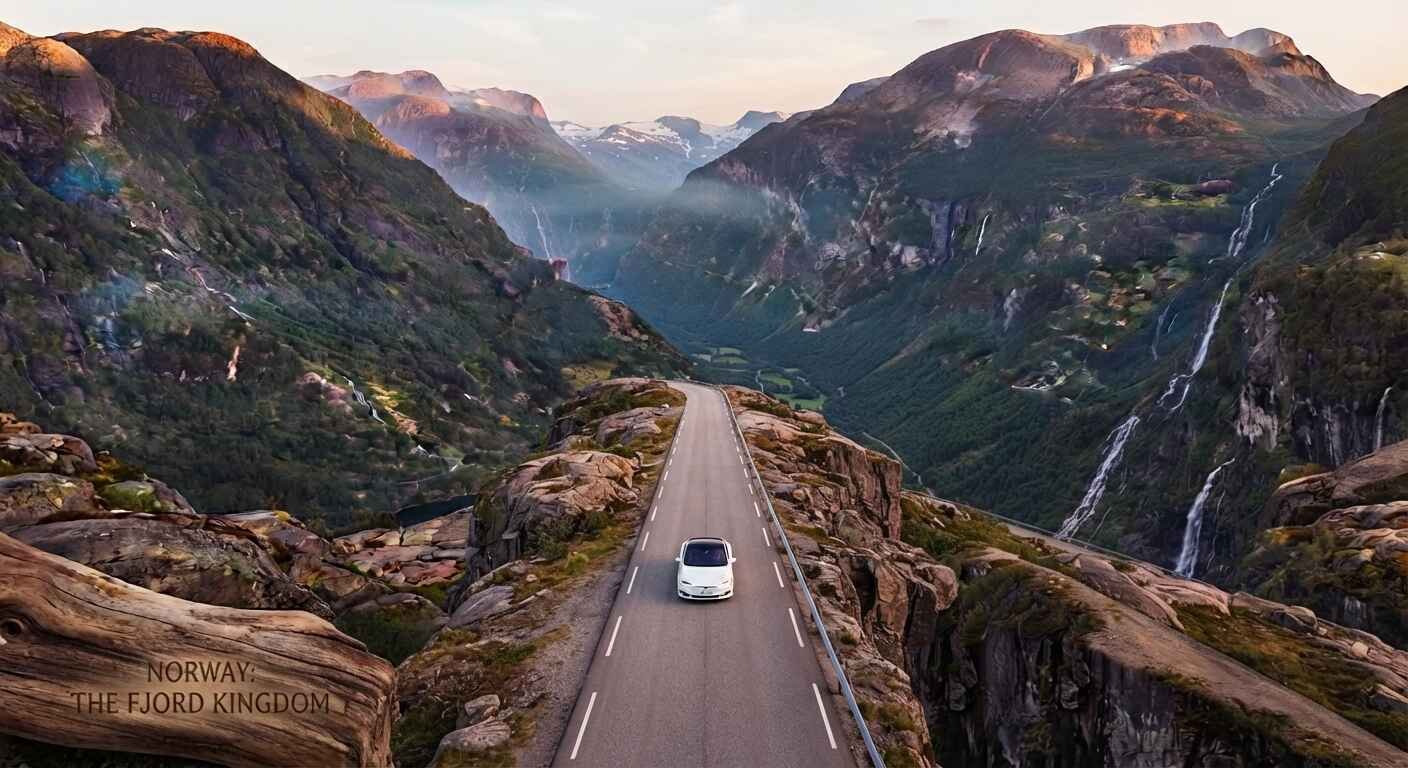

A Norway 2 week road trip gives you enough time to see some of the country’s best fjords, mountains, cities, and scenic roads.
However, Norway is much larger than it looks on a map. Roads are often narrow and winding. Ferries are also part of many routes. Therefore, trying to see the whole country in 14 days can make your trip feel rushed.
This 14-day Norway road trip itinerary focuses mainly on western Norway. It starts in Stavanger and finishes in Trondheim. Browse all our Norway travel guides for more trip ideas.
Along the way, you can explore Bergen, Flåm, Nærøyfjord, Geirangerfjord, Ålesund, the Atlantic Road, and several famous mountain areas.
This route works best from late spring to early autumn. Still, mountain roads can close because of weather or seasonal conditions. Always check current road information before driving. Planning a different trip length? See our Norway 7 day itinerary.
Planning Your Norway Road Trip – Where to Start
Stavanger is a good place to start this Norway self-drive itinerary.
It gives you quick access to Lysefjord and Preikestolen before you travel north toward Bergen and the main fjord region.
You can rent a car after arriving in Stavanger. Since this itinerary ends in Trondheim, check whether your rental company allows a one-way rental before booking. You can also follow our Norway 10 day itinerary.
Another option is to change the route and return the car to your starting city. However, that will add more driving.
Most US visitors can use their driving licence in Norway during a temporary stay. However, licence-format and translation rules can apply. Check the latest Norwegian driving rules before your trip. You should also confirm whether you need an International Driving Permit.
Norway drives on the right side of the road, just like the United States.
However, driving can still feel different. Many roads are narrow. You may also cross tunnels, mountain passes, bridges, and car ferries.
Norwegian toll stations are automated. Rental companies normally have their own process for passing toll charges to renters. Ask about these fees when collecting your car.
Norway 2 Week Road Trip at a Glance
This route moves from Stavanger to Trondheim through western Norway.
It focuses on fjords, scenic roads, waterfalls, mountain areas, and coastal cities.
| Day | Route | Main Highlight | Overnight |
| 1 | Stavanger | Old Stavanger and harbor | Stavanger |
| 2 | Stavanger and Lysefjord | Preikestolen | Stavanger |
| 3 | Lysefjord | Flørli and flexible sightseeing | Stavanger |
| 4 | Stavanger to Bergen | Bergen and Bryggen | Bergen |
| 5 | Bergen | Bergen or Trolltunga option | Bergen |
| 6 | Bergen to Flåm | Waterfalls and Flåm | Flåm/Gudvangen |
| 7 | Flåm and Gudvangen | Nærøyfjord | Flåm/Gudvangen |
| 8 | Gudvangen to Sogndal | Stegastein and Borgund | Sogndal |
| 9 | Sogndal to Geiranger | Scenic mountain roads | Geiranger |
| 10 | Geiranger region | Geirangerfjord and glacier country | Geiranger |
| 11 | Geiranger to Ålesund | Eagle Road and Trollstigen | Ålesund |
| 12 | Ålesund to Kristiansund | Atlantic Road | Kristiansund |
| 13 | Kristiansund to Trondheim | Scenic coastal drive | Trondheim |
| 14 | Trondheim | City sightseeing | Trondheim |
Do not plan your days around driving time alone.
Ferries, narrow roads, viewpoints, food stops, and photo stops can make even short distances take longer.
Two Weeks in Norway – Road Trip Itinerary
This Norway 14-day itinerary follows a simple south-to-north route:
Stavanger → Bergen → Gudvangen → Flåm → Sogndal → Geiranger → Ålesund → Kristiansund → Trondheim
The route includes cities, fjords, waterfalls, mountain roads, and coastal scenery.
It is best for travelers who want a mix of nature and sightseeing.
You do not need to complete every hike mentioned in this itinerary. In fact, choosing only one or two major hikes will make the trip much more comfortable.
Remember that road-trip time in Norway is not always the same as the driving time shown on your navigation app.
Ferries, viewpoints, road conditions, food stops, and photo stops can easily make a travel day longer.
Western Norway Map
Western Norway is the main focus of this road trip.
The route begins on Norway’s southwestern coast in Stavanger. It then travels north through Bergen and the fjord region before reaching Ålesund, Kristiansund, and Trondheim.
This direction works well because many of Norway’s famous natural attractions sit along the route.
You will also travel close to several Norwegian Scenic Routes. Norway has 18 official Scenic Routes. These roads are known for fjords, mountains, coastlines, viewpoints, and modern roadside architecture.
Day 1: Arrival in Stavanger
Use your first day to settle into Stavanger.
After a long international flight, it is better to keep the schedule light.
Walk around the city center and explore the old wooden streets of Gamle Stavanger. You can also visit Stavanger harbor and enjoy your first Norwegian meal.
If you arrive early, organize your rental car and supplies.
Buy water, snacks, and simple breakfast food before leaving the city. Food stops can become less frequent once you enter rural areas.
Spend the night in Stavanger.
Starting slowly also gives you more energy for the outdoor activities planned for the next two days.
Day 2: Stavanger, Lysefjord and Pulpit Rock
Day two introduces you to one of Norway’s most famous landscapes.
Lysefjord is located close to Stavanger. The area is known for steep mountains, deep blue water, and dramatic viewpoints.
One of the main attractions here is Preikestolen, also called Pulpit Rock.
Preikestolen
Preikestolen rises high above Lysefjord and offers one of Norway’s best-known views.
The standard hike is about 8 kilometers, or roughly 5 miles, round trip. It usually takes around four hours and includes about 500 meters of elevation gain.
The trail has steep and rocky sections.
Wear proper walking shoes and bring water, food, and weather protection.
Conditions can change quickly in Norway. Therefore, check the forecast before starting.
If hiking is not your priority, consider enjoying Lysefjord from the water instead. A fjord cruise gives you a different view of the mountains without a long hike.
Return to Stavanger for another night.
Bad-weather alternative: Take a Lysefjord cruise or spend more time exploring Stavanger.
Day 3: Stavanger, Lysefjord and Florli 4444
Spend another day exploring the Lysefjord region.
This gives your Norway road trip a slower start before the longer driving days begin.
One option is Flørli, a small village along Lysefjord. It is famous among active travelers for its long wooden staircase.
However, you do not need to plan another difficult activity if you hiked Preikestolen the day before.
Instead, use this as a flexible day.
You could take another fjord trip, explore around Stavanger, or simply enjoy a slower day by the water.
This flexibility can become useful if bad weather affected your plans on day two.
Spend one final night around Stavanger.
Day 4: Stavanger to Bergen
Today, leave Stavanger and travel north toward Bergen.
Do not treat this as a simple transfer day.
The journey itself is part of the Norway road-trip experience. Depending on your exact route, you may use ferries and travel through coastal areas.
Many Norwegian car ferries use automatic payment systems. Rental-car travelers should check how ferry charges will appear on the final bill.
Once you reach Bergen, park your car and explore on foot.
Bergen is one of Norway’s most famous cities and an important gateway to the fjords.
Visit Bryggen, the colorful historic waterfront area. Bryggen is a UNESCO World Heritage Site and one of Bergen’s best-known attractions.
You can also visit the Fish Market or take the Fløibanen funicular for views over the city.
Spend the night in Bergen.
Day 5: Bergen and Trolltunga
You have two main choices today.
The easier choice is to spend a full day exploring Bergen.
This works well if you prefer a slower road trip. Bergen deserves more than a quick evening visit.
Walk through Bryggen, explore the harbor, visit local museums, or head into the surrounding hills.
The second option is for serious hikers.
Trolltunga
Trolltunga is one of Norway’s famous mountain viewpoints.
However, it should not be treated as a short attraction.
The hike from the main P2 trailhead is about 27 kilometers round trip and can take 8 to 12 hours. A shorter route from P3 is around 20 kilometers and can take 7 to 10 hours.
A Trolltunga hiking day requires careful planning, suitable weather, good fitness, and enough daylight.
If Trolltunga is a major goal for your trip, consider changing your overnight stops so you are closer to the trail area.
Do not try to fit a demanding hike into an already busy driving day.
For most first-time visitors, spending this day in Bergen creates a more balanced 2 week Norway road trip.
Day 6: Bergen to Gudvangen and Flåm
Leave Bergen and travel deeper into Norway’s fjord country.
Your main destinations are Gudvangen and Flåm.
The direct drive can take around 2.5 hours, but you should allow more time if you stop along the way.
Consider visiting Tvindefossen and Skjervsfossen waterfalls.
You can also stop at Viking Valley in Gudvangen before continuing toward Flåm.
This part of the road trip offers a major change in scenery. Coastal city views slowly give way to steep valleys, mountains, waterfalls, and narrow fjords.
Take your time.
Flåm
Flåm sits beside Aurlandsfjord and is one of Norway’s best-known fjord villages.
It is also the starting point for the famous Flåm Railway.
The railway connects Flåm with Myrdal and climbs through dramatic mountain scenery.
If train travel is important to you, book enough time for the experience instead of rushing through Flåm.
You can stay in Flåm or nearby Gudvangen.
Both locations make good bases for the next day’s fjord activities.
Day 7: Gudvangen, Flåm and Nærøyfjord
Day seven is one of the highlights of this Norway fjords road trip.
You can explore the area between Flåm, Gudvangen, Aurlandsfjord, and Nærøyfjord.
Gudvangen
Gudvangen sits at the end of Nærøyfjord.
The village is surrounded by steep mountains and makes a useful stopping point between fjord activities.
Slow down here.
The scenery is the main attraction.
Norway in a Nutshell
The famous Norway in a Nutshell concept combines several forms of transport to experience the fjord region.
Even on a self-drive trip, you can use parts of this idea.
For example, leave your rental car parked and take a fjord cruise between Flåm and Gudvangen.
Nærøyfjord forms part of the UNESCO-listed West Norwegian Fjords area.
You can also visit Undredal, a small fjord village near Flåm. It offers a quieter atmosphere and makes a good short detour.
This is a good day to reduce driving.
Enjoy the water, viewpoints, and villages before continuing your route.
Day 8: Gudvangen to Sogndal
Continue north toward Sogndal.
This day includes several excellent scenic stops.
Start with Stegastein viewpoint, which offers wide views over Aurlandsfjord.
From there, you can follow the scenic Aurlandsfjellet mountain road when it is open. Another option is the Lærdal Tunnel.
You can also visit Borgund Stave Church before continuing toward Sogndal.
This part of the route may include a ferry crossing, so leave extra time.
Avoid the temptation to fill every hour with major attractions.
Some of the best Norway road-trip memories come from unexpected waterfalls, picnic stops, villages, and viewpoints.
Spend the night in Sogndal.
Day 9: Sogndal to Geiranger
Today, travel toward one of Norway’s most famous fjords.
The journey can take around four to five hours before longer sightseeing stops.
Possible stops include Drivandefossen, the mountain village of Lom, and Dalsnibba viewpoint.
Mountains grow higher, valleys become deeper, and waterfalls appear along the route.
Seasonal mountain roads can affect this part of a Norwegian road trip. Check official road conditions before leaving.
Geirangerfjord
Geirangerfjord is part of Norway’s UNESCO-listed western fjord landscape.
It is surrounded by high mountains and waterfalls.
Do not rush through Geiranger.
Spend the evening near the fjord and enjoy the quieter hours after many daytime visitors have left.
Stay overnight in or around Geiranger.
Day 10: Geirangerfjord and Briksdalsbreen
Keep day ten focused on nature.
A fjord cruise is one of the best ways to experience Geirangerfjord.
From the water, you can see steep mountains, old farms, and waterfalls such as the Seven Sisters.
Another option is a longer road trip toward glacier country.
Briksdalsbreen is a well-known glacier arm in the wider Jostedalsbreen region.
If you plan a longer day, you can also explore Hellesylt, Stryn, Loen, and Olden.
However, this adds more driving.
Choose your priority based on your travel style.
If you want a relaxed trip, stay close to Geiranger and spend more time around the fjord.
If glaciers are high on your Norway wish list, use the day for a longer outing.
Either choice works.
The goal is not to collect as many attractions as possible. The goal is to enjoy the places you visit.
Day 11: Geiranger, Trollstigen and Ålesund
Leave Geiranger and continue toward Ålesund.
Before leaving the area, drive along Ørnevegen, or Eagle Road, for another impressive view over Geirangerfjord.
The Geiranger–Trollstigen Scenic Route is about 104 kilometers long and includes a ferry crossing.
Trollstigen
Trollstigen is famous for its steep mountain road and viewpoints.
However, this is one place where you must check current conditions before building your day around it.
Trollstigen opened for the 2026 season on April 29, but conditions can still cause temporary closures.
The route is seasonal and may close because of weather, maintenance, or safety conditions.
Therefore, keep an alternative route available.
Continue toward Ålesund after your mountain drive.
Ålesund is a coastal city known for its architecture and surrounding sea views.
If you have time, visit Mount Aksla viewpoint for a wide view over the city and nearby islands.
Spend the night in Ålesund.
Day 12: Ålesund and the Atlantic Ocean Road
Start the morning in Ålesund before driving toward Norway’s famous Atlantic Road.
The journey takes you away from the deep fjords and toward a more open coastal landscape.
Consider taking the longer coastal route through Bud before reaching the Atlantic Road.
The Atlantic Road crosses small islands and connects them with bridges.
The famous road itself is toll free.
Do not drive this road only to reach the next hotel.
Stop at the viewpoints and walking areas.
Weather can completely change the experience here. A sunny day feels calm and open, while wind and clouds create a much more dramatic coastline.
Continue to Kristiansund after exploring the Atlantic Road.
Spend the night there.
Day 13: Kristiansund to Trondheim
Day thirteen takes you toward Trondheim.
You can follow the faster route or choose the scenic coastal Fv680 option.
The scenic route is around 207 kilometers and can take about four to five hours.
By now, you will have moved through fjords, mountains, coastal roads, villages, and cities.
Keep your final road day relaxed.
Stop when you find a good viewpoint or local café.
After reaching Trondheim, return the rental car if your booking allows it.
You may prefer to keep the vehicle until departure, but a car is not always necessary for exploring central Trondheim.
Spend the night in Trondheim.
Day 14: Trondheim
Use your final day to explore Trondheim without a long drive.
After almost two weeks on the road, a slower city day is a good way to finish the trip.
Walk through the historic center and along the river.
You can see Trondheim’s colorful wooden buildings, visit local cafés, and explore the city’s main historic sites.
Keep your schedule flexible if you fly home the same day.
If your flight leaves the following morning, enjoy a full final evening in Norway.
How Much Does a 2 Week Norway Road Trip Cost?
The cost of a 2 week Norway road trip depends on your travel dates, rental car, hotel style, food choices, and activities.
The main expenses usually include:
- Rental car
- Fuel or EV charging
- Accommodation
- Food
- Road tolls
- Car ferries
- Parking
- Fjord cruises
- Scenic railway tickets
- Hiking transport or tours
- Travel insurance
Summer is a busy travel season. Car rentals and accommodation can become more expensive.
A budget traveler can save money by staying in simple hotels or cabins, buying food from supermarkets, and choosing free outdoor attractions.
Mid-range travelers may prefer hotels, restaurant meals, fjord cruises, and a comfortable rental car.
A more comfortable trip can include waterfront hotels, guided activities, premium rental cars, and more restaurant meals.
Instead of relying on one fixed budget, check prices for your exact travel dates. Rental-car and hotel prices can change greatly between destinations and seasons.
Best Time for a Norway 2 Week Road Trip
The easiest time to follow this western Norway road trip is during the warmer months.
June
June offers very long daylight hours.
Crowds may be lower than during the busiest weeks of summer. However, some high mountain roads may still have seasonal restrictions.
July
July offers long days and good access to hiking and outdoor activities.
It is also one of the busiest months.
Book accommodation and rental cars early.
August
August is another good month for road trips, hikes, fjord cruises, and scenic roads.
Popular attractions can still be busy.
September
September can bring fewer visitors and beautiful autumn colors.
However, the days are shorter and mountain weather can become less predictable.
For the full scenic-road version of this itinerary, June through September is usually the easiest period.
Always check current mountain-road conditions before driving.
What to Book in Advance
Advance planning can make your road trip much easier.
Rental Car
Book your rental car early during summer.
This is especially important if you want an automatic vehicle, EV, larger car, or one-way rental.
Accommodation
Small fjord destinations have fewer hotels than major cities.
Flåm, Gudvangen, and Geiranger can become busy during summer.
Book early if you want a specific hotel or location.
Flåm Railway and Nærøyfjord Cruise
If these experiences are important to you, reserve your preferred departure times before arriving.
Popular Ferries
Some ferries can develop queues during the summer season.
Routes used by tourists may also allow or recommend advance reservations.
Guided Hikes and Activities
Check availability early if you want a guided Trolltunga hike, kayaking trip, glacier experience, or another popular outdoor activity.
Still, leave some flexibility for bad weather.
Ferries, Road Tolls, and Parking in Norway
Ferries and toll roads are normal parts of driving in western Norway.
Car Ferries
Most Norwegian ferry journeys use automatic payment systems.
FerryPay is another payment option on supported routes. Some Norwegian ferry routes are also free.
Summer queues can occur.
Do not assume that missing one ferry will only delay you by a few minutes. The next departure may affect your entire travel day.
Road Tolls
Norway has many automatic toll stations.
Rental companies normally pass applicable toll charges to the driver.
Ask about toll fees and administration charges when collecting your rental car.
Parking
Check parking before booking hotels in Stavanger, Bergen, Ålesund, and Trondheim.
A central hotel may be convenient but may not offer free parking.
You should also check parking before major hikes.
Trailhead parking often has its own fees and rules.
When possible, park once and explore compact city centers on foot.
Should You Rent an EV or Petrol Car in Norway?
Both electric and petrol cars can work for this itinerary.
Norway has a large EV charging network, so an electric car can be a practical choice.
Choose an EV if:
- You are comfortable planning charging stops.
- Your hotels offer charging.
- You do not mind using charging apps.
- You want to reduce fuel use.
Choose a Petrol or Hybrid Car if:
- You want simpler long-distance planning.
- You do not want to think about charging times.
- You expect many unplanned detours.
- You have little experience with EV road trips.
An EV can work well in Norway. However, check charging options before entering remote mountain areas.
Norway Road Trip Without Hiking
You do not need difficult hikes to enjoy this itinerary.
Many of Norway’s best landscapes can be seen from roads, ferries, viewpoints, trains, and fjord cruises.
If you do not want to hike Preikestolen, take a Lysefjord cruise instead.
If Trolltunga feels too demanding, spend more time around Bergen or explore the Hardanger area.
In Flåm, take the Flåm Railway or cruise through Nærøyfjord.
Around Geiranger, enjoy a Geirangerfjord cruise, Eagle Road, and scenic viewpoints.
On the Atlantic Road, use the walking paths and viewpoints instead of planning a difficult outdoor activity.
This makes the route suitable for couples, families, older travelers, and anyone who wants a slower road trip.
Have a Bad-Weather Plan
Weather can change quickly in western Norway.
Do not build the whole itinerary around activities that require perfect conditions.
For major hiking days, keep a backup plan.
Preikestolen: Take a Lysefjord cruise or explore Stavanger.
Trolltunga: Spend more time in Bergen or explore the Hardanger region.
Flåm: Take the scenic railway or enjoy the fjord villages.
Geiranger: Choose a fjord cruise or scenic drive.
Ålesund: Explore the town and wait for better visibility before visiting viewpoints.
Keeping part of your itinerary flexible can prevent one bad-weather day from affecting the whole trip.
Can You Include Lofoten in a 2 Week Norway Road Trip?
Yes, but adding Lofoten to this exact western Norway route would make the trip much more rushed.
Lofoten is in northern Norway, far from the Stavanger-to-Trondheim route.
Trying to drive through western Norway and Lofoten in the same 14-day trip means spending much more time in transit.
A better choice is to focus your trip on one region.
Choose western Norway if your priorities are Stavanger, Bergen, Flåm, Nærøyfjord, Geirangerfjord, Trollstigen, and the Atlantic Road.
Choose northern Norway and Lofoten if your priorities are Arctic beaches, fishing villages, northern mountains, and dramatic island scenery.
If you strongly want to see both areas, shorten the western route and consider a domestic flight instead of driving the full distance.
Travel Tips for a Norway 2 Week Road Trip
A little planning makes a big difference when driving around Norway.
First, never judge a travel day only by distance.
Norwegian roads can be slower than roads in the United States. Mountain passes, narrow sections, ferries, tunnels, and photo stops all add time.
Second, understand the toll system before collecting your rental car.
Ask your rental company how tolls and administration fees will appear on your final bill.
Third, check road conditions every morning when driving through mountain regions.
Seasonal roads can close during winter. Bad weather may also cause temporary closures during the normal travel season.
It also helps to book accommodation early during the busy summer months.
This is especially useful in small fjord villages where the number of rooms is limited.
Finally, avoid planning a major hike every day.
Preikestolen, Trolltunga, and other mountain routes can be tiring.
Leave enough time for fjord cruises, scenic drives, cities, and quiet stops as well.
Norway 2 Week Road Trip FAQs
Is two weeks enough for a Norway road trip?
Yes.
Two weeks gives you enough time to explore one major region of Norway at a comfortable pace.
Western Norway is a good choice for first-time visitors because it combines fjords, mountain roads, waterfalls, cities, and villages.
How much driving is involved in a 2 week Norway road trip?
It depends on your route.
Several days on this itinerary can involve around four to five hours of driving before sightseeing stops.
Ferries, narrow roads, viewpoints, and photo stops can make travel days longer.
Is driving in Norway difficult?
Most visitors can drive in Norway without major problems.
However, rural roads can be narrow and winding.
Mountain roads, tunnels, ferries, and changing weather require extra attention.
Can Americans drive in Norway?
Most US visitors can use their driving licence during a temporary stay.
However, licence-format or translation requirements may apply.
Check current Norwegian rules before traveling and confirm whether you need an International Driving Permit.
How do car ferries work in Norway?
Most car ferries use automatic payment systems.
Some ferries also support FerryPay, while some routes are free.
Popular crossings can have queues during summer.
Are there toll roads in Norway?
Yes.
Norway has many automatic toll stations.
If you rent a car, ask the rental company how tolls will be added to your final bill.
Is an electric car good for a Norway road trip?
Yes.
Norway has an extensive EV charging network.
However, plan charging stops before longer mountain drives or trips through remote areas.
What is the best month for a Norway road trip?
June, July, August, and early September are good options.
July offers long daylight hours but attracts more visitors.
June and September can be quieter, although seasonal mountain roads and weather need more attention.
Do I need to book accommodation in advance?
It is a good idea during summer.
Book early in smaller fjord destinations such as Flåm, Gudvangen, and Geiranger.
Rental cars should also be reserved in advance during busy travel months.
Can I do this Norway itinerary without hiking?
Yes.
Fjord cruises, scenic trains, waterfalls, viewpoints, villages, and scenic roads make this itinerary worthwhile even without long hikes.
Final Thoughts on a 2 Week Norway Road Trip
A successful Norway 2 week road trip is not about seeing every attraction in the country.
It is about creating a route that gives you enough time to enjoy Norway’s landscapes.
With 14 days, western Norway offers an excellent mix of fjords, mountain roads, coastal cities, waterfalls, villages, and scenic drives.
Start in Stavanger, travel north at a comfortable pace, and finish in Trondheim.
Do not worry if you cannot see everything.
Leave space for weather changes, scenic stops, and unexpected discoveries.
In Norway, those unplanned moments can become some of the best parts of your road trip.