
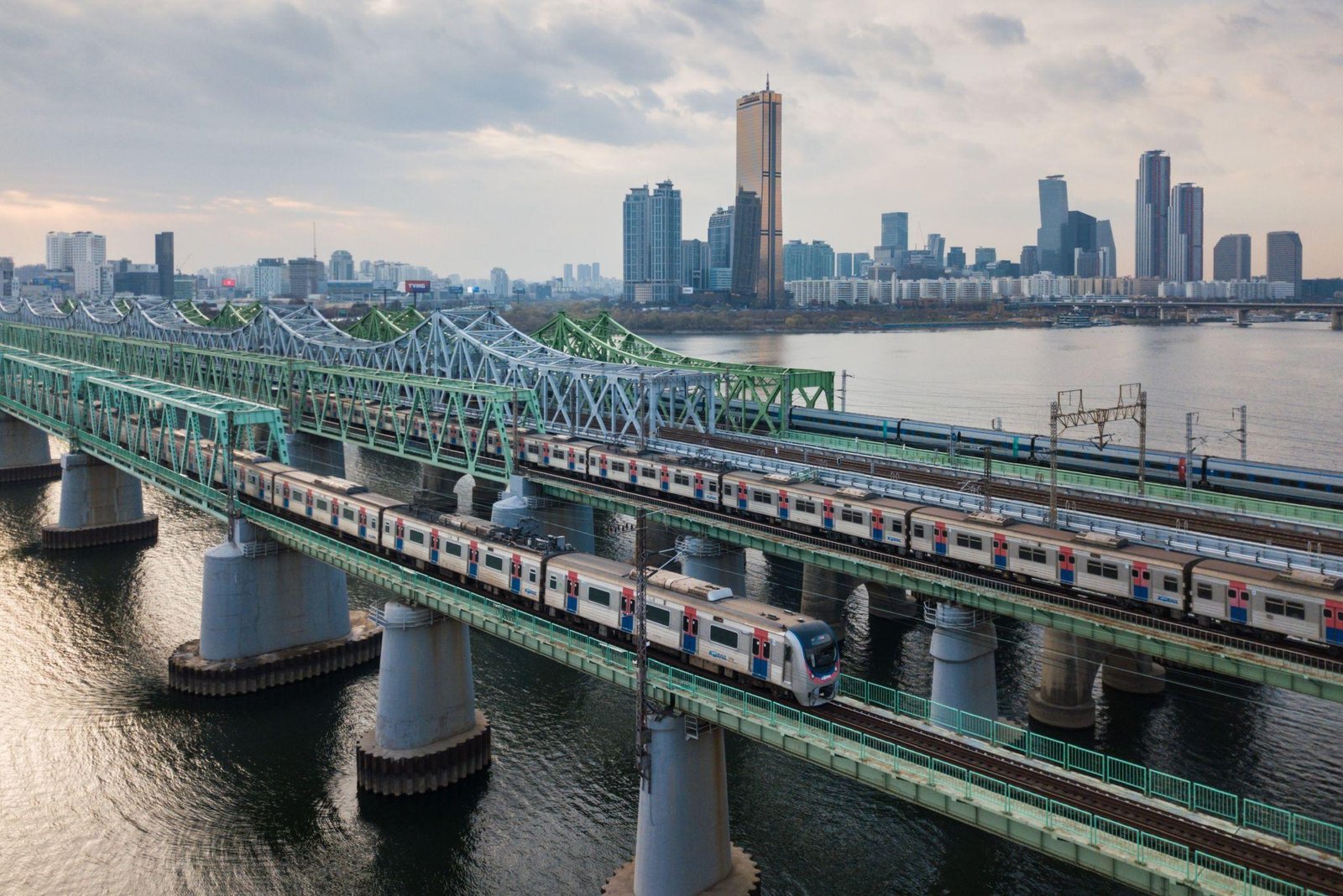

Getting around South Korea is easier than you might expect, even if it is your first visit. The country has an extensive transportation network that connects major cities, small towns, popular tourist attractions, and coastal destinations. Whether you are exploring Seoul’s busy neighborhoods, visiting Busan’s beaches, discovering historic Gyeongju, or traveling to Jeju Island, there is usually a convenient way to reach your destination.
South Korea offers several transportation options, including high-speed trains, city subways, public buses, taxis, domestic flights, and ferries. Most international visitors can explore the country comfortably without renting a car.
However, choosing the right transportation can make a big difference in your travel time, budget, and overall experience. Some journeys are faster by train, while others are more convenient by bus or domestic flight. You will also need to understand how transportation cards work, which navigation apps are useful, and how foreign visitors can purchase tickets.
This guide explains how to get around South Korea, how much transportation may cost, and which options make the most sense for different types of travelers.
Quick Guide to Getting Around South Korea
If you are visiting South Korea for the first time, here is a quick overview of the main transportation options.
| Transportation | Best For | Main Advantage |
| Subway | Exploring major cities | Affordable and easy to navigate |
| City buses | Reaching local neighborhoods | Extensive route coverage |
| KTX trains | Traveling between major cities | Fast and comfortable |
| Express buses | Budget intercity travel | Wide regional connections |
| Taxis | Short trips and late-night journeys | Door-to-door convenience |
| Domestic flights | Traveling to Jeju Island | Saves travel time |
| Ferries | Visiting coastal and offshore islands | Scenic island connections |
| Rental cars | Exploring rural areas and Jeju | Greater flexibility |
| Bicycles | Exploring parks and cycling routes | Relaxed local sightseeing |
For most first-time visitors, a combination of subway, buses, and KTX trains is the easiest way to explore South Korea.
Use the free tools below to estimate your local transport budget, find the best way to travel for your situation, compare KTX and express bus options, and understand how a T-money card works.
South Korea Transport Cost Calculator
Estimate how much you may spend on local public transportation during your trip.
Planning estimate only. Enter your expected average fare. This calculation excludes intercity trains, airport transfers, taxis and special passes.
Which Transport Should You Use in South Korea?
Choose your travel situation to see a practical transport recommendation.
KTX vs Express Bus Calculator
Enter the prices and journey times you find for your route to compare both options.
Ticket prices and journey times vary by route, date, service and availability. Check the operator before booking.
T-money Card: Quick Traveler Guide
Understand how a rechargeable transportation card can make city travel easier.
What is a T-money card?
T-money is a rechargeable transportation card commonly used for public transport in many parts of South Korea. Acceptance and features can vary by location and service.
Where can I buy one?
Cards are commonly sold at convenience stores and selected subway station locations. Availability may vary, so check at your arrival airport or nearby station.
How do I add money?
Top-up options depend on the location and machine. Many travelers use Korean won cash at supported convenience stores or transit machines. Do not assume a foreign bank card can top up every T-money service.
Can I use my US credit card directly at subway gates?
Do not assume that a foreign-issued bank card can be tapped directly at public transport gates. Check current local payment options and use a supported transit card when needed.
Is T-money the same as WOWPASS?
No. They are different products with different features. Check each provider’s current transport coverage, payment features, fees and top-up rules before choosing.
Always confirm current card rules and transport coverage before traveling.
1. Get Around South Korea by Subway
The subway is one of the most convenient ways to explore South Korea’s major cities. It is affordable, relatively easy to understand, and connects many popular tourist attractions, shopping areas, hotels, and transportation hubs.
Seoul has an extensive subway network that reaches popular neighborhoods such as Myeongdong, Hongdae, Gangnam, Itaewon, and Dongdaemun. Other cities, including Busan, Daegu, Daejeon, and Gwangju, also have subway systems.
For visitors staying in major cities, the subway is often the best transportation option for everyday sightseeing.
How to Use the Subway in South Korea
Using the subway is straightforward, even if you do not speak Korean.
- Download a navigation app such as Naver Map or KakaoMap.
- Enter your destination and select public transportation directions.
- Check the subway line, direction, and transfer stations.
- Purchase a transportation card or a single-journey ticket.
- Tap your card at the entrance gate.
- Follow the station signs to the correct platform.
- Tap your card again when exiting, where required.
Most major subway stations have English signs, and train announcements are commonly provided in English alongside Korean.
Digital displays also show upcoming trains, platform information, and transfer directions.
How Much Does the Subway Cost?
Seoul subway fares are relatively affordable compared with public transportation in many large US cities.
The adult base fare is approximately ₩1,550 with a transportation card, based on the fare information published in 2026. Longer journeys may cost more because fares can increase according to distance.
Fares vary between cities and transportation systems, so check the latest local fare information before traveling.
Subway Travel Tips
- Avoid traveling during weekday morning and evening rush hours if possible.
- Check your exit number before leaving the station because some stations have many exits.
- Follow the signs for elevators if you are carrying heavy luggage.
- Leave priority seating available for older adults, pregnant passengers, and travelers with disabilities.
- Check the last train schedule before planning a late-night outing.
2. Use City Buses to Reach More Places
Buses are another important part of South Korea’s public transportation system. They reach neighborhoods, residential areas, local attractions, and destinations that may be inconvenient to access by subway.
In Seoul, buses are organized using different colors to indicate their general route types.
- Blue buses: Connect major areas across the city.
- Green buses: Serve shorter local routes and connect neighborhoods with subway stations.
- Red buses: Connect Seoul with surrounding metropolitan areas.
- Yellow buses: Operate circular routes around selected districts.
Bus colors and route systems may differ in other South Korean cities.
How to Use Buses in South Korea
The easiest way to pay for most city bus journeys is with a rechargeable transportation card.
Follow these steps:
- Check the bus number using Naver Map or KakaoMap.
- Confirm the destination and direction before boarding.
- Enter through the front door.
- Tap your transportation card on the reader.
- Watch your location on your navigation app.
- Press the stop button before reaching your destination.
- Exit through the rear door and tap your card again.
Remember to tap when leaving the bus. This helps calculate the correct fare and preserves eligible transfer discounts.
Are Buses Better Than Subways?
It depends on where you are going.
Subways are generally easier for traveling between major tourist districts. Buses are useful when your destination is farther from a subway station or when a direct bus route avoids several transfers.
For example, a bus may take you closer to a local restaurant, residential neighborhood, or scenic attraction than the nearest subway station.
If you are unfamiliar with Korean bus routes, use a navigation app to check the bus number, direction, and arrival time before boarding.
3. Choose the Right Transportation Card: T-money, WOWPASS, or Climate Card
One of the first things to arrange after arriving in South Korea is a convenient way to pay for public transportation.
South Korea has several transportation and tourist payment cards. Although they may look similar, they do not all provide the same benefits.
T-money Card
T-money is one of the most widely used rechargeable transportation cards in South Korea.
You can use it on participating city buses, subway systems, and many taxis. It is especially convenient for visitors who plan to travel between several cities.
You can generally purchase a physical T-money card at participating convenience stores and transportation outlets.
Top-ups for standard physical T-money cards are generally made using Korean won cash at supported stores or machines.
WOWPASS
WOWPASS is a prepaid payment card designed with international visitors in mind.
It combines payment features with transportation functionality through its supported transit-card system.
It can be useful if you want one tourist-oriented card for everyday purchases and transportation. However, its payment balance and transportation balance may be managed separately, so understand how each balance works before relying on it.
Seoul Climate Card
The Climate Card is a Seoul-focused public transportation pass.
It is designed for people who expect to use eligible Seoul public transportation frequently during a short visit or longer stay.
Short-term pass options include different durations, such as 1, 2, 3, 5, and 7 days. The exact coverage, purchase requirements, and prices should be checked before buying.
It is not a universal transportation pass for traveling throughout South Korea.
Which Transportation Card Should You Choose?
| Card | Best For | Main Benefit |
| T-money | Most international visitors | Convenient public transportation payments |
| WOWPASS | Visitors wanting a tourist payment card | Shopping and transportation features |
| Climate Card | Visitors staying mainly in Seoul | Eligible unlimited public transportation during the selected period |
My recommendation: If you are planning a multi-city trip that includes Seoul, Busan, and other destinations, a T-money card is a practical starting option. If you are staying mainly in Seoul and expect frequent transit journeys, compare the Climate Card with regular pay-as-you-go fares before purchasing it.
4. Travel Between Cities by KTX High-Speed Train
If you want to visit several South Korean cities during one trip, the KTX high-speed train is one of the most convenient transportation options.
KTX connects Seoul with destinations such as Busan, Daejeon, Daegu, and Gyeongju through the country’s major railway network.
It is particularly useful for travelers who want to avoid long highway journeys and spend more time exploring their destinations.
Popular KTX Routes
| Route | Approximate Journey Time |
| Seoul to Busan | Around 2 hours 20 minutes to 3 hours |
| Seoul to Daejeon | Around 1 hour |
| Seoul to Gyeongju | Around 2–2.5 hours |
| Seoul to Gangneung | Around 2 hours |
| Seoul to Jeonju | Around 1 hour 40 minutes |
Actual travel times depend on the train service, departure station, and number of stops.
How to Book KTX Tickets as a Foreign Visitor
International travelers can book train tickets through the official Korail website, the KorailTalk app, and supported booking services.
Here is a simple booking process:
- Visit the official Korail website.
- Select your departure and arrival stations.
- Enter your travel date and preferred departure time.
- Select the number of passengers.
- Choose an available train and seat.
- Complete the booking using an accepted payment method.
- Save your ticket confirmation and check your departure details.
Official booking website: https://www.letskorail.com/
Foreign-issued credit cards are accepted through supported Korail booking channels, although payment requirements can differ between websites, apps, and ticket machines.
Important: Check Your Departure Station
Do not assume every train departing from Seoul uses the same station.
Seoul Station, Yongsan Station, and Suseo Station serve different train services and routes.
Always check the departure station printed on your ticket before leaving your hotel.
Is the KORAIL PASS Worth It?
The KORAIL PASS is designed for eligible international visitors who plan to take multiple train journeys.
Depending on the available pass type, it can provide access to eligible train services for selected travel periods.
However, buying a pass does not automatically make every trip cheaper.
Before purchasing, compare:
- The price of the pass.
- The number of train journeys you plan to take.
- The individual ticket prices.
- Whether your preferred trains are covered.
- Seat reservation requirements.
For a simple Seoul-to-Busan round trip, individual tickets may be more economical.
5. Take Express and Intercity Buses Between Cities
South Korea’s highway bus network is another excellent way to travel between cities.
Buses connect major destinations, smaller towns, regional attractions, and places that may not have convenient railway connections.
They can also be cheaper than high-speed trains, making them attractive for budget-conscious travelers.
Express Bus vs. Intercity Bus
Although both services connect different cities, they operate through different route networks.
Express buses:
- Generally operate longer-distance routes.
- Use major express highways.
- Connect important cities and transportation terminals.
- Often offer different seating categories, including premium options.
Intercity buses:
- Connect cities, towns, and smaller destinations.
- Provide more regional route options.
- Can be useful for destinations without direct train services.
How to Book Bus Tickets
International visitors can check bus schedules and booking options through services such as:
- KOBUS: https://www.kobus.co.kr/
- Bustago: https://www.bustago.or.kr/
Payment methods and foreign-card acceptance can vary by platform and route. If online booking is difficult, you can check ticket availability at the bus terminal.
For popular routes, weekends, and national holidays, advance booking is recommended.
What Should You Expect During a Long Bus Journey?
Many long-distance buses are comfortable and provide reclining seats.
Some longer journeys include a rest stop where passengers can purchase snacks, drinks, or use restroom facilities.
Pay attention to the departure time when leaving the bus during a rest stop. Keep your ticket or booking details available, and remember the bus number and parking location.
Travel tip: Compare the total journey time rather than just the ticket price. A cheaper bus may take considerably longer than KTX, especially when traffic is heavy.
6. Use Taxis for Short Trips and Late-Night Travel
Taxis are widely available in South Korea and can be a convenient option when public transportation is inconvenient.
They are particularly useful for:
- Reaching hotels with luggage.
- Traveling between nearby attractions.
- Returning to your accommodation late at night.
- Visiting locations away from subway stations.
- Traveling with children or family members.
Types of Taxis in South Korea
Standard taxis: The most common option and generally the most affordable.
Deluxe taxis: Usually offer larger or more comfortable vehicles and charge higher fares.
International taxis: Designed to help international visitors, with drivers who can provide foreign-language assistance.
Taxi fares depend on the city, distance, time of day, and vehicle category. Late-night surcharges may apply.
Which Taxi Apps Should You Download?
Two useful options for visitors are:
- Kakao T: A popular Korean taxi-booking platform.
- k.ride: A service designed to make taxi booking easier for international visitors.
Check account registration, available payment methods, and verification requirements before your journey.
You can also take a taxi from designated taxi stands or hail an available vehicle on the street.
How to Avoid Communication Problems
Not every taxi driver speaks English.
Before entering a taxi, save your destination in Naver Map or KakaoMap. Showing the destination’s Korean name or address can make communication much easier.
Always check that the meter is running when using a metered taxi.
7. Fly to Jeju Island or Take a Ferry
Jeju Island is one of South Korea’s most popular destinations, famous for its volcanic landscapes, beaches, waterfalls, hiking trails, and coastal scenery.
Because Jeju is separated from mainland South Korea, visitors need to plan a separate transportation journey.
Flying to Jeju Island
For most international visitors already traveling in South Korea, domestic flights are the fastest way to reach Jeju.
Flights operate from several mainland airports, including:
- Gimpo International Airport in Seoul.
- Gimhae International Airport in Busan.
- Other selected regional airports.
The flight from Gimpo Airport to Jeju usually takes around one hour.
However, remember to include airport transfers, check-in, security screening, and baggage collection when comparing flight time with other transportation options.
Taking a Ferry to Jeju
If you prefer a slower journey, you can also reach Jeju by ferry from selected mainland ports.
Depending on the service, ferry routes may connect Jeju with ports such as Mokpo, Wando, and other southern coastal destinations.
Ferry travel can be a memorable experience, especially if you enjoy sea views or are traveling with a vehicle.
However, sailing times, departure schedules, and vehicle availability vary by route.
Check official ferry operators before planning your trip, particularly during bad weather or busy travel periods.
How to Get Around Jeju Island
Once you arrive in Jeju, you have three main transportation options.
Rental car: Best for travelers who want to explore beaches, waterfalls, countryside attractions, and remote locations.
Public buses: Best for budget-conscious visitors who have flexible schedules and do not mind longer journeys.
Taxis: Useful for shorter journeys or reaching attractions that are inconvenient by bus.
If you are visiting Jeju for only two or three days, decide where you want to go before choosing your transportation. The island is larger than many visitors expect, and traveling between attractions can take longer than anticipated.
8. Travel From Incheon Airport to Seoul
Many international travelers arrive at Incheon International Airport before exploring Seoul.
Fortunately, there are several ways to reach the city center.
Airport Railroad Express (AREX)
AREX is one of the most convenient ways to travel between Incheon Airport and Seoul.
It offers two main services:
AREX Express Train: A direct service between Incheon Airport and Seoul Station.
AREX All-Stop Train: Stops at several stations along the route, making it useful if your hotel is closer to an intermediate station.
The Express Train is particularly convenient if you are staying near Seoul Station or plan to connect with another train.
Official website: https://www.airportrailroad.com/
Airport Limousine Bus
Airport limousine buses connect Incheon Airport with different Seoul neighborhoods, hotels, and transportation hubs.
They can be a good choice if your hotel is located near a bus stop or you have several suitcases.
Journey times depend on traffic conditions.
Taxi
Taxis offer direct transportation from the airport to your accommodation.
They can be convenient for families, groups, and travelers arriving late at night, although they generally cost more than public transportation.
Which Airport Transfer Should You Choose?
| Option | Best For |
| AREX Express | Travelers staying near Seoul Station |
| AREX All-Stop | Travelers near intermediate railway stations |
| Airport limousine bus | Travelers with heavy luggage or hotels near bus stops |
| Taxi | Families, groups, and door-to-door convenience |
Before choosing, check your hotel’s exact location and compare the total journey time, not just the transportation cost.
9. Rent a Car for Rural Areas and Flexible Travel
Renting a car is not necessary for most first-time visitors to South Korea.
Major cities have extensive public transportation networks, and driving in busy areas such as Seoul can be stressful.
Traffic congestion, parking availability, toll roads, and unfamiliar navigation systems can make renting a car less convenient than using trains and buses.
However, driving can be useful when exploring less accessible destinations.
When Should You Rent a Car?
Consider renting a car if:
- You are exploring Jeju Island.
- You want to visit remote countryside attractions.
- You are traveling with several family members.
- Your itinerary includes multiple destinations with limited public transportation.
- You prefer flexibility over fixed bus and train schedules.
Driving Requirements for International Visitors
Before renting a vehicle, check the requirements of the rental company and South Korean authorities.
International visitors may need:
- A valid driver’s license from their home country.
- An eligible International Driving Permit.
- Their passport.
- An accepted payment card.
- Any additional documents required by the rental company.
Not every international driving document is accepted. Confirm that your permit meets South Korea’s requirements before booking.
Also remember that South Korea drives on the right-hand side of the road.
10. Explore South Korea by Ferry
South Korea has numerous offshore islands, and ferries are an important transportation option for reaching some of them.
Popular island destinations include areas around Incheon, the southwestern coast, and the southern coastal region.
Ferries are useful for visitors who want to explore destinations beyond the usual Seoul–Busan–Jeju route.
Depending on your itinerary, you may find ferry services connecting mainland ports with smaller islands, coastal communities, and popular holiday destinations.
What to Know Before Taking a Ferry
- Check the departure port carefully.
- Confirm the sailing schedule before traveling.
- Book ahead for busy routes and holidays.
- Bring identification as required by the operator.
- Check weather conditions before departure.
- Confirm whether vehicles can be carried if you are traveling with a rental car.
Ferry schedules can change because of weather and sea conditions, so avoid building a tight itinerary around a single sailing without a backup plan.
11. Use Bicycles and Walking for Local Exploration
Not every journey in South Korea requires a train, bus, or taxi.
Walking is often the best way to explore compact neighborhoods, traditional markets, shopping streets, and historic districts.
In Seoul, walking between nearby attractions can be more enjoyable than taking a short taxi ride.
For example, visitors exploring the areas around Gyeongbokgung Palace, Bukchon Hanok Village, and Insadong can combine walking with subway journeys.
Where Can You Go Cycling?
South Korea has dedicated cycling paths, riverside routes, and bicycle-sharing services in selected cities.
In Seoul, the public bicycle-sharing service Ttareungi is a popular option for exploring parts of the city.
Cycling is particularly enjoyable along the Han River, where dedicated paths provide scenic views of the city.
Jeju Island also offers coastal cycling routes for visitors who enjoy outdoor activities.
However, check local cycling rules, road conditions, and rental requirements before setting off.
12. Best Transportation Apps for Getting Around South Korea
Navigation apps can make traveling around South Korea much easier, particularly if you cannot read Korean.
Unlike in many other countries, Google Maps does not provide the same complete driving and public transportation navigation experience in South Korea that visitors may expect.
It is worth downloading local navigation apps before arriving.
| App | Best Use |
| Naver Map | Walking, public transportation, and driving directions |
| KakaoMap | Navigation and local place information |
| Kakao T | Taxi booking |
| k.ride | Taxi booking for international visitors |
| KorailTalk | Train information and booking |
| Subway Korea | Subway route planning |
| KakaoBus | Bus routes and arrival information |
| Papago | Korean-to-English translation |
Why Should You Use Naver Map or KakaoMap?
These apps are particularly useful for finding the most convenient routes between attractions.
You can use them to:
- Find nearby subway stations.
- Check bus numbers and arrival times.
- Compare walking and public transportation routes.
- Locate restaurants and tourist attractions.
- Save hotel addresses.
- Check estimated travel times.
For first-time visitors, installing both Naver Map and Papago can make navigation and communication considerably easier.
13. Can Americans Use US Credit Cards for Transportation in South Korea?
This is an important question for travelers visiting from the United States.
The short answer is that many transportation services accept foreign-issued credit cards through supported payment channels, but a US credit card does not automatically work everywhere.
For example:
- Foreign-issued cards are accepted at supported Korail online booking channels.
- Some newer railway ticket machines accept international cards.
- Airport railway tickets can be purchased through supported international payment methods.
- Standard physical T-money card purchases and top-ups generally require Korean won cash.
- Direct tap-to-pay with a US bank card should not be assumed to work at regular subway gates.
This is why carrying some Korean won and purchasing a rechargeable transportation card is useful.
What Should You Prepare Before Traveling?
For a smoother experience:
- Bring a Visa or Mastercard with international transactions enabled.
- Carry some Korean won in cash.
- Purchase a suitable transportation card.
- Check foreign-card payment support before booking train and bus tickets.
- Keep a backup payment method available.
Payment acceptance can vary by operator, ticket machine, app, and service, so always check the specific payment instructions.
14. How Much Does Transportation Cost in South Korea?
Transportation in South Korea is generally affordable, particularly when using public transportation.
Your overall spending depends on how many cities you visit, how frequently you take taxis, and whether you use KTX trains, domestic flights, or rental cars.
Here are some indicative transportation costs to help you plan.
| Transportation | Approximate Cost |
| Seoul subway base fare with transportation card | ₩1,550 |
| Seoul standard city bus | Approximately ₩1,500 |
| Physical T-money card | Approximately ₩3,000–₩5,000 |
| Seoul to Busan by KTX | Varies by service and fare |
| Seoul to Busan by express bus | Varies by service |
| Seoul to Jeju flight | Depends on airline and booking date |
| Taxi | Depends on distance and time |
These are planning estimates, not guaranteed ticket prices. Check the latest operator fares before your trip.
How to Save Money on Transportation
You can reduce your transportation spending with a few simple habits:
- Use a rechargeable transportation card.
- Compare KTX and express bus fares before booking.
- Avoid unnecessary taxi journeys.
- Group nearby attractions together.
- Choose accommodation near subway stations.
- Compare a Seoul Climate Card with regular transportation fares.
- Book popular long-distance journeys in advance.
If you are planning a longer trip, read our guide to South Korea trip costs for a more complete travel budget.
15. Getting Around South Korea at Night
South Korea has a lively nightlife scene, particularly in Seoul and Busan.
However, visitors should understand that public transportation does not operate around the clock.
Seoul’s subway services generally stop operating around midnight, although exact final train times vary by station, line, and direction.
If you are planning to stay out late, consider these options:
Night buses: Seoul operates designated night bus services on selected routes. These are often identified by an N in their route numbers.
Taxis: Taxis are a practical option when the subway is closed.
Taxi apps: Kakao T and k.ride can help you find available taxis, subject to account and service availability.
Always check your return journey before heading out, particularly if you are staying outside the main tourist districts.
16. Accessibility and Traveling With Luggage
South Korea has made significant investments in accessible transportation, particularly in major cities and airports.
However, accessibility can vary between stations, buses, rural destinations, and older transportation facilities.
Traveling With Heavy Luggage
If you have several suitcases, think about convenience rather than simply choosing the cheapest option.
- AREX provides a convenient connection between Incheon Airport and Seoul.
- Airport limousine buses can reduce the need for subway transfers.
- Taxis offer door-to-door transportation.
- KTX trains have designated luggage storage areas, although space can be limited during busy periods.
- Larger subway stations may have elevators and escalators, but not every exit is equally convenient.
Accessibility for Travelers With Disabilities
Many major subway stations provide elevators, accessible facilities, tactile guidance, and designated wheelchair spaces.
Some city buses also have low-floor boarding and wheelchair-accessible features.
However, do not assume that every station, bus, or rural destination has the same facilities.
If accessibility is important for your trip, confirm the facilities for your specific route before traveling.
17. Common Transportation Mistakes to Avoid in South Korea
Even though South Korea has an excellent transportation network, first-time visitors can make a few avoidable mistakes.
1. Relying only on Google Maps
Download Naver Map or KakaoMap before arriving. They generally provide more useful local navigation information.
2. Forgetting to recharge T-money
Check your remaining card balance before beginning a long day of sightseeing.
3. Assuming every US credit card works at transit gates
Foreign bank cards are not a universal replacement for Korean transportation cards.
4. Booking a train from the wrong station
Always check your departure station and train number before leaving your accommodation.
5. Ignoring the last subway schedule
Late-night travelers should check their final train connection in advance.
6. Underestimating Jeju Island distances
Jeju is larger than many visitors expect. A short journey on the map can take considerably longer by public transportation.
7. Traveling during major Korean holidays without reservations
Seollal and Chuseok are major holiday periods when intercity transportation becomes especially busy. Reserve popular journeys early.
8. Assuming all bus terminals are in the same location
Some cities have separate express and intercity bus terminals. Confirm the correct terminal before departure.
18. A Sample 10-Day South Korea Transportation Plan
If you are visiting South Korea for the first time and want to explore Seoul, Busan, and Jeju Island, you can combine several transportation options.
Here is a practical example.
| Day | Destination | Recommended Transportation |
| Day 1 | Incheon Airport to Seoul | AREX or airport limousine |
| Day 2 | Seoul sightseeing | Subway and walking |
| Day 3 | Seoul sightseeing | Subway and city buses |
| Day 4 | Seoul local attractions | Subway and walking |
| Day 5 | Seoul to Busan | KTX |
| Day 6 | Busan sightseeing | Subway and buses |
| Day 7 | Busan sightseeing | Subway, buses, and taxis |
| Day 8 | Busan to Jeju | Domestic flight |
| Day 9 | Jeju sightseeing | Rental car, bus, or taxi |
| Day 10 | Jeju Airport departure | Airport taxi or local bus |
This route is only an example. If your international flight departs from Incheon, you will need to plan your return from Jeju to your international departure airport separately.
The main advantage of this transportation combination is that you use the fastest and most convenient option for each part of the journey instead of relying on one transportation method throughout the trip.
Frequently Asked Questions About Getting Around South Korea
1. What is the easiest way to get around South Korea?
The easiest way to explore South Korea is by combining subway, buses, and KTX trains. Subways are convenient in major cities, while KTX trains are useful for traveling between destinations such as Seoul and Busan.
2. Can you travel around South Korea without renting a car?
Yes. South Korea has an extensive public transportation network, and most first-time visitors can explore major cities and popular tourist destinations without renting a car.
3. Is public transportation in South Korea easy for foreigners?
Yes. Major subway stations provide English signs and announcements, while navigation apps such as Naver Map and KakaoMap make route planning easier.
4. Is T-money worth buying for tourists?
Yes. T-money is a convenient option for visitors who plan to use public transportation regularly. It works on participating buses, subway systems, and taxis.
5. Is KTX better than the express bus?
KTX is generally faster and more convenient for major city-to-city journeys. Express buses can be cheaper and offer connections to destinations without convenient train services.
6. Does Google Maps work in South Korea?
Google Maps works for some location and map functions, but its navigation capabilities are limited compared with what travelers may expect elsewhere. Naver Map and KakaoMap are generally better options for local transportation directions.
7. Can Americans use their credit cards in South Korea?
Yes, many businesses and supported transportation booking services accept international credit cards. However, standard T-money card top-ups generally require Korean won cash, and foreign credit cards should not be assumed to work directly at subway gates.
8. How do you get from Incheon Airport to Seoul?
You can take the AREX Express Train, AREX All-Stop Train, an airport limousine bus, or a taxi. The best option depends on your hotel location, luggage, and arrival time.
9. Can you get around Jeju Island without a car?
Yes. Jeju has public bus services and taxis, but reaching some remote attractions can take longer. Renting a car provides more flexibility if you want to explore the island extensively.
10. Is Uber available in South Korea?
Uber operates in South Korea through local taxi services and available ride options. However, availability, booking features, and payment requirements can vary. Kakao T and k.ride are also useful alternatives.
11. Do you need cash to use public transportation in South Korea?
You do not need cash for every journey, but carrying Korean won is helpful. Standard physical T-money cards generally need cash for purchasing and recharging.
12. Is public transportation in South Korea safe?
South Korea’s public transportation system is widely used by residents and visitors. As with any destination, keep your belongings secure, pay attention to your surroundings, and plan late-night journeys carefully.
Final Thoughts
Getting around South Korea is relatively easy once you understand how its transportation system works. From modern subway networks and convenient city buses to high-speed KTX trains and domestic flights, there are plenty of ways to explore the country without renting a car.
For most first-time visitors, the best approach is to use a T-money card for everyday transportation, take the subway around Seoul and Busan, use KTX for longer journeys, and consider a domestic flight when visiting Jeju Island.
Download Naver Map, prepare some Korean won, check your train schedules, and plan your airport transfers before departure. A little preparation can save you time, money, and unnecessary stress.
If you are still planning your first visit, explore our complete South Korea Travel Guide for First-Time Visitors for more information about destinations, itineraries, travel costs, and essential planning tips.