

You do not need an expensive camera to take great travel photos. Good light, simple composition and a little planning matter much more than gear. Most of the best travel shots come from people who know a few basic rules and practice them on every trip.
These travel photography tips for beginners work with a phone or a camera. Start with one or two, and your photos will improve fast.
Key Takeaways
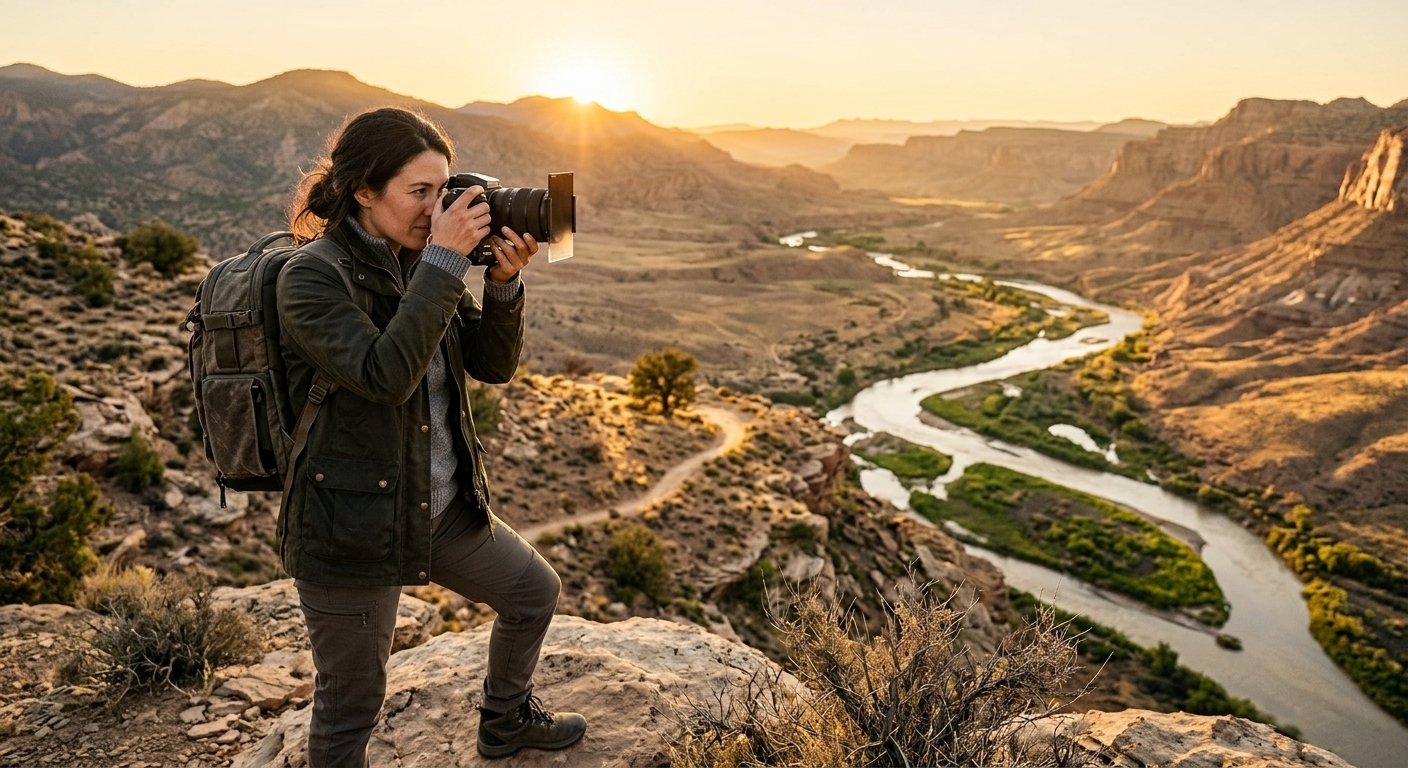
- Shoot during golden hour, just after sunrise and before sunset, for soft, warm light.
- Use the rule of thirds and leading lines to make photos look balanced.
- Add people or local details to tell the story of a place.
- Always ask before taking close-up photos of people.
- Back up your photos every day to the cloud or a second card.
1. Learn Your Camera Before You Go
Practice at home, not on the trip. Learn how to change focus, exposure and modes on your phone or camera. Take test shots in your own neighborhood at different times of day.
2. Chase the Golden Hour
The hour after sunrise and the hour before sunset give soft, warm light and long shadows. Midday sun is harsh and flat. Early mornings also mean fewer crowds at famous sights.
Do not forget blue hour, the short time just before sunrise and after sunset. City lights and a deep blue sky make beautiful night scenes.
3. Use the Rule of Thirds
Imagine your frame split into a 3×3 grid. Place your main subject on one of the lines or where they cross, not in the center. Turn on the grid in your phone or camera settings to make this easy.
4. Look for Leading Lines
Roads, rivers, fences, bridges and stairs can guide the eye through your photo. Stand so the line starts near a corner and leads toward your subject.
5. Frame Your Subject
Use arches, windows, doorways or tree branches to frame a landmark. Framing adds depth and makes a common shot look fresh.
6. Add People for Scale and Story
A tiny hiker on a huge cliff shows how big a place really is. Local people at work, at a market or at prayer tell a story that an empty landscape cannot. Your travel partner can also be a great subject.
Be respectful
Ask Before You Shoot People
Always ask before taking close photos of people, especially children and in religious places. A smile and a gesture toward your camera works in any language. If someone says no, thank them and move on. Some sites, museums and countries also ban photos or drones, so check the rules first.
7. Shoot Details, Not Just Landmarks
Close-ups of food, signs, doors, textures and handmade crafts often say more about a place than a wide view. Mix wide, medium and close shots to build a full story.
8. Change Your Angle
Most people shoot from eye level. Crouch low, climb higher or shoot from a rooftop. A new angle can turn an ordinary scene into something special.
9. Keep It Steady
Blurry photos are the most common beginner mistake. Hold your phone with two hands, lean on a wall or use a small travel tripod. A tripod also lets you take sharp low-light and night photos.
10. Edit Lightly
Simple edits make a big difference. Straighten the horizon, crop out clutter and adjust brightness and contrast. Free apps like Snapseed or Lightroom Mobile are perfect for beginners. Avoid heavy filters that make photos look fake.
Beginner Camera Settings Cheat Sheet
| Scene | Mode | Aperture | Shutter speed | ISO |
|---|---|---|---|---|
| Landscapes | Aperture priority (A/Av) | f/8–f/11 | Auto | 100–200 |
| Portraits | Aperture priority | f/1.8–f/4 | Auto | 100–400 |
| Street and action | Shutter priority (S/Tv) | Auto | 1/250 or faster | Auto |
| Night (tripod) | Manual | f/8 | 2–15 sec | 100–400 |
| Indoors, no flash | Aperture priority | Widest | 1/60 or faster | 800–3200 |
Phone users can use Night mode, Portrait mode and tap-to-focus for similar results.
Travel Photography Gear for Beginners
Most travel photography tips for beginners agree on one thing: start simple. You can always upgrade later.
- Your phone: Modern phones take excellent travel photos.
- A compact or mirrorless camera: Light and good in low light.
- One zoom lens: A 24–70mm or similar covers most scenes.
- Small travel tripod
- Extra batteries and memory cards
- Lens cloth for dust, rain and sea spray
- A comfortable camera strap or sling
What Improves Beginner Photos Most?
Our rough ranking of impact versus cost for new photographers.
Protect and Back Up Your Photos
One of the most useful travel photography tips for beginners has nothing to do with taking pictures. Losing a whole trip’s photos is heartbreaking. Back up every night to cloud storage like Google Photos or iCloud, or copy files to a second card or drive. Keep your camera in a padded bag and never leave it in a hot car. Check if your travel insurance covers your gear.
Common Beginner Mistakes to Avoid
Even with good travel photography tips for beginners, a few habits can ruin a shot. Watch out for these:
- Putting every subject in the center
- Shooting only at midday
- Tilted horizons
- Too many filters and edits
- Spending the whole trip behind the camera
The last one matters most. Take your shots, then put the camera down and enjoy the moment.
Frequently Asked Questions
What are the most important travel photography tips for beginners?
Shoot in golden hour, use the rule of thirds, keep the camera steady and back up your photos daily.
What is the best camera for beginner travel photography?
Your phone is a great start. If you want more, a light mirrorless camera with one zoom lens is easy to carry and use.
How can I take better travel photos with my phone?
Clean the lens, turn on the grid, tap to focus, shoot in good light and use Night or Portrait mode when needed.
What time of day is best for travel photos?
Golden hour, right after sunrise and before sunset, gives the softest and most flattering light.
Is it OK to take photos of strangers while traveling?
Wide street scenes are usually fine, but always ask before close-up portraits and respect the answer.
Keep learning
More Travel Photography and Planning
Ideas for your next photo trip.
Final Thoughts
The best travel photography tips for beginners are simple: shoot in good light, compose with care and tell the story of the place and its people. Practice on every trip, edit lightly and back up your files. Most of all, enjoy the journey. Great photos come from curious travelers.